Ottawa to Calabogie

Calabogie lake is an increasingly popular destination for Ottawan’s in search of some Rest & Relaxation. There are also lots of Ottawa Valley historical sites to discover en route, and what better way to do so than by bike? Well exactly. Here’s the route I recommend.

.
I followed Richmond Road on the way out of town. It was an important stretch in the early development of Ottawa and its surrounding communities. It’s usually a very busy road, but not so bad early weekend mornings.

There are many heritage buildings along the way, such as the Aylen-Heney house at 150 Richmond Road, built in the 1830’s to house labourers of Peter Aylen, the leader of a rioutous gang of Irish immigrants called the Shiners.

Aylen House

The former Maplelawn Estate is located at 529 Richmond Road.

Maplelawn

Here’s another one a bit further down from Maplelawn. I love the iron detailing on the top of the stone fence.
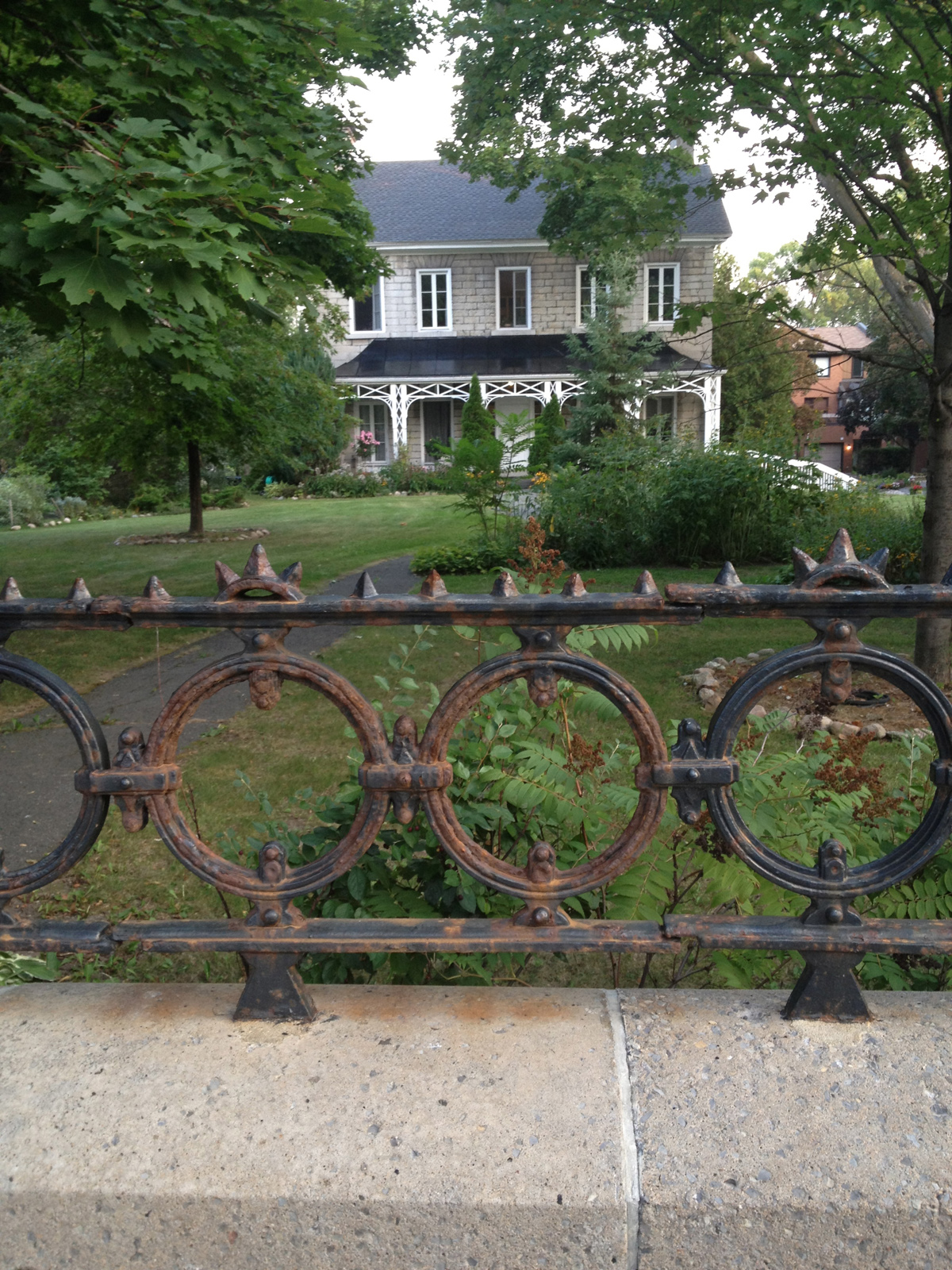
Great fence

This is The Olde Forge built in the early 1830’s where Richmond crosses Carling.
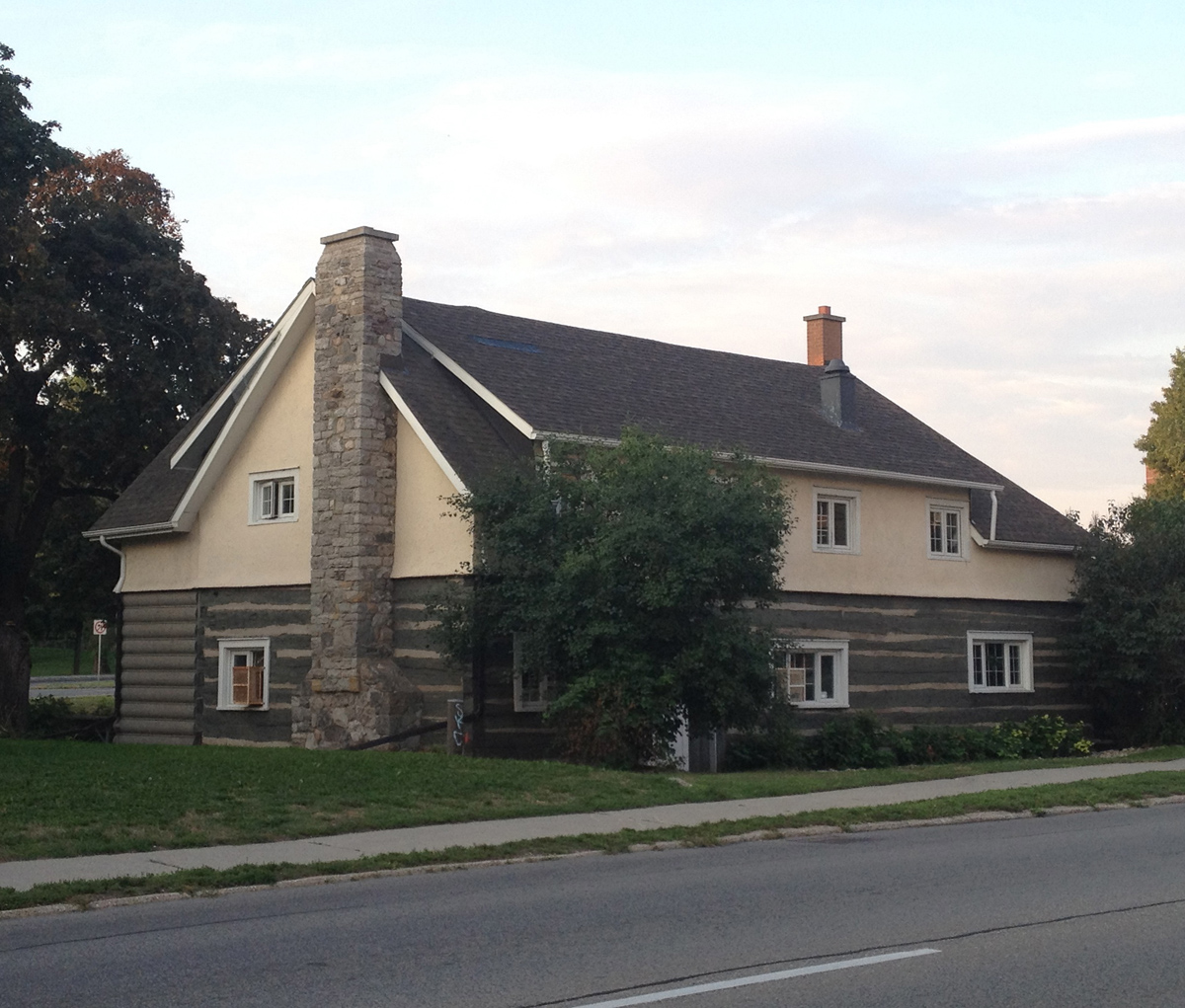
Olde Forge

This old house was built by William Bell in the 1820’s. Its location is in stark contrast to its immediate surroundings, where Richmond passes over the Queensway across from the Bayshore Shopping Centre.
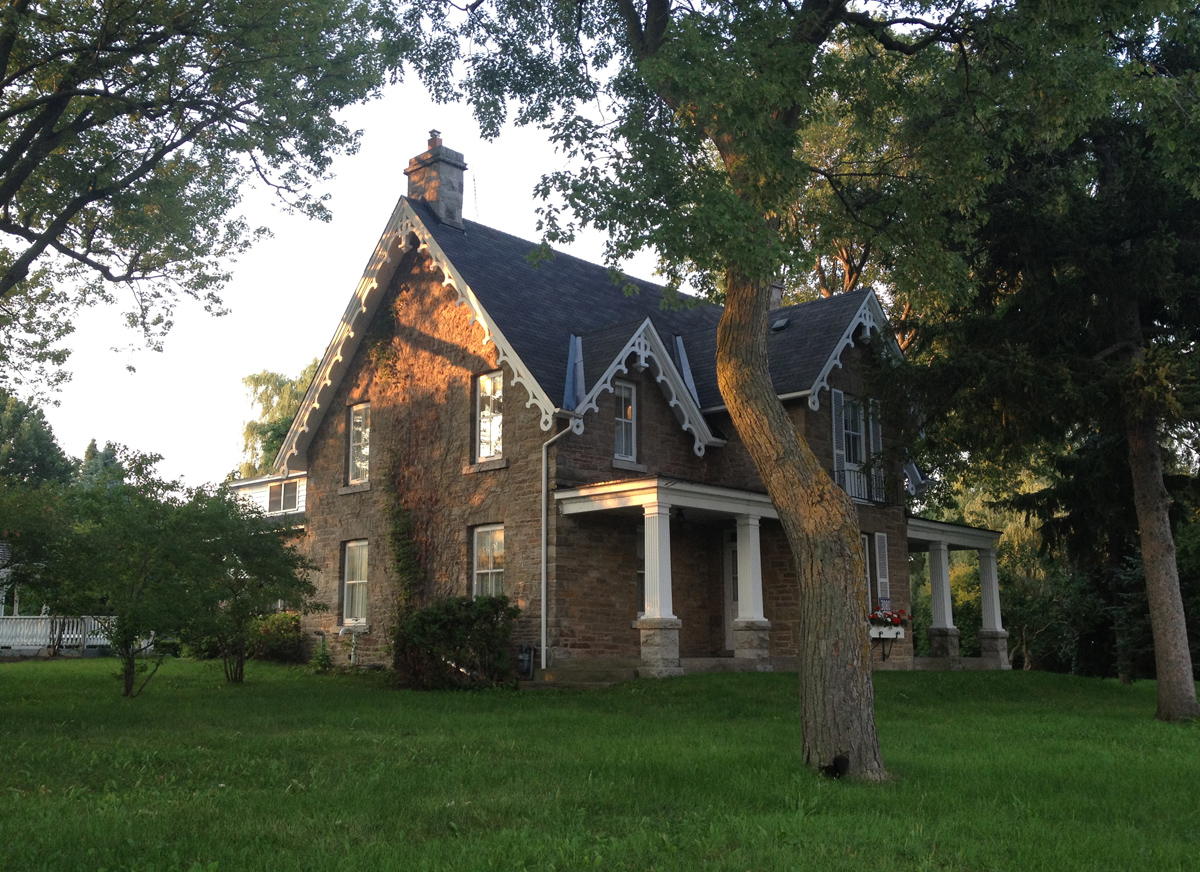
Bell Family Homestead

I continued along Robertson Road to where the Trans Canada Trail crosses overhead on an old converted rail line. So, under the train bridge and up a short path to the right I went, and voila! – I was on the trail. Now train tracks like to go straight and stay flat as much as possible, and this line was no exception, all the way to Carleton Place.

The straight and narrow

There is lots to see along this easy going stretch including wetlands, farmland, housing developments, Stittsville, and this bunch of huge solar panel structures sitting in a farmers field.
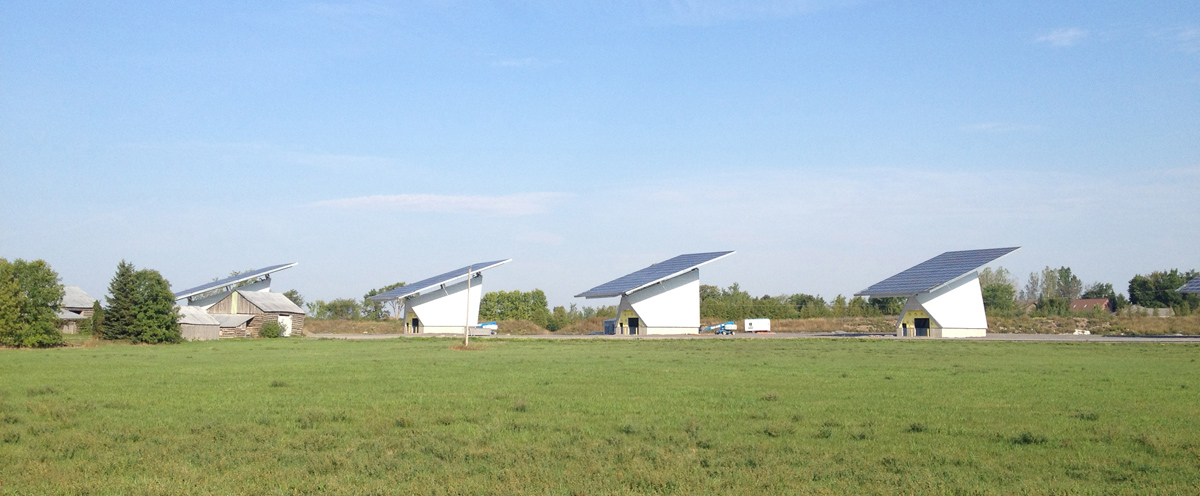
Huge solar panels

My route through Carleton Place was a charming meander, making me want to return someday and discover it in more detail. For example, check out the fabulous cornice moulding on this sucker!
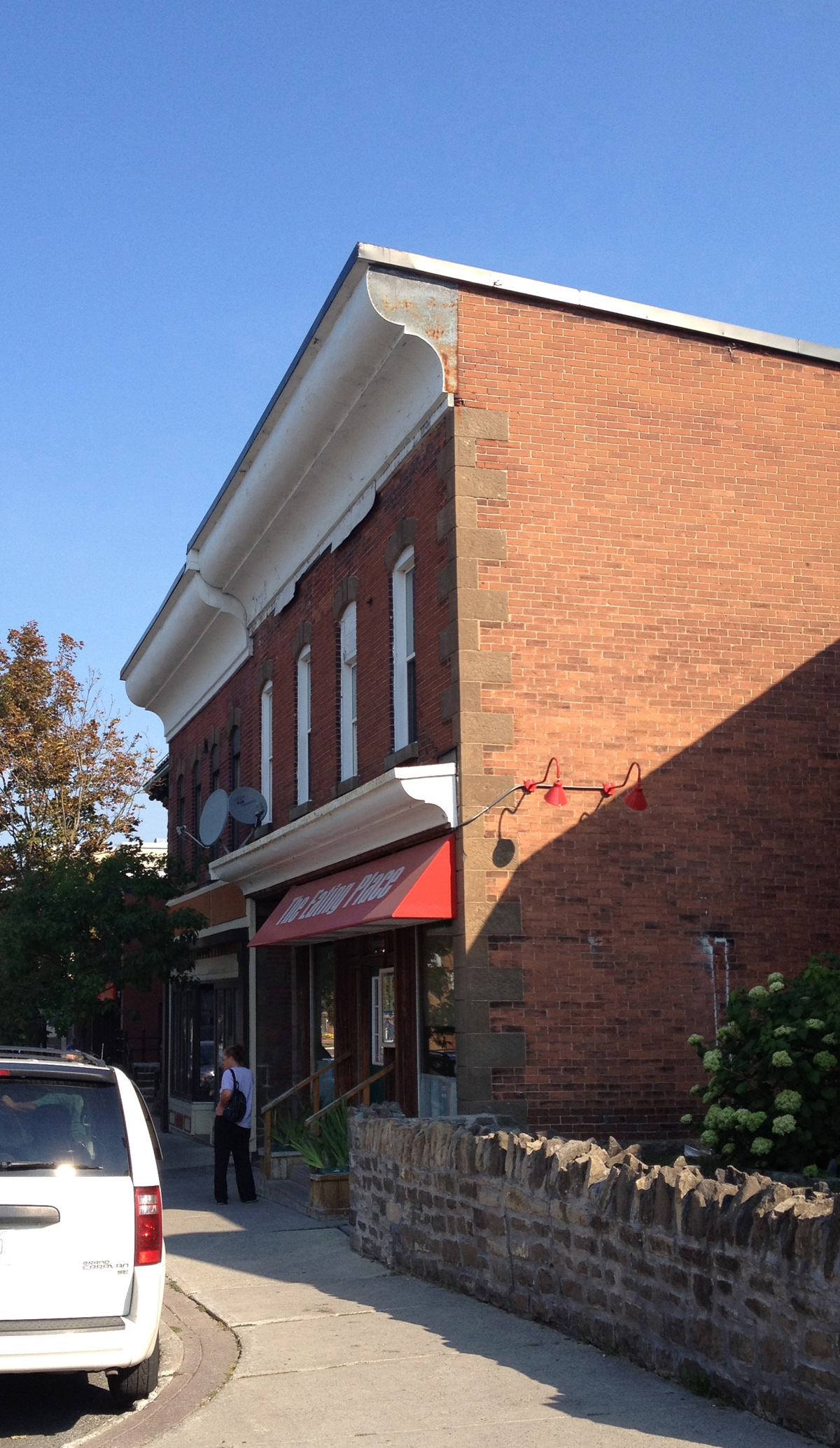
CORNICE moulding!

Then, poof!, the road became a winding gravel road which made me think of this song – just replace West Virginia with Calabogie and Shenandoah with Madawaska when you sing it out loud in the shower.
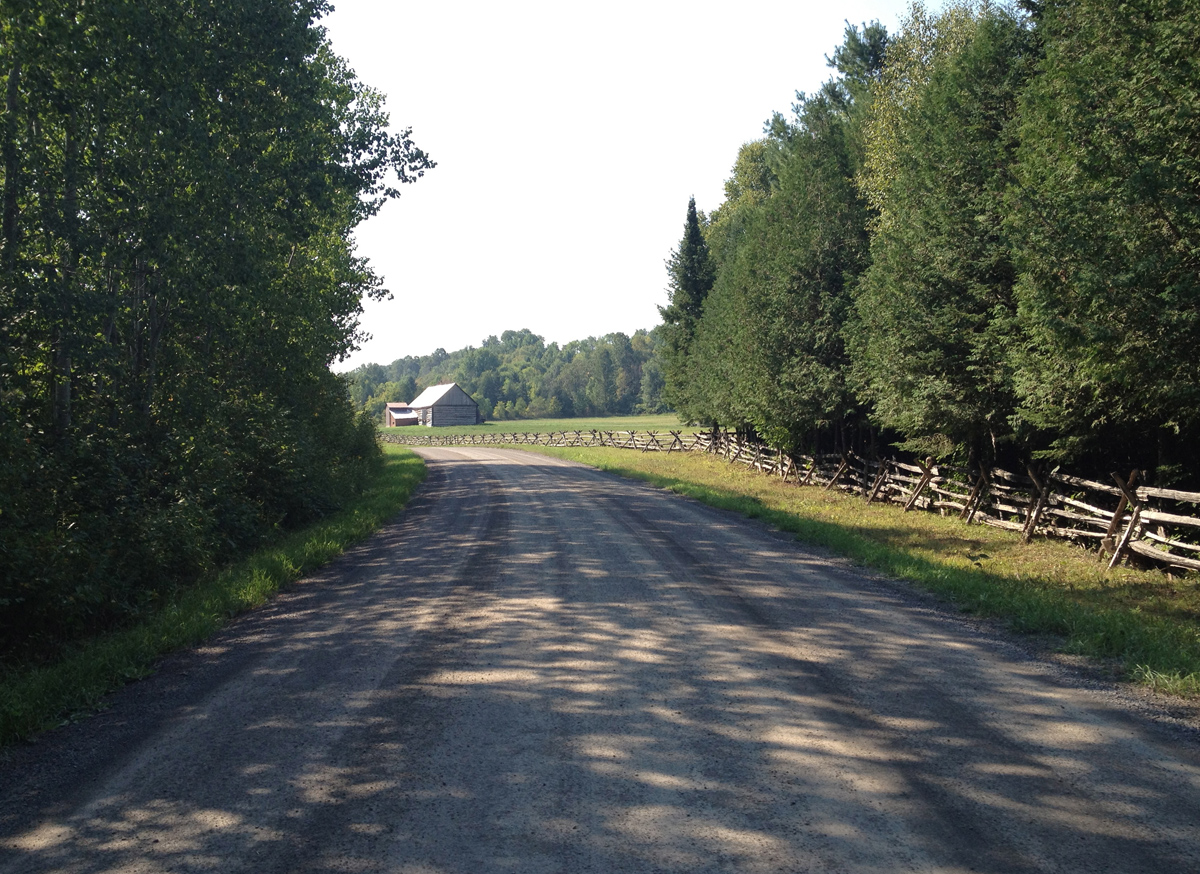
Country Road

I stopped and ate lunch by the dam in the tiny village of Clayton before continuing along Tatlock Road.

I’ll admit to being nervous as I approached Highway 511, mostly because it says Highway before the 511, but also because the shoulder on the side of this two lane road appeared very narrow or non-existant when I checked it out on Google Maps Street View. However riding along this stretch felt very safe. The road was in good shape and all the motorized vehicles gave me lots of room, including the huge pick-up trucks hauling big boats.

So I made it to Calabogie safe, sound, and happy. However I do need to invest in a good bike seat.

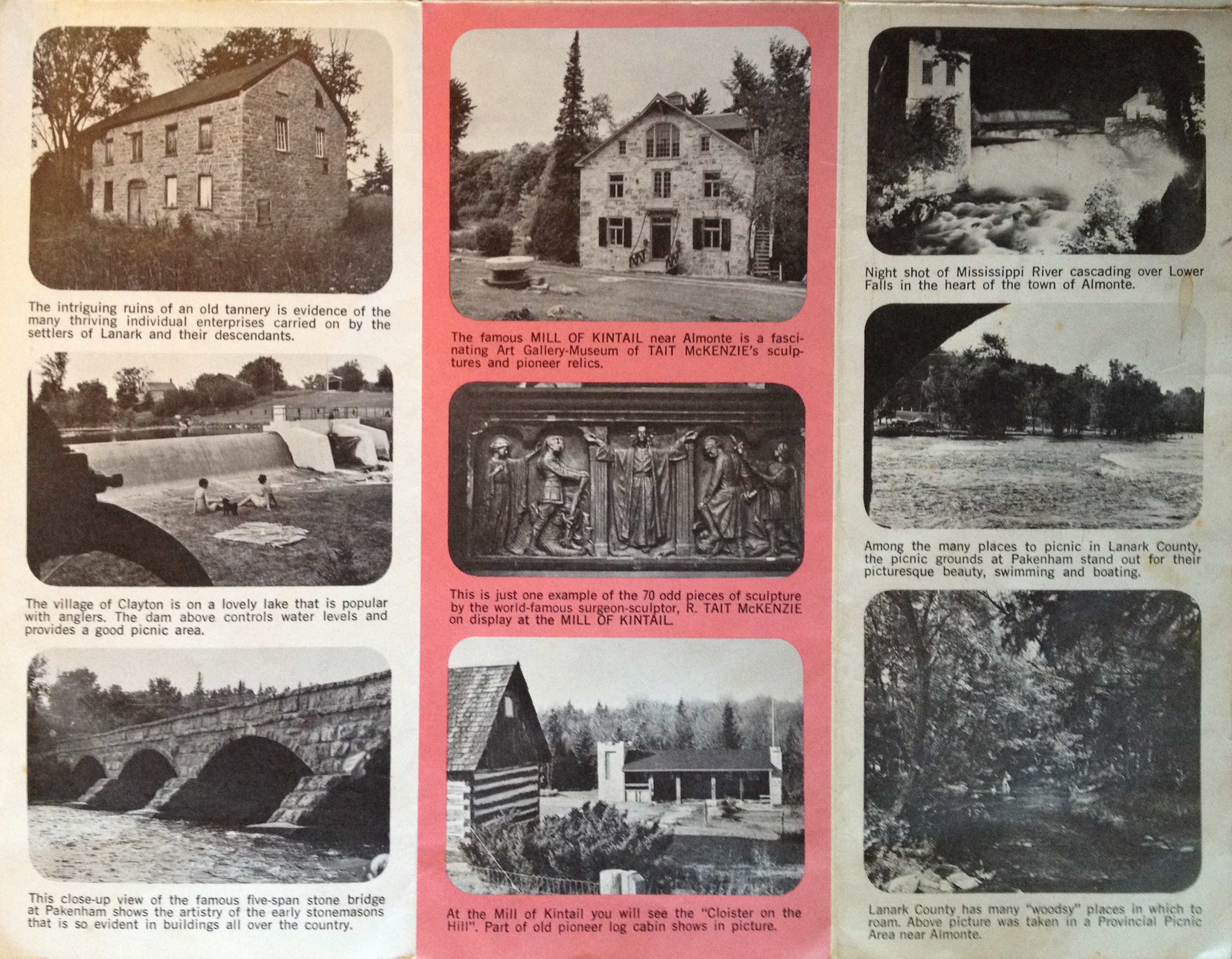
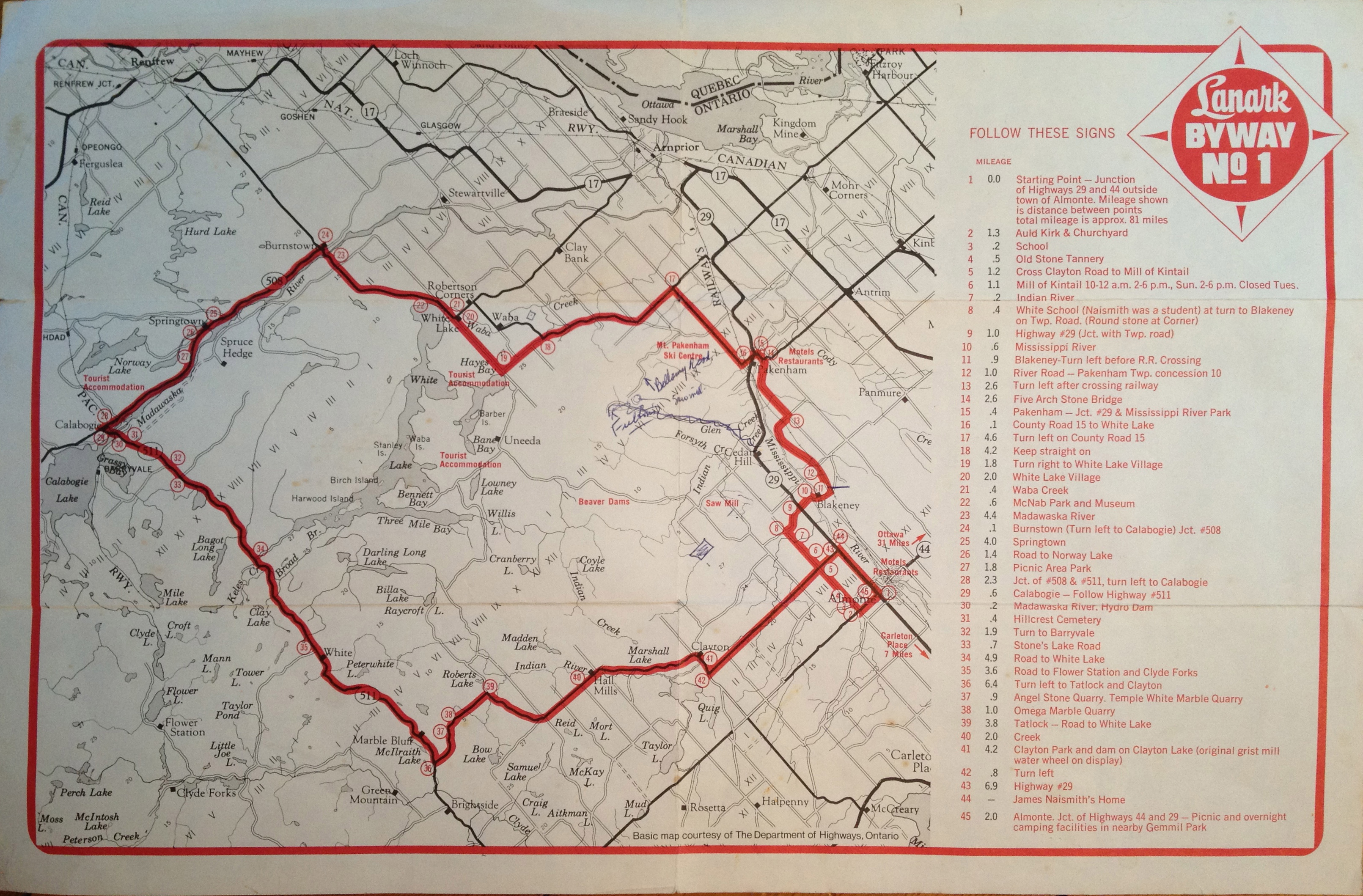
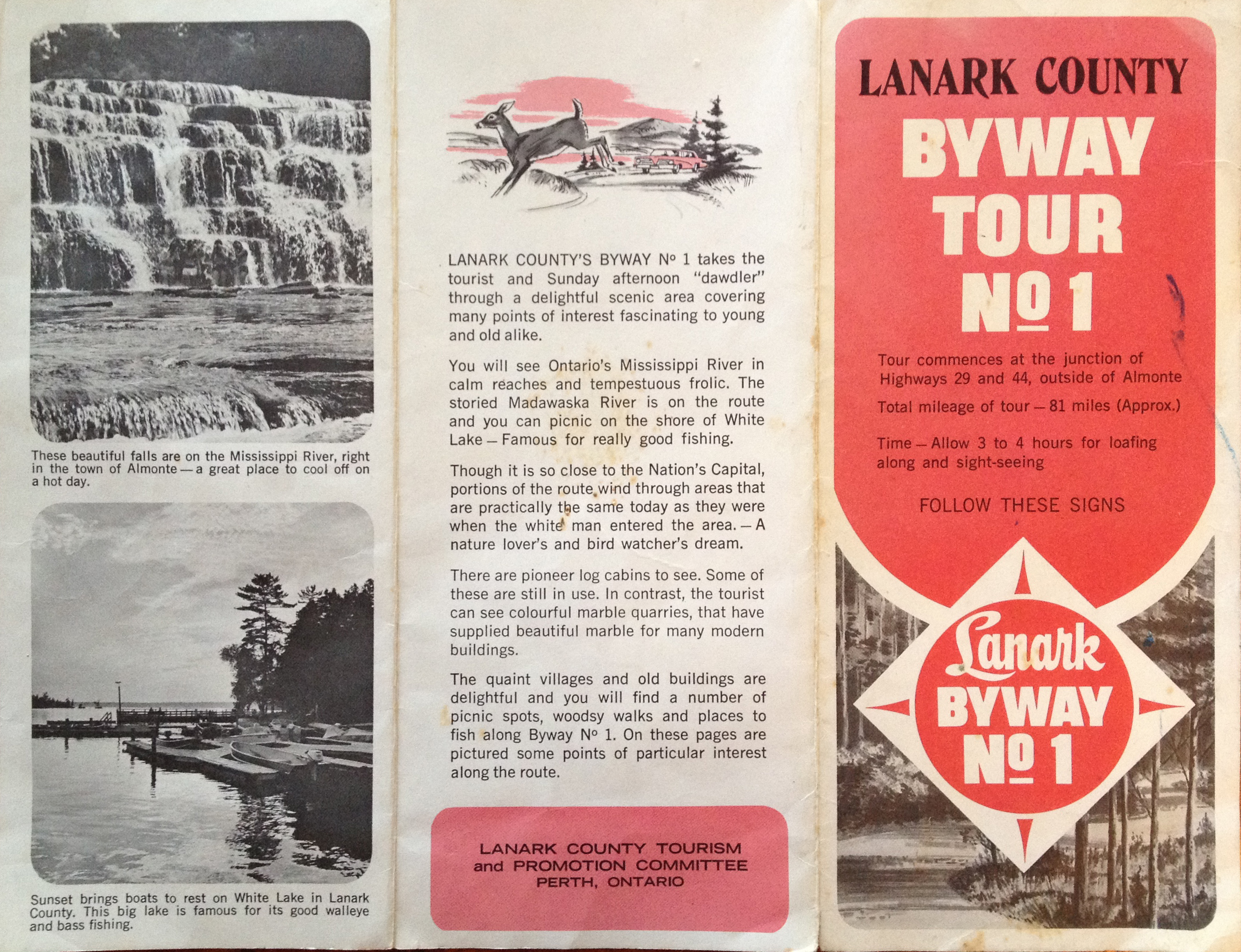
At the cottage I came across this great 1960’s tourist road map brochure. I love the graphics. Coincidently the route corresponds alot to this Bikely route I used to help me plan my route.
Biking to South Keys Cinemas

.

Family decided to go see a film at South Keys Cinema this evening so I biked there!

I passed through Mooney’s Bay Park where I happened upon this large gathering of Canadian geese. other parts of the park were filled with folks barbecuing, playing beach volley ball, dragon boat racing, swimming, biking and more! It must be one of the most popular public facilities in town.

Mooney’s Bay Park

I continued along a stretch of Walkley Road, which maintains a precarious balance as a speedy four lane artery and a comfortable residential area. UPDATE, Summer 2014 – The Sawmill Creek Pathway has been extended! You can read more about this great section of pathway on in this post. To access this path requires continuing down Hogs Back and Brookfield, onto the Brookfield Pathway, which connects to The Sawmill Creek Pathway, as indicated by the orange line on the above map.  This makes it possible to avoid riding down Walkley. The city should still install a bike lane along Walkley. Riding along this section is tense due to the fast moving traffic, much of it uncomfortably close regardless of how much I hugged the curb. Bike lanes on both sides would make it much safer, and human friendly, supporting what the homeowners are attempting to do based on the care they put into their houses and properties. The bike lanes would also further encourage commuting by bike.


Walkley Road

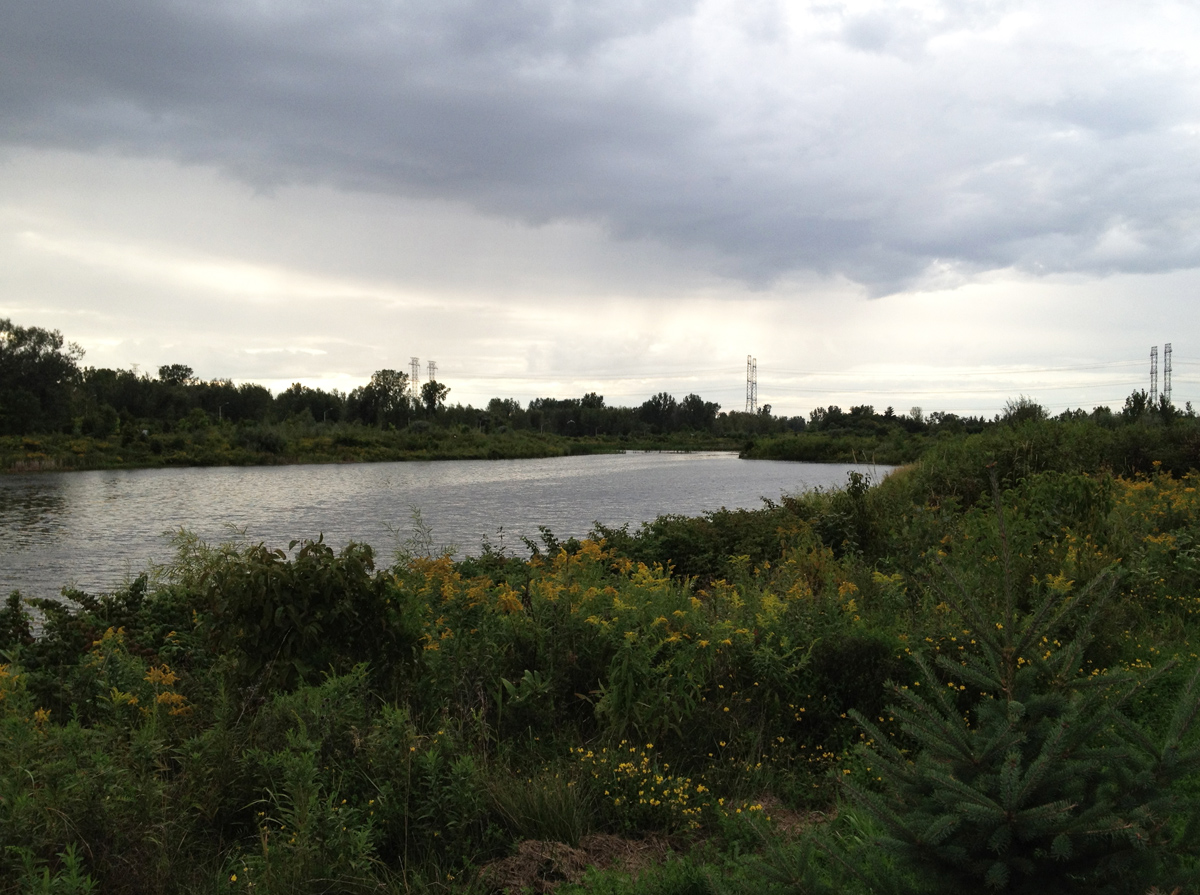
I got off Walkley Road where it crosses over the OC Transpo transit way and carried my bike down the stairs to the bike path which meanders through the little used pathways around the Sawmill Creek Constructed Wetland, described extensively on this Quadracycling in Ottawa blog page.

Sawmill Creek Constructed Wetland

A pedestrian bridge over the Airport Parkway is being constructed which will allow for much better access to this recreational treasure. Here is a section of it mid-build. UPDATE, November 2014 – The Airport Parkway Bridge is officially open! I’ve indicated it by the green line on the above map. See this post for more.

UPDATE, Summer 2015 – A new point of access to South Keys Mall and the cinema has been created via a short pedestrian tunnel under the O-Train tracks, as indicated by the burgundy line on the above map. Signs are confusing but I checked with OC Transpo – bikes are allowed through the tunnel but walked, not ridden.

Rebar galore!

Off to Home Depot at Rush Hour

Had to get to Home Depot in the west end right in the middle of rush hour.
I could have driven….

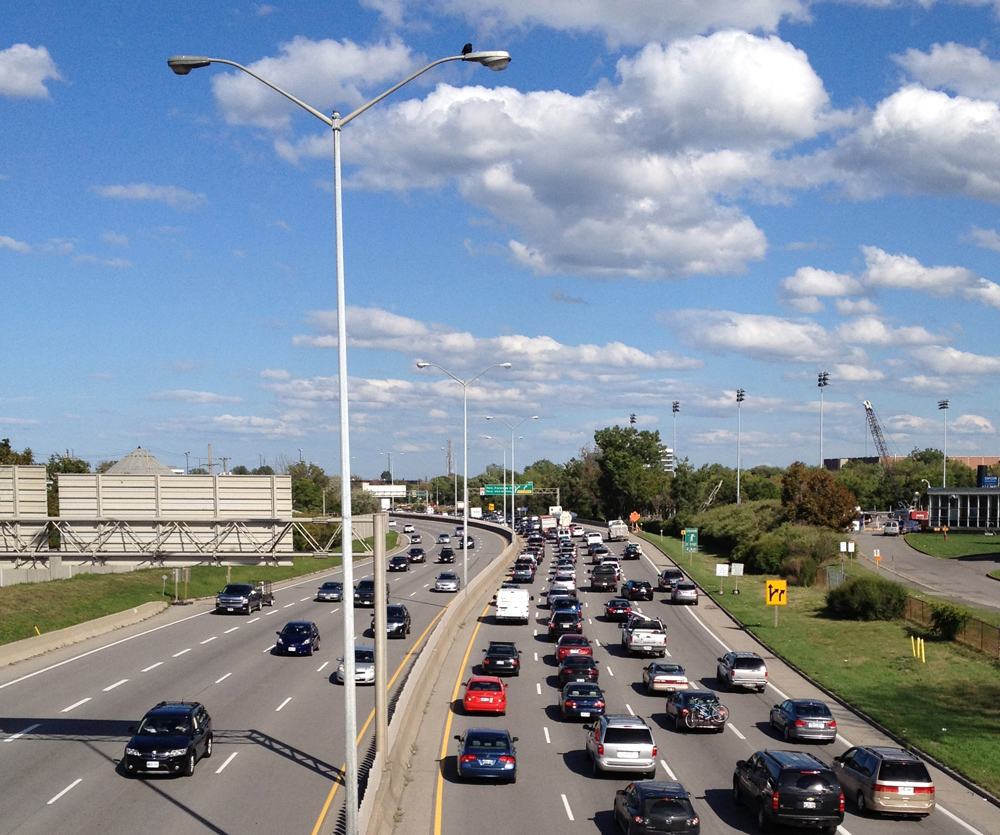
Rush Hour on the Queensway

… but decided to bike.
I chose a route that allowed me to re-visit the Cyrville Industrial Area. On my first ride through a month ago today I was struck by its mix of houses and industry, encircled by very heavy duty traffic arteries – St Laurent to the West, the Queensway to the North, the 417 to the East, and Innes Road to the South. Todays trip taught me that the surviving residential area is pretty much confined to the area defined by the three blocks Gossett St, Louis Lane and Marchand St, however I did notice this white house (below, left) on Triole St, all alone standing proud.

House

Innes Road over the 417 is treacherous. Too bad, because a bike lane starts right on the other side.

The Home Depot on Cyrville is really great – best service in town, apart from Preston Hardware which is in a league of its own.

King Edward

Short ride today. Work related. Middle of the day. Almost got smushed on Laurier by a car cutting me off as it turned south onto Elgin. I was going straight. Didn’t give chase as I had an appointment. Couldn’t report it either as I managed to avoid getting hit, so it won’t show up on any heat map intended to give bicyclists an idea of where most accidents occur. Shook it off and made it to my meeting on time. Then I headed South on King Edward for a bit.

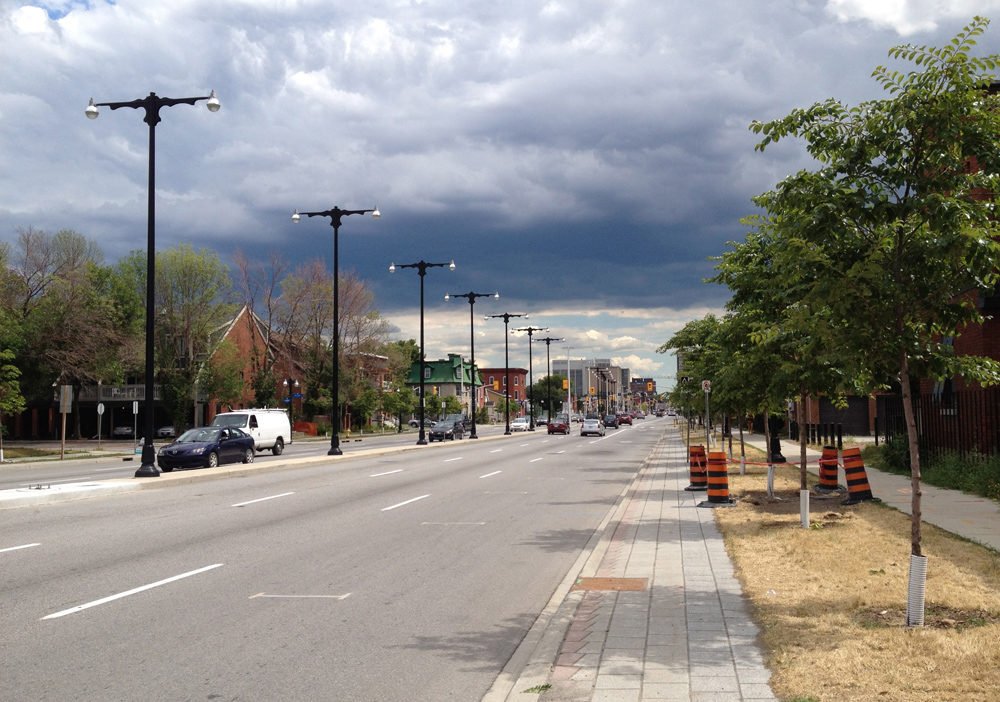
King Edward looking south

These sculptures along King Edward are by Karl Ciesluk.

Fiddleheads in the meridian

Some great historical before and after shots of King Edward can be found here.

Aleutian Road

Interesting name. I don’t know if any of these reasons inspired the powers-that-be to name it as such, but I’m guessing it’s after the Aleut from the Aleutian Islands of Alaska, based on some of the surrounding streets named after other aboriginal peoples such as Mohawk Crescent and Sioux Crescent. Similar to the area of streets in Gatineau named after aboriginal groups, both neighbourhoods appear to have originally been developed around the same time, an assumption I’m making based on their period styles.

But before we get there, here’s an interesting building one happens upon en route along the Ottawa River Pathway. It’s the Belltown Dome. There’s a skating rink inside. It’s cramped, but very special in it’s uniqueness. My son has had hockey practice there so I got to go inside.

Belltown Dome

Aleutian Drive has great trees, like this huge oak.

Big Oak

Nanaimo Drive has a number of unique single-story houses such as this.

Eyebrow Arches

Heading East towards Greenbank Road, one comes across many two story houses with decorative shutters.

Decorative Shutters

Beacon Hill Beckoned

There are a number of houses in Beacon Hill with the brick work treatment shown below. The grout is left untrimmed, and the exterior walls are painted entirely white. It must must have been a popular style in the 50’s and 60’s, as there are a number of houses with this type of brickwork in Elmvale Acres as well.

Grout – gotta love it!

This style too, with protruding bricks to create a subtle pattern.

Intermittent Outies

At the top of Ski Hill Park along Naskapi Drive I noticed this interesting hedge, trimmed to avoid the side walk. Either that, or a very fussy and hungry deer lives in the neighbourhood.

Serious Hedge Trimming

Ending off with another glorious view of the Ottawa River, as seen from the boat launch at the end of Massey Lane.

Ahhhh…….

Return to the Pine Grove Forestry Trail, and more!

Well, we loaded up the Element and headed off towards the Pine Grove Forestry Trail in the Greenbelt.

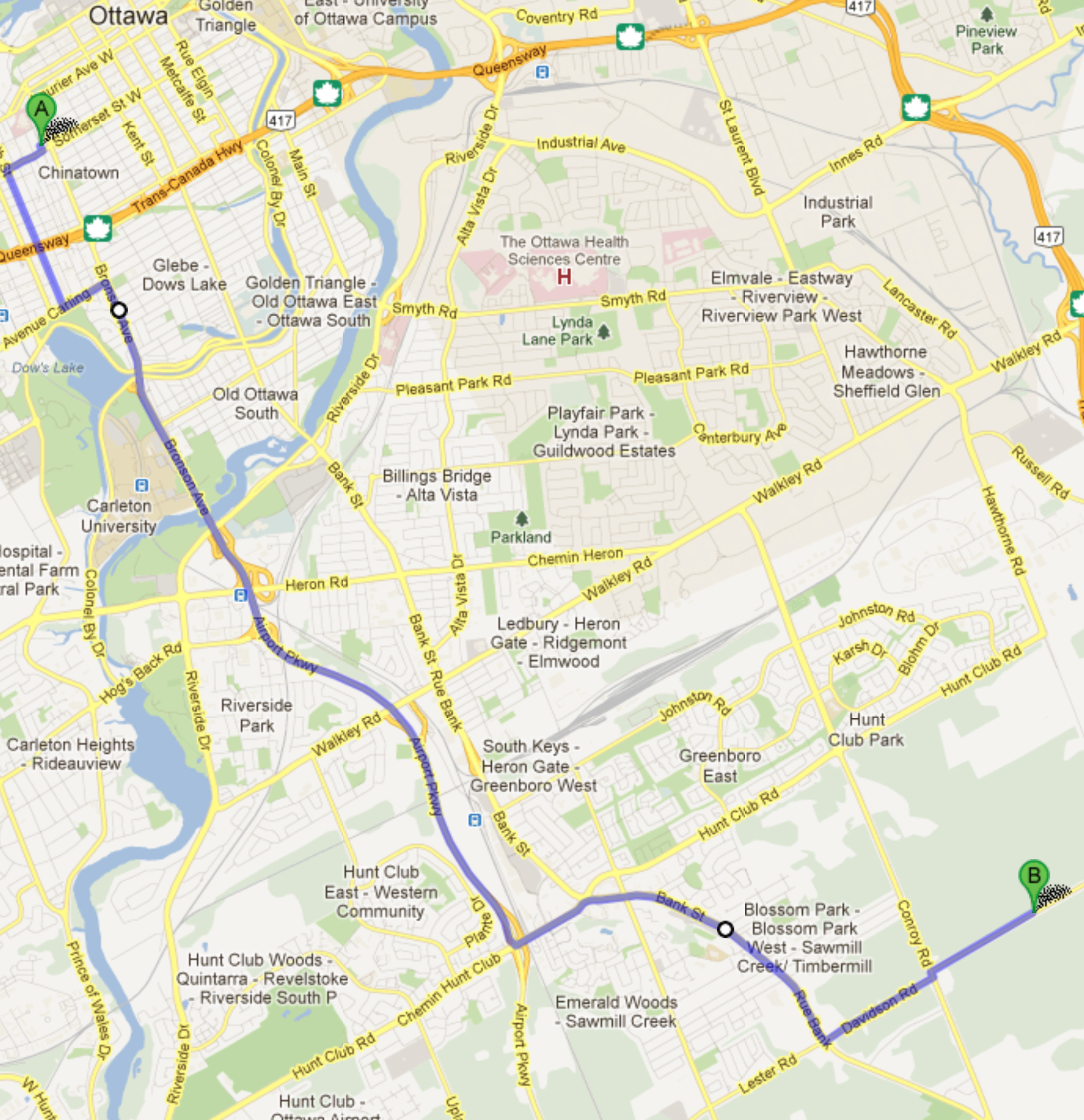
Driving Directions to P18

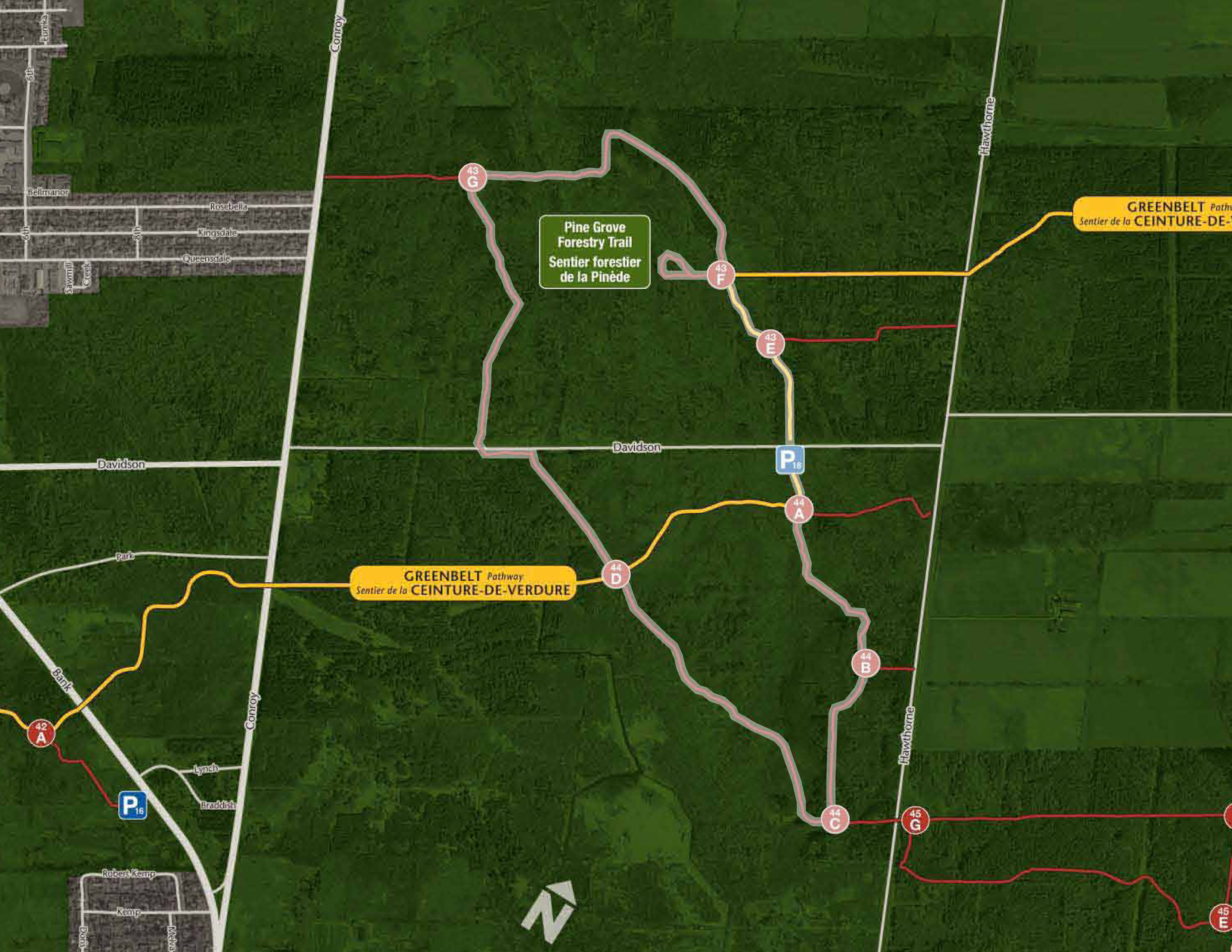
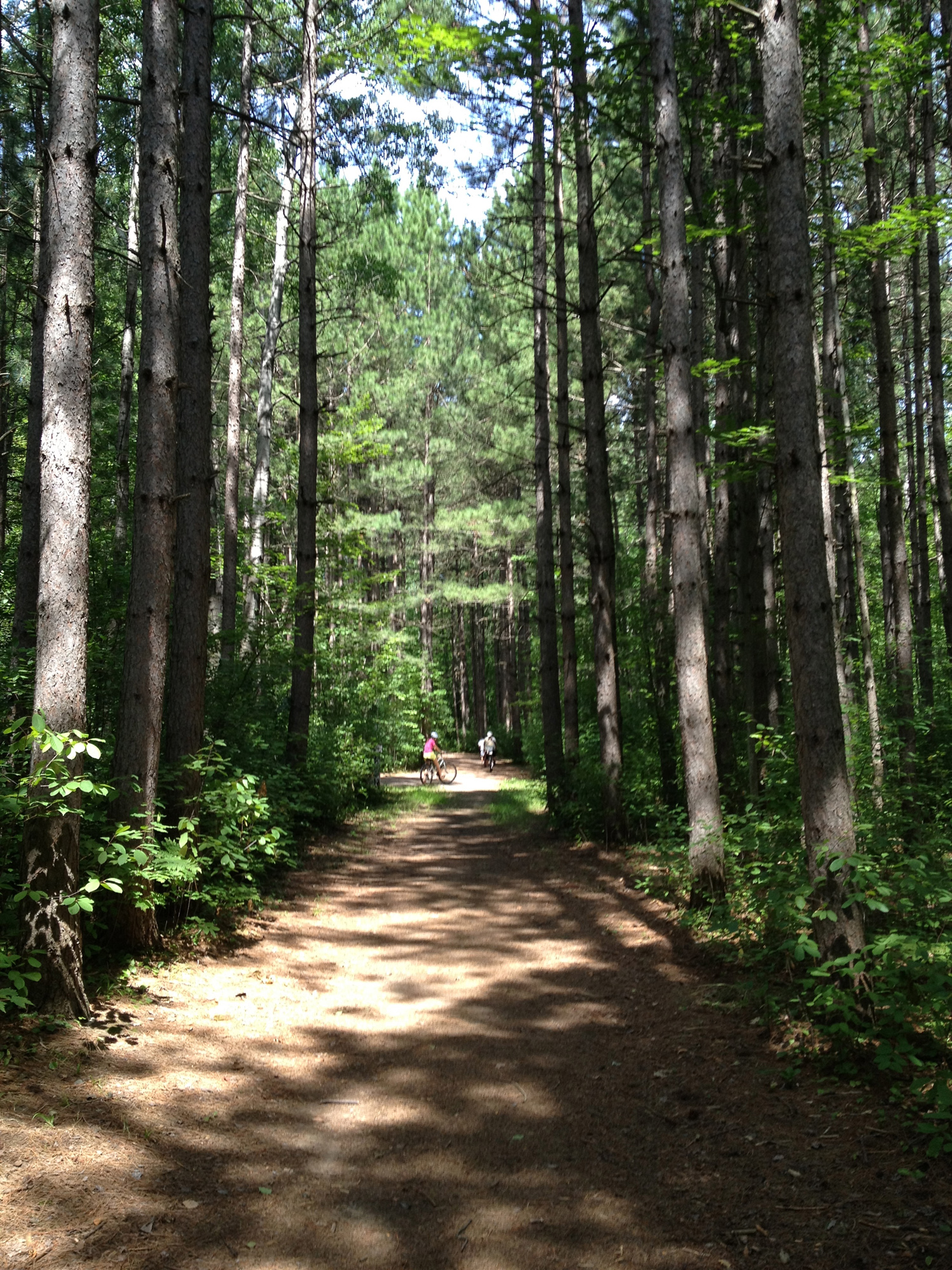
I’ve hi-lited the paths we biked and hiked with a white glow on this map.

Where we biked & hiked

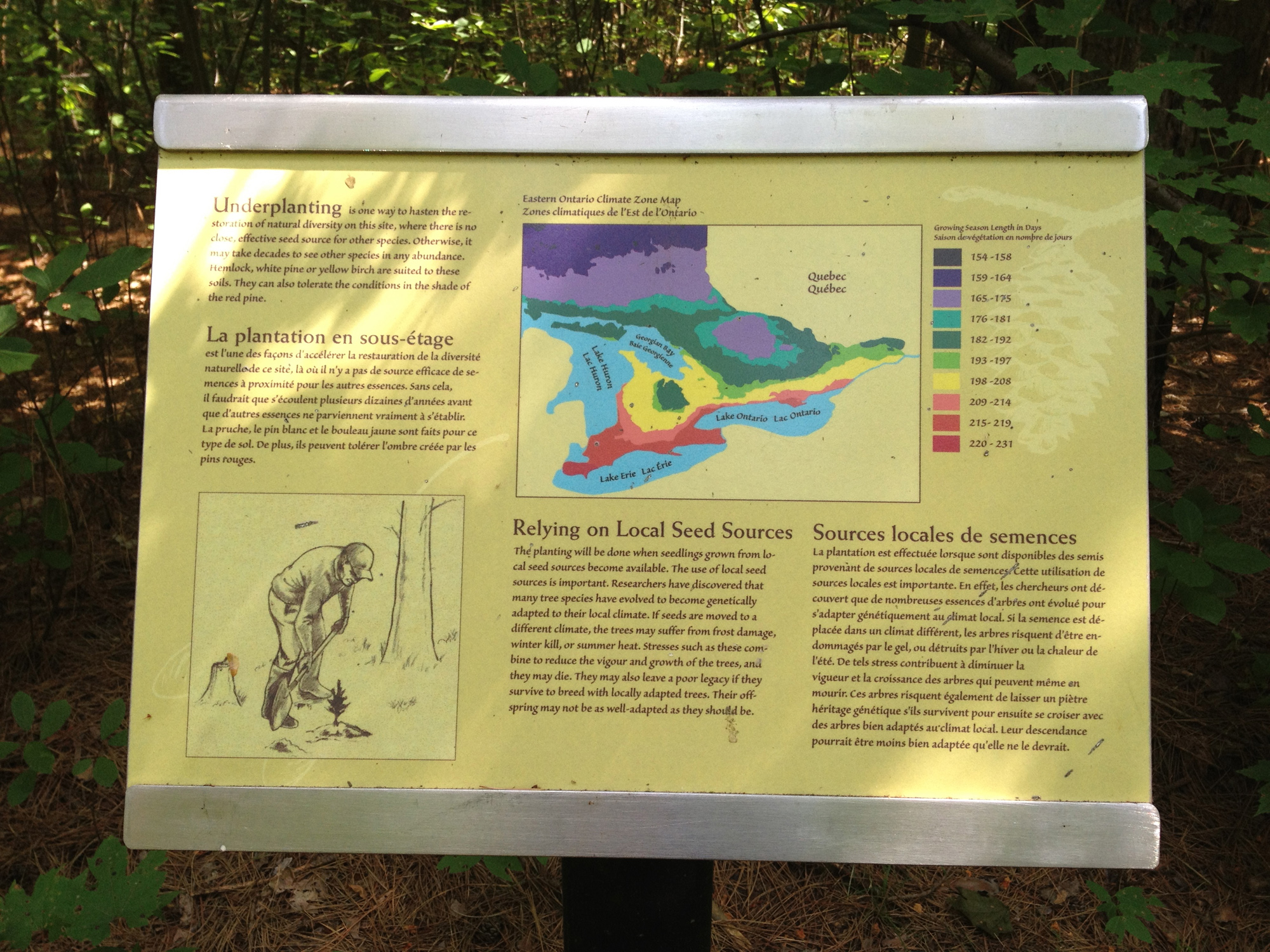
The stretch between P18 (where we parked) and the start to the Pine Grove Forestry Trail has the highest concentration of interpretive panels I’ve ever seen along a nature trail. One every 20 yards maybe? Here’s one. The hungry mosquitoes kept me from reading them all, however I caught enough to remark how thorough the information was, providing extensive detail on the surrounding forest, so bravo.

Interpretive Panel

Pine Grove Forestry Trail was a short intimate hike punctuated with smaller interpretive panels along it’s way, as previously mentioned in this post.

Apart from the little stretch running along Davidson Road which was very narrow and grown over, but you can avoid by biking on the road. The rest of the route was wide and just a little bit bumpy. Like this.

Trail

A fine family outing.

Side Streets to Baseline and Clyde

Work required that I find my way near the corner of Baseline Road and Clyde Avenue, a heavy traffic zone not easily accessible by bike, especially as one gets closer to the destination. ‘What’s the safest way to go?’ say’s I. Well, this is why I love the bike option in Google Maps. It helps you plot out the safest way to get to your destination.

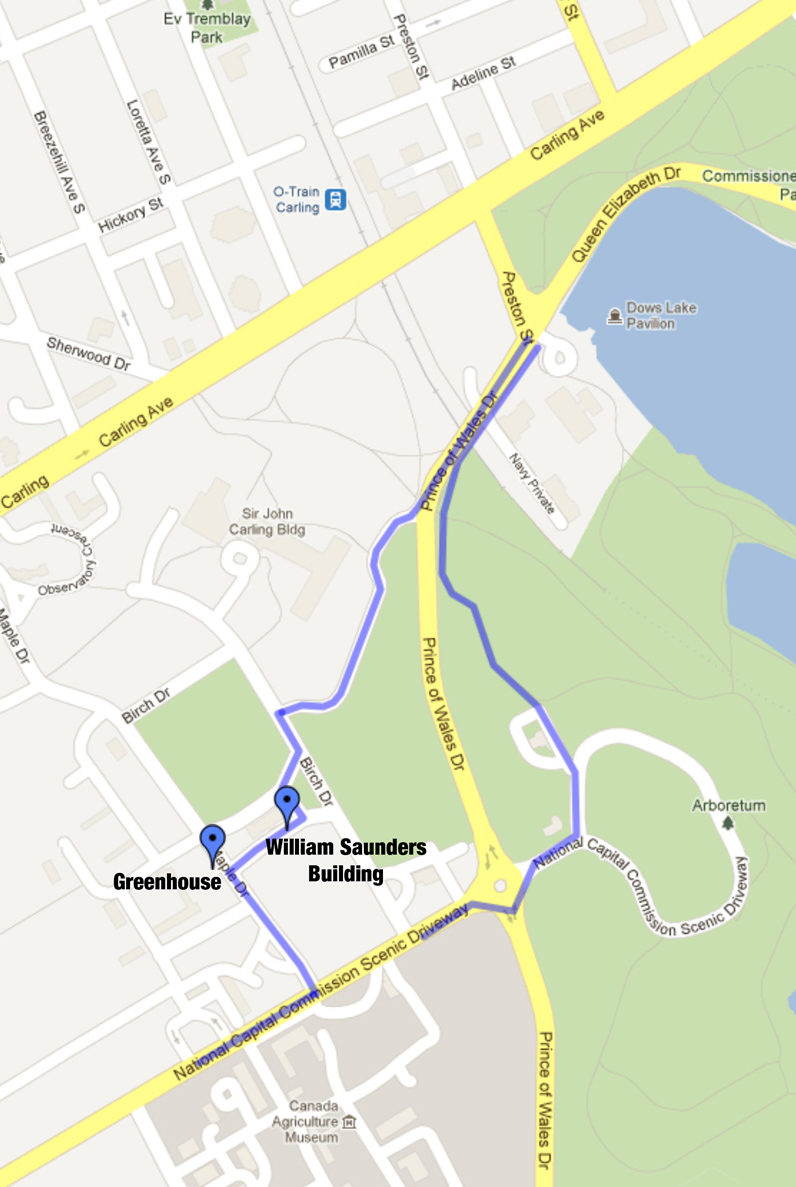
But before I go too far, I want to mention a couple of side routes around another tricky spot en route, someone other than Mr Google put me onto many years ago. Prince of Wales Drive just beyond Dow’s Lake towards the Experimental Farm is scary because of the crazy speeds motorists reach zipping up and down this curved hill. Below are two suggested ways to avoid this section.

Ways around Prince of Wales Drive

The route on the right, or east side of Prince of Wales, follows a gravel path up the hill along the edge of the Arboretum. On weekends one often happens upon events at the top of the hill hosted by the very dedicated Friends of the Farm. The route on the west side, which I took today, takes you through a large parking lot heading up the hill. Once at the top, a few dippy do’s brings you to architectural delights one hardly notices from the beaten path, such as the William Saunders Building shown on the right below, or this Victoriana greenhouse a little further along. It’s presently undergoing some construction. I hope they aren’t dismantling it.

Victoriana Greenhouse and the William Saunders Building

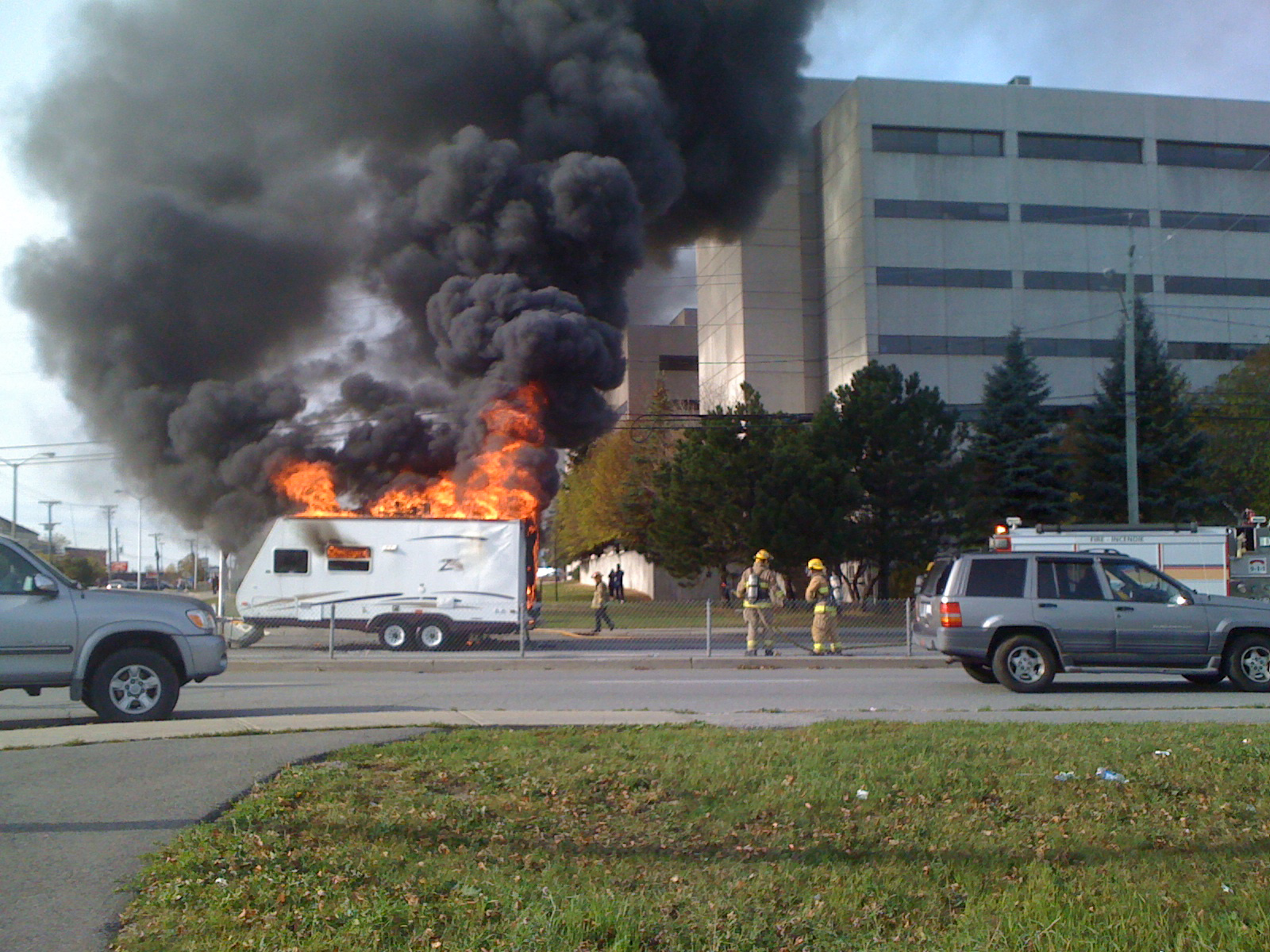
Now back to the really tricky section – getting from the Experimental Farm Pathway where it meets Merivale Road, to the area near Baseline and Clyde. You especially want to avoid Merivale and Baseline. Traffic here is so crazy – last Fall this trailer exploded into flames as I biked by.

FIRE!

But how does one navigate safely through this area? Well for todays route, here’s what I did: 1) I went to the Google Maps site; 2) I typed in ‘Baseline and Clyde’ in the search box; 3) I clicked on the ‘get directions’ icon; 4) In the box beside ‘A’ I entered the address I was taking off from, and then finally; 5) I clicked on the bicycle amongst the four choices of transpo icons. Without further ado, it plotted out a safe route, avoiding the dangerous area in question. It was a path I would not have imagined taking, and it was perfect. The map below shows the section of the route that got me around the trouble spot in question. Thank you Google Maps!

Elmvale Acres

I’ve covered streets in the Elmvale Acres housing development a few times already without even knowing it. Created by Robert Campeau‘s company in the 1950’s, it comprised 1600 homes built on acres of farmland. It was his biggest housing development at the time. Now absorbed into Alta Vista, its existence is alluded to on my paper map by the Elmvale Acres Shopping Centre. A friend mentioned he had grown up in Elmvale Acres, so with fresh info and renewed interest, I headed over to visit the few remaining streets in the area to be hi-lited on my map. Figuring out the boundaries of Elmvale Acres proved a little tricky. The most detailed description I found was on this real estate website, which I’ve outlined below. Hope it’s right.

Here are the streets within Elmvale Acres I covered today.

Some of Elmvale Acres

While the design of the buildings varied, it was interesting seeking out common details, figuring out which forms and proportions had survived the test of time. The varied flat stones on the exterior walls on this house, in combination with the rich red brick were a common detail, emphasized by the horizontal sills extending beyond the edge of the windows. I like it.

Campeau is described in one of his biographies as having very high standards of quality control. The number of houses within Elmvale Acres retaining their original form would support this argument. For example this house with it’s vertical bands of brick appears to be original.

Vertical bands of brick.

The house in the photo below also appears authentic. The one to the left beside it in the same photo must have been identical, having since been renovated with the addition of a wooden deck and matching siding, but never completely shedding its original proportions.

Similarly the house shown below, extensively renovated on the outside, will always retain it’s mid-century proportions.

‘A man’s home is his castle’

Those houses which have been renovated and taken on their own personality over the past 55 to 60 years have allowed this area to shed an overly dominant sense of repetitiveness that may have existed when they were built. The mature trees and gardens lining the streets contribute to this even more so. Tragically, on one of the last streets visited in the area today I noticed instances of the devastation being wrought by the Emerald Ash Borer Beetle, previously mentioned in this post. A sad sight, a time for rebirth.

Ash

One defining feature Elmvale Acres has as a housing development which it shares with developments that followed is the lack of businesses within the community, something my ex-Elmvale Acres resident friend laments. As he pointed out, older communities in Europe as well as some within our region retain more mixed use, such as Centretown and Vanier. I heard the same opinion expressed by Bruce Firestone, interestingly, at a presentation on Lebretton Flats awhile back, summarized in this bloggers posting. Important stuff to ponder as our region evolves.