Biking to Blue Skies Music Festival from Ottawa – Route #2

The Blue Skies Music Festival near Clarendon, Ontario takes place on the first weekend of August, as it has every year since the early 70’s. It’s a great big gathering where folks come for a day, or camp out over the 3 day long weekend.

This year was the third time I’ve been. Last year I biked to a friend’s cottage close by on Sharbot Lake, then rode up to the site on the following Friday morning. You can read all about that adventure here. This year I did the same, however I chose a different route, identified by the blue line on the map below.

I rode back to Ottawa on the following Monday along the red line shown on the map, similar to the route my friend François rode to get there this year, which you can read about by clicking here.

.

Last year’s ride took me much longer than I had anticipated, so this year I tried to streamline my route to shorten the time spent in the saddle. To get out of Ottawa I headed straight down Wellington/Richmond/Robertson Road. Now most cyclists familiar with that stretch of road might not consider it the safest option. Few sections of it are safe most hours of the day, however there is a narrow window of opportunity early in the morning before traffic starts to build. I left the house at 5:30 am. Things went smoothly, until Richmond turned in to Robertson Road, just west of Baseline. That’s where any semblance of a paved shoulder disappears and the surprising number of cars, buses & trucks that early in the day flew by at highway speeds. I was very relieved to get on the Trans-Canada Trail west of Moodie Drive.

Calm & minimal traffic along Richmond....but narrow & speedy traffic along Robertson Rd
Calm & minimal traffic along Richmond….but narrow road & speedy traffic along Robertson Rd

The Trans-Canada Trail between Bells Corners and Carleton Place is an old railway line that has been converted to a packed stone dust path, as described in a bit more detail in the middle of this post. I’ve travelled it a few times now, so in search of a little variety, and to speed things up, I rode along Abbott Street for a short stretch through Stittsville, which runs parallel to the Trans-Canada Trail. Traffic was calm, and there was a generous shoulder for most of it’s length.
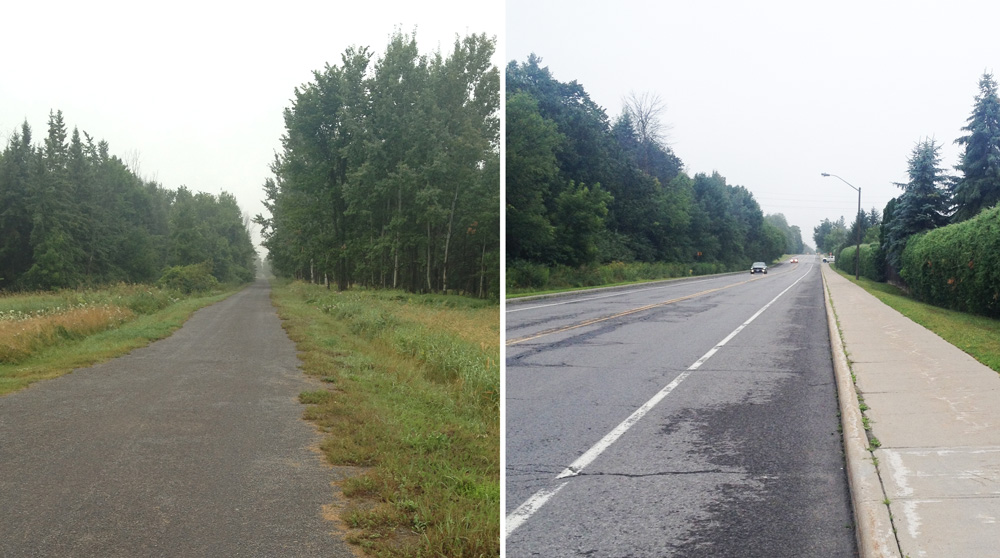
Packed stone dust Trans-Can Trail....& paved shoulder along Abbott Street through Stittsville
Packed stone dust Trans-Can Trail….& paved shoulder along Abbott Street through Stittsville

Stittsville went through a growth period in the 1870’s when the railway line connecting Ottawa to Carleton Place was introduced. There are a few surviving examples of buildings from that period near the intersection of Main and Abbott Street where the train station was located, including this fixer upper sandwiched between the Trans-Canada Trail and Abbott St.
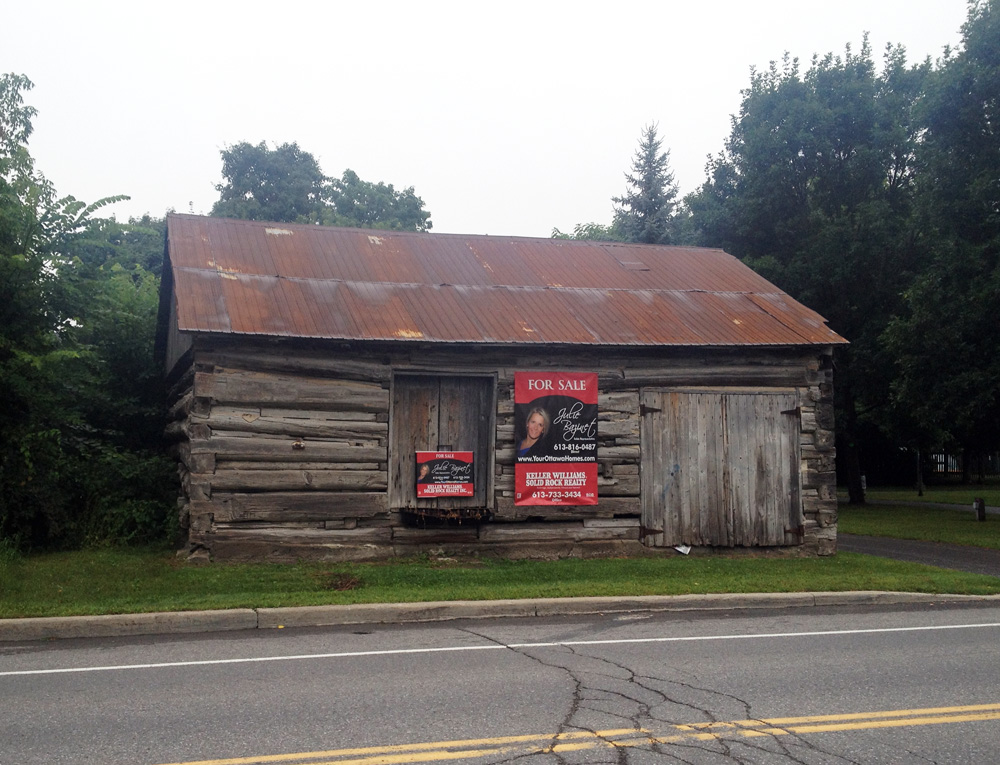
Old house in Stittsville

The rail-to-trail section of the path ends on the edge of Carleton Place. From there I headed south-east along a path that runs parallel to McNeely Ave to where it crosses Highway 7. At the end of McNeely there is a wonderful network of short trails called the Beckwith Trail, that meanders through a varied mix of wooded area and old farmland. I followed the McGregor Branch and the Shady Branch to get to 9th Line road.

Sections of the Beckwith Trail

I then headed southwest along 9th Line, a two lane road where I encountered minimal traffic. Saw some beautiful big old brick farm houses. I also road through a thunderstorm. I passed this family of bovines just as the rain let up, staring at me as if to say, ‘What the heck are you doing way out here in this weather?!’

Befuddled bovines
Befuddled bovines

9th Line turned into Tennyson Road which I followed for a bit before turning on to Concession Road 7. It too was a nice quiet paved two laner through farm country. On the other side of the 511 it became a very smooth white stone dust road.

White stone dust surface along Concession Line 7

Road 7 morphed into McVeigh road, which I followed to where it ended at Doran Road. Now Doran Road was the trickiest stretch along this year’s ride to Blue Skies. It narrowed down to one lane with a loose stone gravel surfacing that went up and down through the woods for quite a ways.
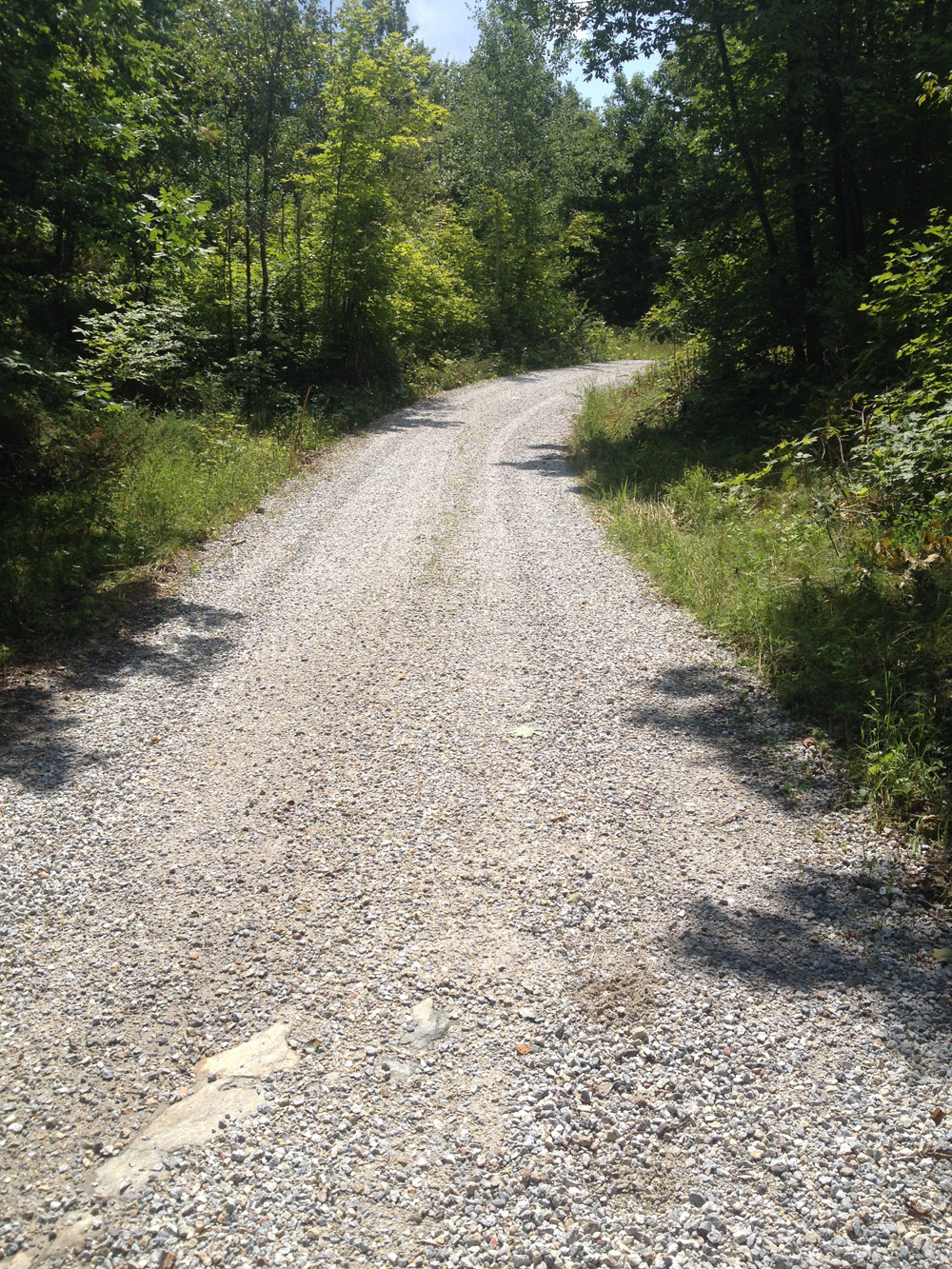
Loose gravel along Doran Road

The road surface became smoother once it turned on to Fagan Lake Road, and then paved once more on the other side of the Elphin-Maberly Road, along Zealand Road.

I am always amazed by the cedar post fences that weave their way through this whole area. The manner in which they are stacked and arranged in a zig-zag pattern allows for great flexibility in negotiating the rough rocky terrain. Here’s an example, perched up on the edge of a stone cut along Zealand Road.
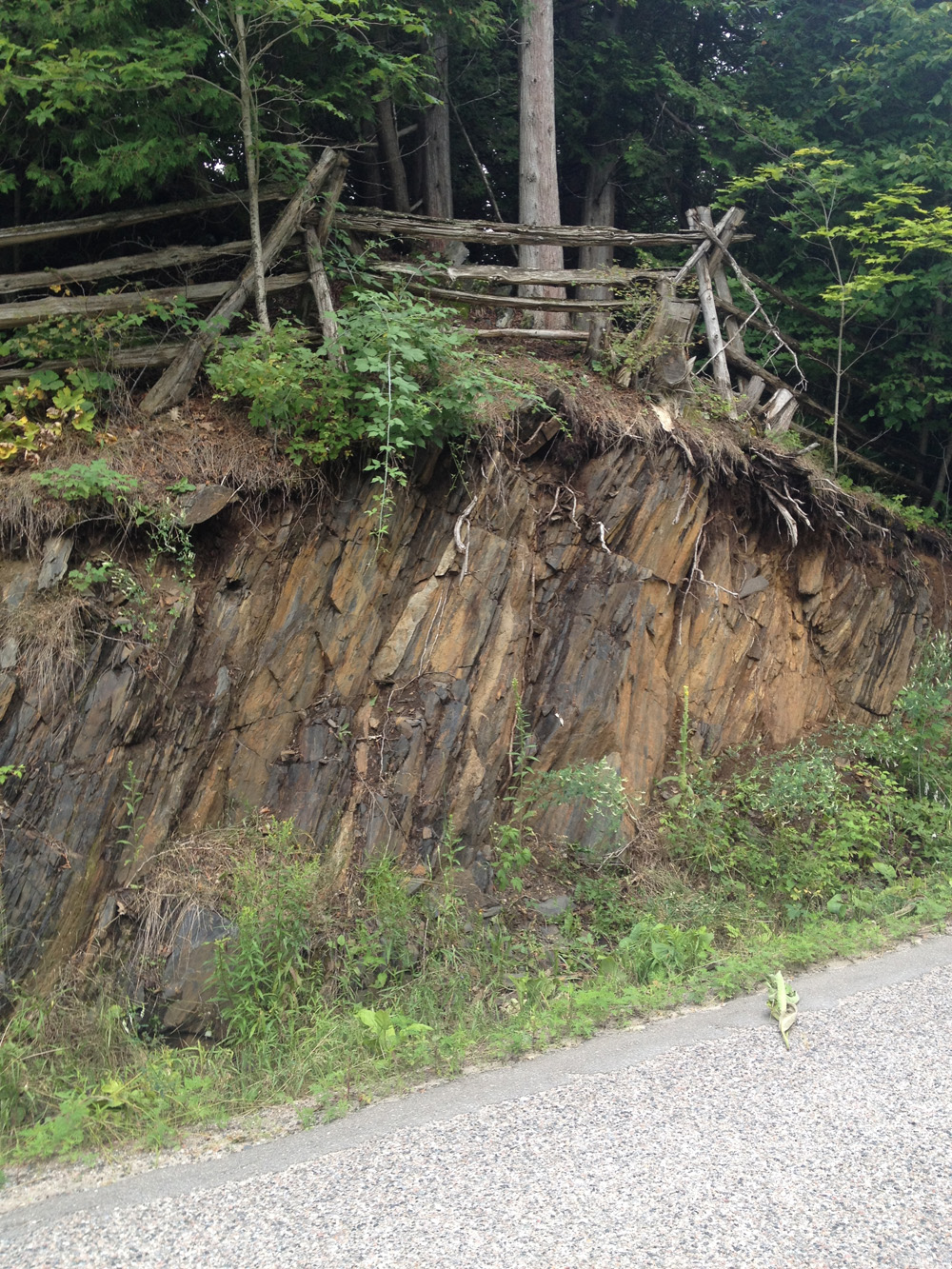
Cedar post fence
Cedar post fence

For the rest of the ride I followed Bell Line Road and the A&P trail to my friends cottage on Sharbot Lake, and then up to the festival site the following morning, as described at the tail end of last year’s post.

Et voila – ’twas another wonderful Blue Skies festival full of music galore!

Early morning mist rising on a farmers field near Clarendon

Biking over the Strandherd Bridge!

The long awaited opening of the Strandherd Bridge has happened. (Update Nov 2014 – now officially renamed the Vimy Memorial Bridge) Early Saturday morning I took the opportunity to bike over and test it out!

The route I followed to get to the bridge was the same as the one described in this post, as far as Leikin Drive. Mid way along Leikin I turned east and worked my way along paths and residential streets to get to the Chapman Mills Conservation Area which lies just north of the bridge. There’s a pedestrian boardwalk that meanders through the Conservation Area along the edge of the river, with lookouts and interpretive panels that describe the area’s natural environment.

Boardwalk through Conservation Area
Boardwalk through Chapman Mills Conservation Area

I walked my bike along the boardwalk to the southern edge of the Conservation Area where the path opens up onto this impressive side view of the bridge.

Side view
Side view

The path circles under the bridge, which affords some great views of it’s ribbed underbelly and massive footings.

Strandherd underbelly

Crossing under the bridge
It’s all under the bridge

This path leads up to the sidewalk along Strandherd Drive which runs alongside the bike lane over the bridge. I decided to video the momentous occasion, so without further ado, here is the Ottawa Velo Outaouais Peddle Powered Crossing of the new Strandherd Bridge!

Et voila!

Once on the other side of the river I cut through a residential area along paths and roads, rode along Spratt then Limebank to Leitrim Road, then along High Road beside the airport. From here on in I followed the same route described in this post.

n.b. Prince of Wales Drive is a busy street which I don’t recommend biking along at anytime other than early mornings on weekends, as described in this post. Hopefully this will be improved upon as soon as possible, because Manotick could be a great bike tourism draw if there was a safer way to get there from downtown along the west shore of the Rideau River.

Architects on Bikes Checking Out Buildings: Episode 2 – Sarah Gelbard

For the second instalment of Architects on Bikes Checking Out Buildings I asked Sarah Gelbard to recommend buildings she admires within our region, and she accepted! Sarah is a graduate of architecture at Carleton, and is heading off to McGill to do her doctorate on Urban Planning in the Fall. She’s very active within the local design community, as evident in her YOWLAB initiative. She’s also one of this year’s organizers of Architecture Week AND she loves to cycle! My architect-sister-Sue had so much fun on our first instalment of Architects on Bikes Checking Out Buildings, she jumped at the occasion to come along for the ride.

Sarah’s first choice was The Sister’s of Notre Dame campus off Heron Road, while her second choice was The Old City Hall on Sussex Drive. We met up at Art Is In Bakery in City Centre early Saturday morning and headed off. Here’s the route we followed.

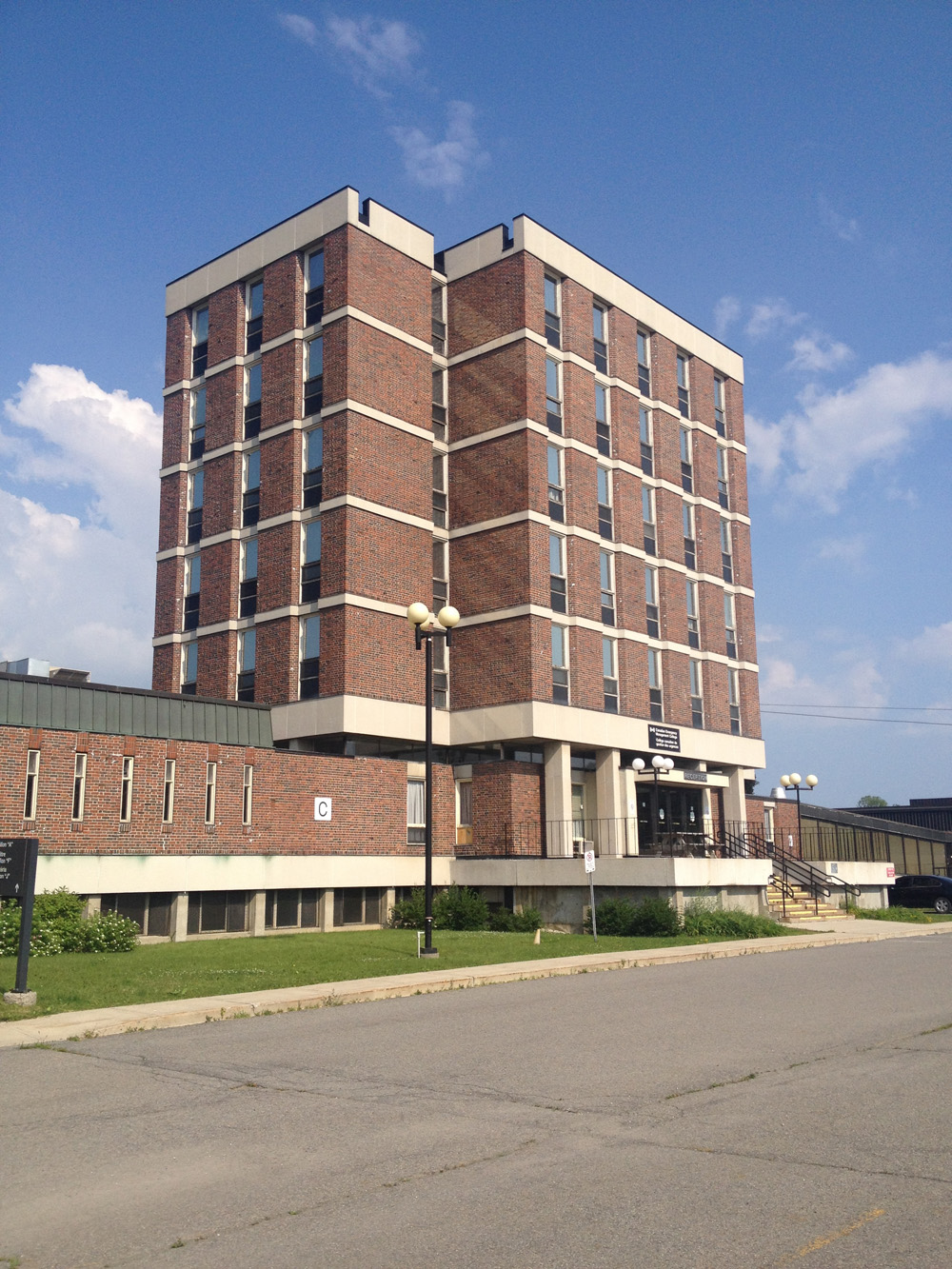
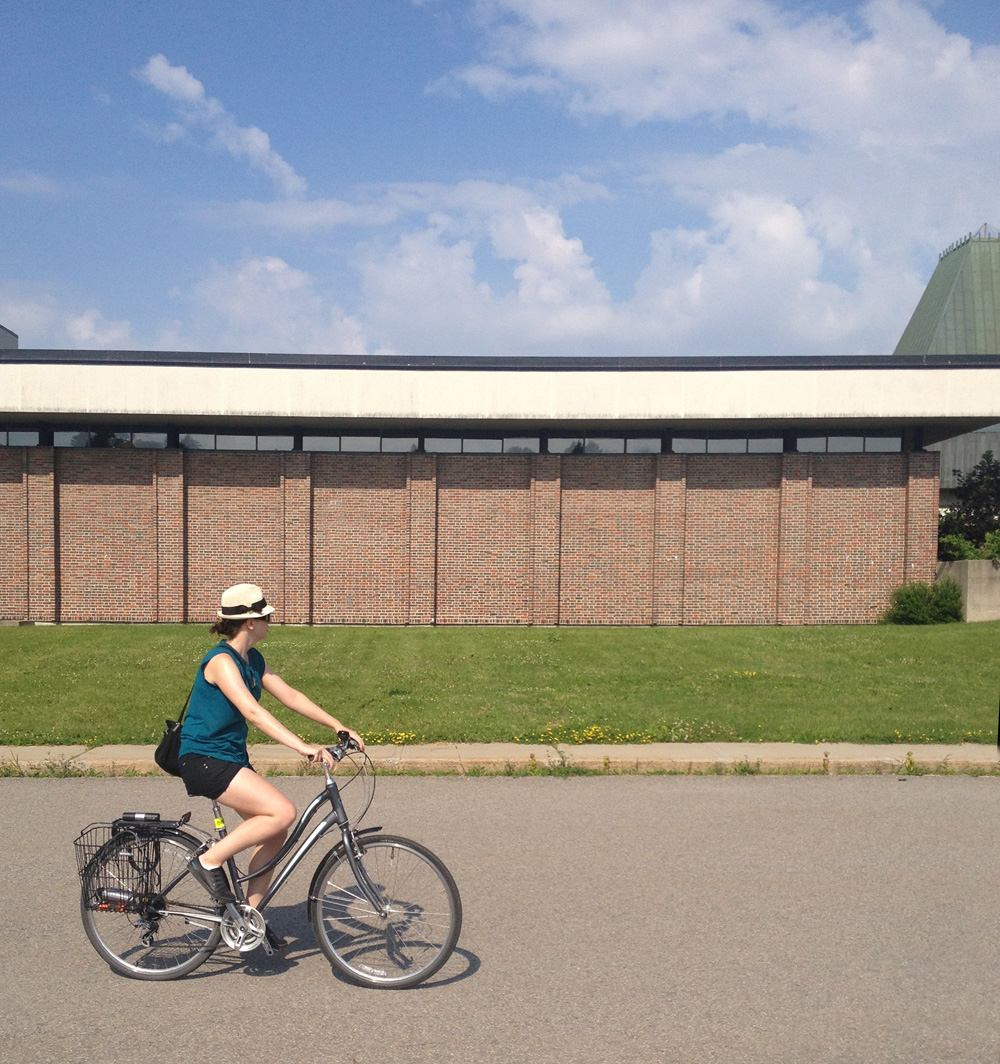
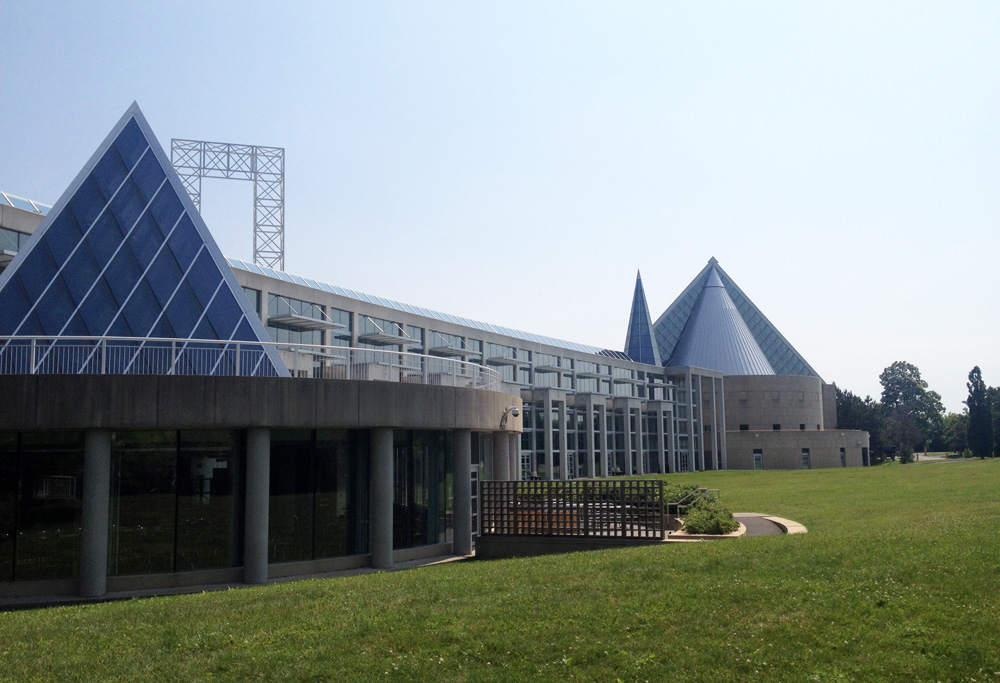
We wove our way south-east along bike paths and quiet streets until we reached the Sister’s of Notre Dame campus. This series of buildings were designed by Tim Murray of Murray and Murray Associates, and completed in 1965 for the Sisters of the Congregation of Notre-Dame. The Sisters operated it as an educational facility up until the 1970’s, at which time it was purchased by Canadian Government and renamed the Federal Study Centre. We were able to meander our way through the campus and admire the various buildings.

View across campus, bell tower to the left (photo by Sarah Gelbard)
View across campus, bell tower to the left (photo by Sarah)
Pavilion K
Pavilion K
Pavilion A
Pavilion A
Sarah riding past Pavilion D
Brick screen (photo by Sarah)
Layered surfaces & brick screen (photo by Sarah)

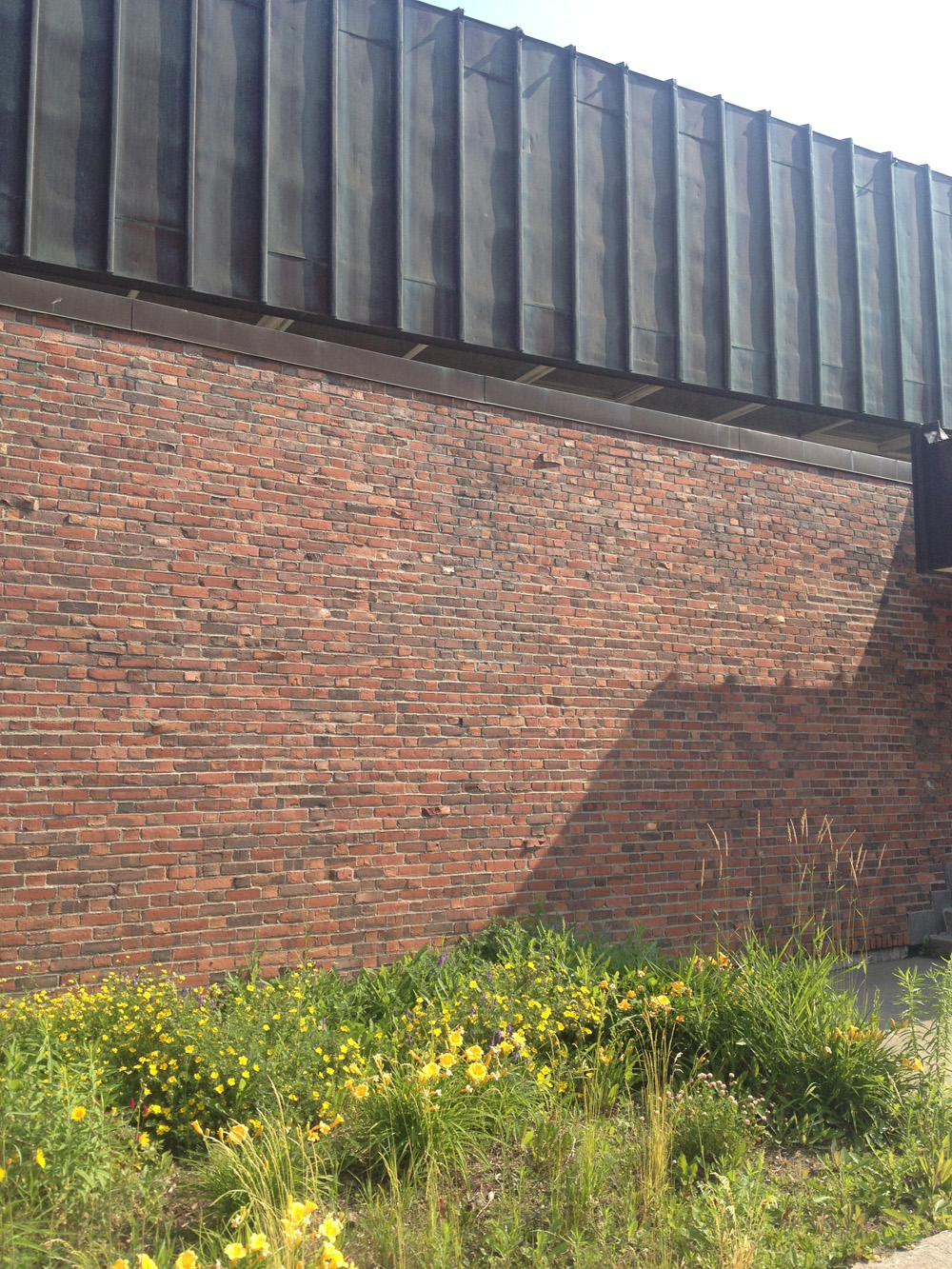
The brick work was interesting. In contrast to smooth glazed finishes popular in the ’60’s when these buildings were constructed, these bricks were roughly poured resulting in wall surfaces of richly varied textures.

Brick wall
Brick wall

We then worked our way over to Pleasant Park Road, and biked north to the Rideau River Eastern Pathway, which we followed down river all the way to our second destination: The Old City Hall on Sussex Drive. We approached the site from the back, via the Minto Bridge. The arch to the right in the photo below was designed by Moshe Safdie and added to the site along with a number of other additions when the original building was expanded upon in 1992-93.

Minto Bridges & Old City Hall Arch
Minto Bridges & Old City Hall Arch (photo by Sarah)

To get to the front of the building on Sussex we rode along the contour of these additions on the northern perimeter of the building, also introduced by Safdie, that bulge out into the Rideau River. I love how they appear to float on the river’s surface.

North side of Old City Hall

Sarah mentioned being particularly fond of the original building,designed by John Bland of the office of Rother, Bland and Trudeau, 1955-58, as seen in this shot she took of the front facade. She also mentioned a great Urbsite Post that includes original photos of the original building designed in the International Style in 1958, which you can check out by clicking here.

Front of the original Old City Hall (photo by Sarah)

We then rode along a path on the south side of the building. There are many wonderful nooks and architectural details to be discovered throughout this site – definitely worth a visit.

South Side of Old City Hall

Architectural exploration complete, we rode back across town for well a deserved break at Raw Sugar Cafe. UPDATE 2017: Hélas, Raw Sugar closed down a couple of years ago.

Architects on Bikes Checking out Buildings: Episode 1 – Susan Smith

Jerry Seinfeld has a popular online series called Comedians in Cars Getting Coffee whereby he invites other famous comedians to ride around town (mostly L.A.) in a fancy automobile très à propos for his guest. Then they stop and have coffee. While this region does have it’s fair share of fine comedians, we also have a great collection of architects with an appreciation for various buildings within our metropolis, so I came up with this mini series called Architects on Bikes Checking out Buildings. I will be asking various members of the profession to choose three edifices within the region that they admire, then I’ll plot a safe bike route to each one and go check them out.

My first guest is Susan Smith Architect, who designed our third floor studio addition. Not only is she a fine architect, she has also spent her entire career in Ottawa sans automobile(!), using her bike and public transportation since graduating from Carleton University School of Architecture many moons ago. She’s also a stellar older sister. We headed off early Saturday morning and checked out her picks.

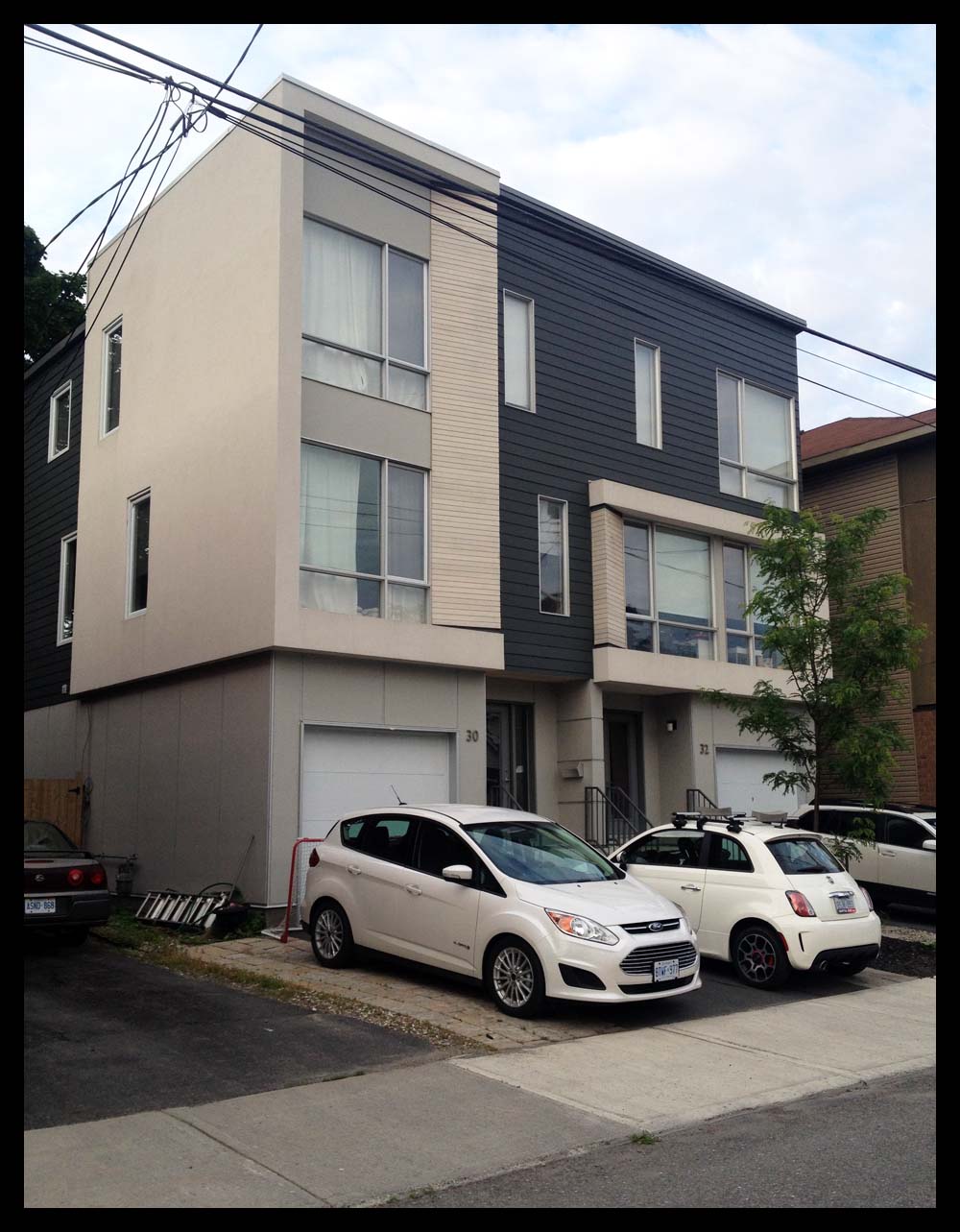
First stop: 30 Sims Avenue in Hintonburg, where sits this new house. Sue noticed it while biking to her office nearby on Gladstone. She appreciates it’s elegant simplicity and detailing.

New house on Sims Ave.

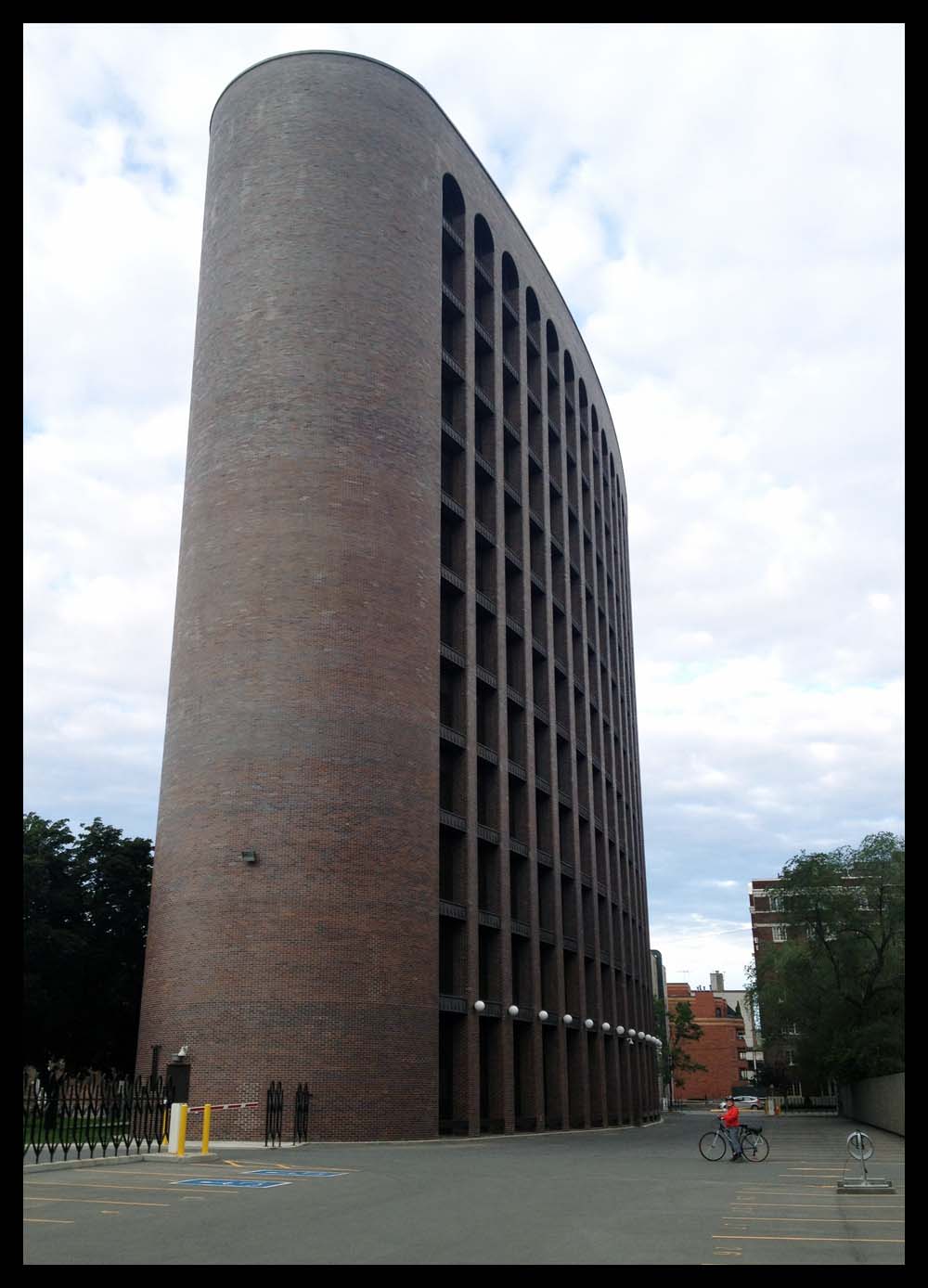
After admiring this little gem of a dwelling, we bicycled over to Dows Lake and along the Rideau Canal Western Pathway, then cut across the Golden Triangle to get to Sue’s second choice: The elliptical Public Service Alliance of Canada Building, completed in 1968 and designed by architect Paul Schoeler. In 2000 the Royal Architectural Institute chose it as one of the top 500 buildings built in Canada over the last millennium. The curved forms of the outer walls are so seemingly perfect that we double checked with a folded piece of paper to make sure the brown bricks were actually flat – and they are.

Sue 2

Public Service Alliance of Canada Building

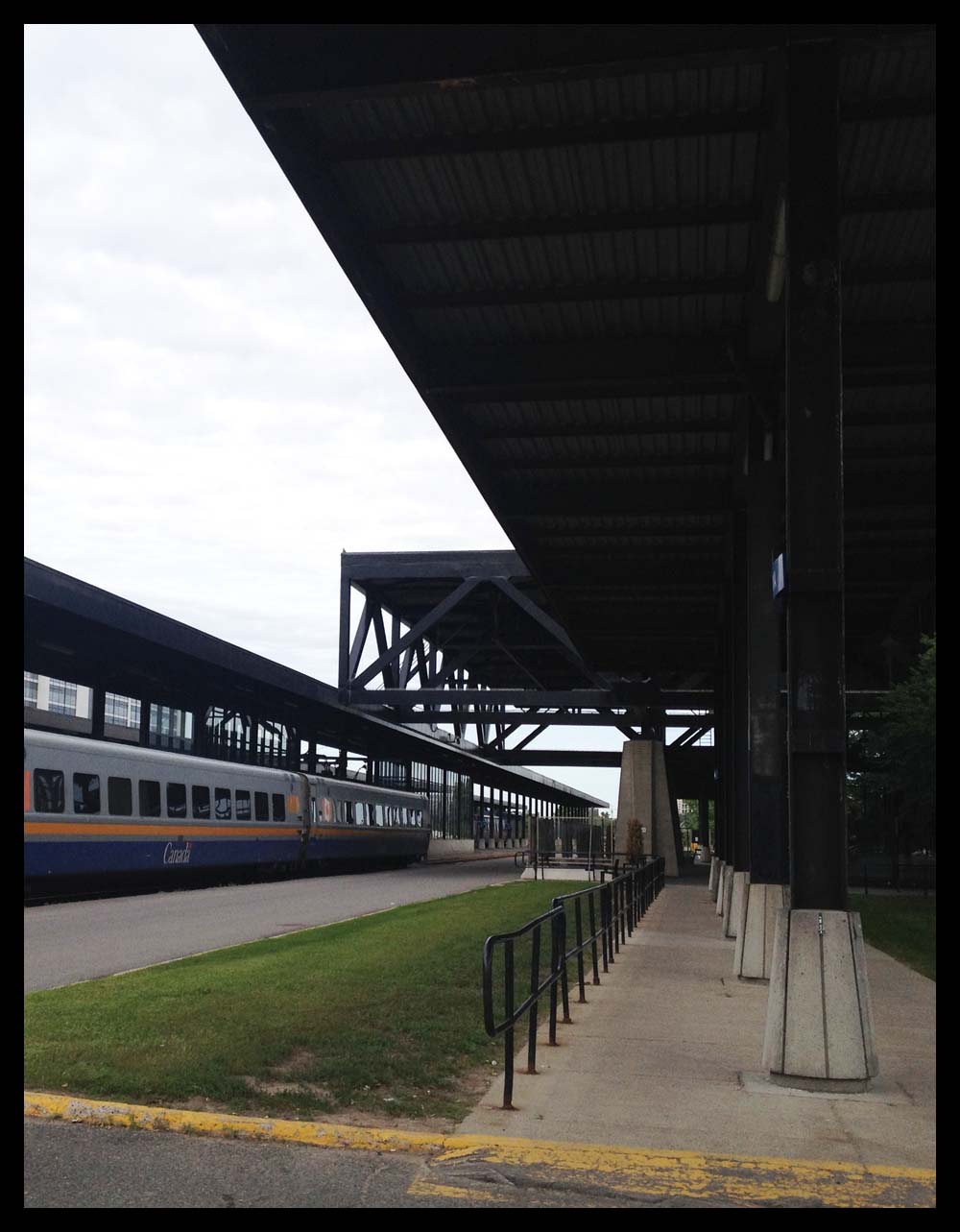
We then rode through Sandy Hill and crossed the Rideau River over the old train bridge before heading towards our final building, the Ottawa Train Station. Designed by John P Parkin & Associates in 1966, it too was chosen by the Royal Architectural Institute as one of the top 500 buildings built in Canada over the last millennium. Sue likes how the dominanting truss roof structure extends right through the building, allowing for a great open space inside, as well as an extended covering at the entrance and at the opposite end between the terminal and the trains.

Sue 3

Ottawa Train Station

So there you go – a fine first architect inspired bike adventure!

Bike commute from Kenson Park to Overbrook

A number of studies have shown that a large proportion of commuters want to bike to work but hesitate to do so for lack of a safe route to follow. I have an open offer to scope out a safe bike route to anyone within the national capital region. All I need is two cross streets – one to start from and a final destination. Halden took me up on my offer, starting from the intersection of Woodroffe and Iris at the edge of the Kenson Park neighbourhood in the west end, to the intersection of Vanier Parkway and Coventry Road in the Overbrook neighbourhood. He’s already a regular bike commuter but thought it would be interesting to see the route I scope out compared to his. Me too! Here’s what I came up with.

The Blue line is the one I recommend- a very picturesque route almost entirely along bike paths. The red line is a short cut that shaves 15 minutes off but traverses the not-so-safe Bank Street Bridge over the Rideau River. More about that later. The green line shows the route Halden takes. After crossing the locks at Carleton he rides along the canal and cuts over to the Rideau River along Graham Avenue, Lees Avenue, then through the Ottawa U Lees campus. Lees is a pretty busy road so one’s comfort level with riding in traffic would be an important factor in choosing this route.

And away we go! First I headed east on Iris.

Nice quiet street. Easy on the Iris.

The Experimental Farm Pathway crosses Iris. I got on the path and continued eastwardly.

Experimental Farm Pathway at Iris

This interesting building is located just south of where the path crosses Maitland. I used to think it was some sort of power station associated with the hydro towers that ran past it. Well it is a power station but of a very different sort. It’s the Trinity United Church designed by the late Ottawa architect James Strutt.

Trinity Church
Trinity Church

The path winds up and over Carlington Heights, then down through the farm.

Branches budding on the edge of the farm.

Things get a little screwy where the path meets Fisher. To continue along the path on the other side requires riding south along Fisher for a hundred yards or so and crossing at the lights, like so.

Crossing Fisher Ave
Crossing Fisher Ave

The path becomes Cow Lane, and then turns right on Morningside Lane.

Corner of Cow and Morningside Lanes

Midway down Morningside Lane there is a small road on your left that takes you to an intersection with traffic lights across Prince of Wales Drive. The path continues along the road on the other side of Prince of Wales, and ends by the canal locks across from Carleton U. I pushed my bikes over the top set of locks.

Up and over the locks

On the other side of the canal I followed the path to the right (blue arrow). The red arrow is the way you’d go for the alternative route on the above map across the Carleton campus and Bronson, through Ottawa South and across the dreaded Bank St Bridge. The green arrow points is the direction Halden takes.

Route options on the south side of the canal
Biking up the canal (the blue arrow direction)

The path pops out at Mooney’s Bay and crosses over the river.

Bridge over troubled waters

On the other side of the bridge the path dipsy-do’s back under the road.

Follow the painted yellow line
Path going back under Hogs Back Road

The scenery is quite spectacular all the way down along the path through Vincent Massey Park.

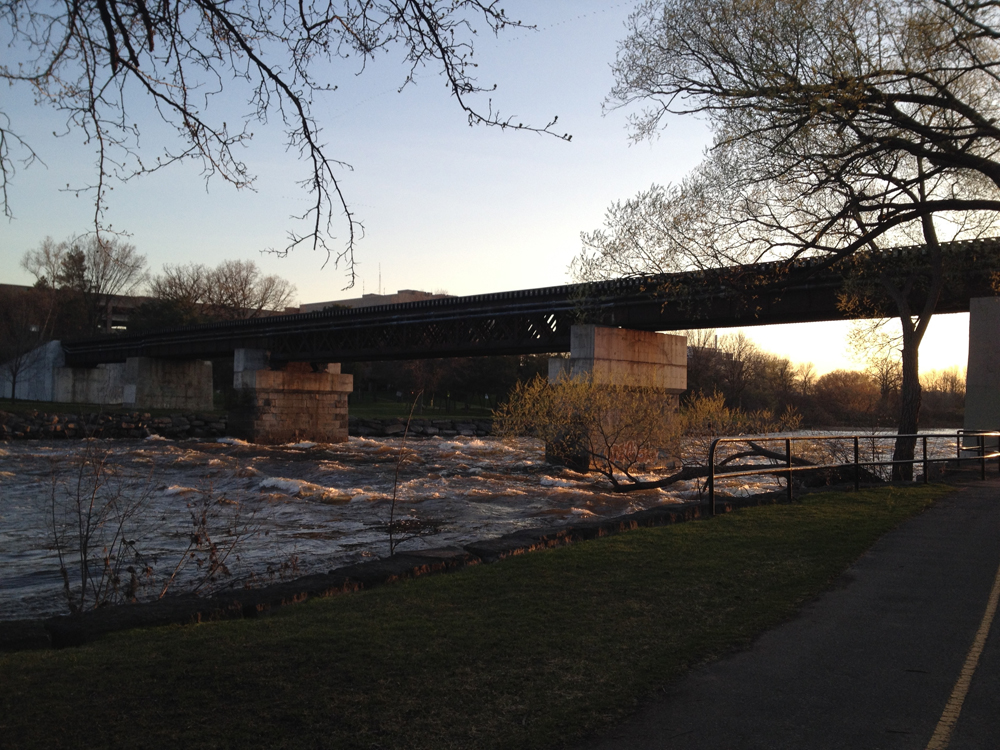
Rail bridge the O-Train takes to get across the river

This path is called the Rideau River Eastern Pathway which I followed almost entirely to our final destination. It is a very pleasant path however there is one dangerous spot, and that’s the intersection of Bank St and the pathway/Riverside Drive. Riverside Drive is a four lane speedway. Cars crossing the Bank St Bridge heading south often try to hurriedly turn right onto Riverside on the red without looking to their right, regardless of the sign. As such they threaten cyclists and pedestrians on the path as they nervously try to rush around the corner, for example this car at the intersection this Sunday that came to a screeching halt well over the stop line.

Screech
Screech

The ghost bike at this same corner is a commemoration to Meg Dussault who was struck and killed by a cement truck in July 2013. UPDATE: May 2016The ghost bike has been removed by the city.

Ghost bike
Ghost bike

On the secondary route option suggested by the red line, crossing the bridge is what is proposed. There are sharrows painted on the road, suggesting cyclists share the road. This Muddy Bike post (click here) shows that this is an ineffective option, and I believe a dangerous one as it suggests this is a safe area for cyclists when it is quite the opposite. So, when my son and I biked to Billings Bridge Museum on Sunday we walked our bike on the sidewalk.

So, what to do once you get to the corner? I don’t move until I am sure the driver stopped at the corner sees me and seems aware that I have the right of way to cross.

OK, enough on the dangerous bridge, time to continue down the pathway.

Rideau River Eastern Pathway west of Bank St

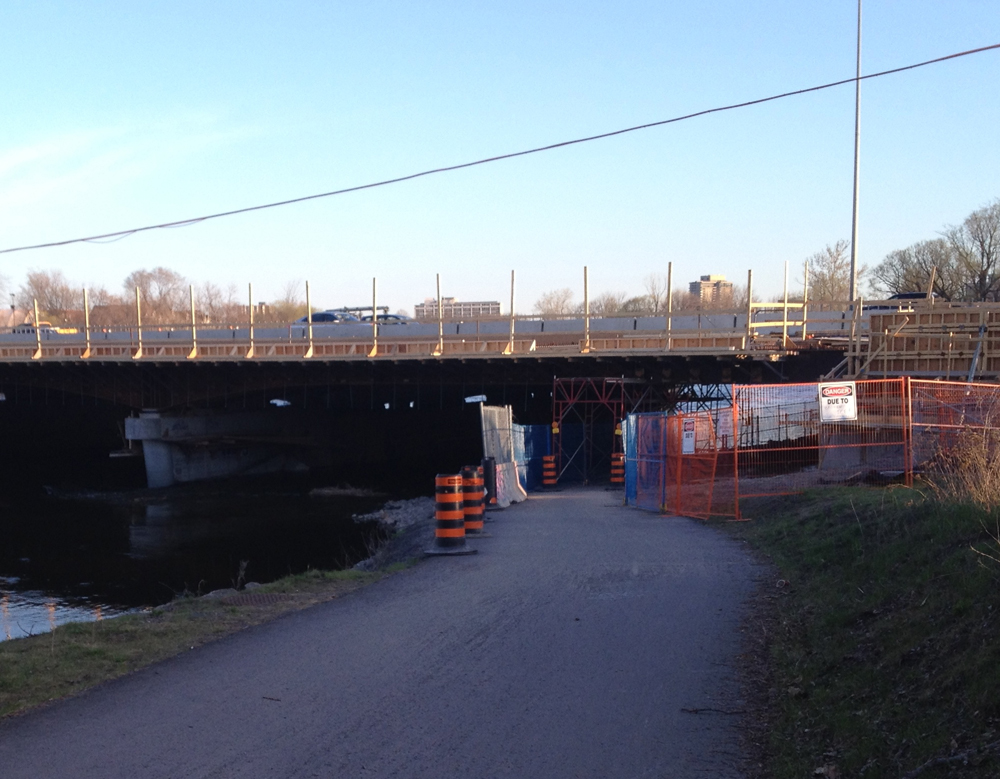
They’ve re-opened the path under the Queensway where they are doing construction, but it’s through scaffolding and only wide enough for one bike so I went pretty slow in case a rider was coming the other way, giving me time to react.

Path under Queensway

Getting close to our destination, I turned off the path at the sign pointing to River Road.

Exit
Exit

I turned right off River Road onto Presland, and was pleased as punch to discover a pedestrian cross signal to get across the Vanier Parkway.

Crosswalk signal at Presland and Vanier Parkway

I continued along Presland for a jot until I turned right onto Forestlane. Part way down Forestlane there’s a small opening that allows you to pop out almost right at our final destination.

Opening in the wall
Opening in the wall

And There it is – the intersection of Vanier Parkway and Coventry Road!

Van&Convent

Touring the Historic Billings Bridge Community

I was scanning through the great selection of tours included in this year’s Jane’s Walk program when one in particular caught my eye: A bike tour of the Billings Estate National Historic Site. I decided to check it out. The wet weather forecast must have discouraged others from attending, which resulted in a small entourage of four including our guide Britta, who shared an enthusiasm and passion for local history that made the continuous rainfall barely noticeable. She is an employee at the museum and helped put this bike tour together, which will be given again throughout the summer. Call the museum to confirm if you are interested. You may even be able to request a group tour.

Billings Estate Museum is bike keen! Not only did they organize this outing, check out this wooden bike in their collection. It was hand built by a 17 year old farm boy named James Henry Blair back in 1898.

Oh wow....
Oh wow….

The story of the Billings Bridge Community follows the gradual dividing up of the homestead originally settled by Braddish Billings and his wife Larima way back in 1813, thirteen years before the establishment of Bytown. The tour visits a number of locations and houses spread throughout the community, starting from the Billings House which is presently a museum. There isn’t a self guided program specifically for this tour, but there is a booklet sold at the museum for a few dollars titled Historic Homes and Buildings of the Billings Bridge Community that share a number of the stops, which I’ve identified on the following tour map. There were a number of other interpretive stops along the way not identified on the map.

Billings Estate Museum
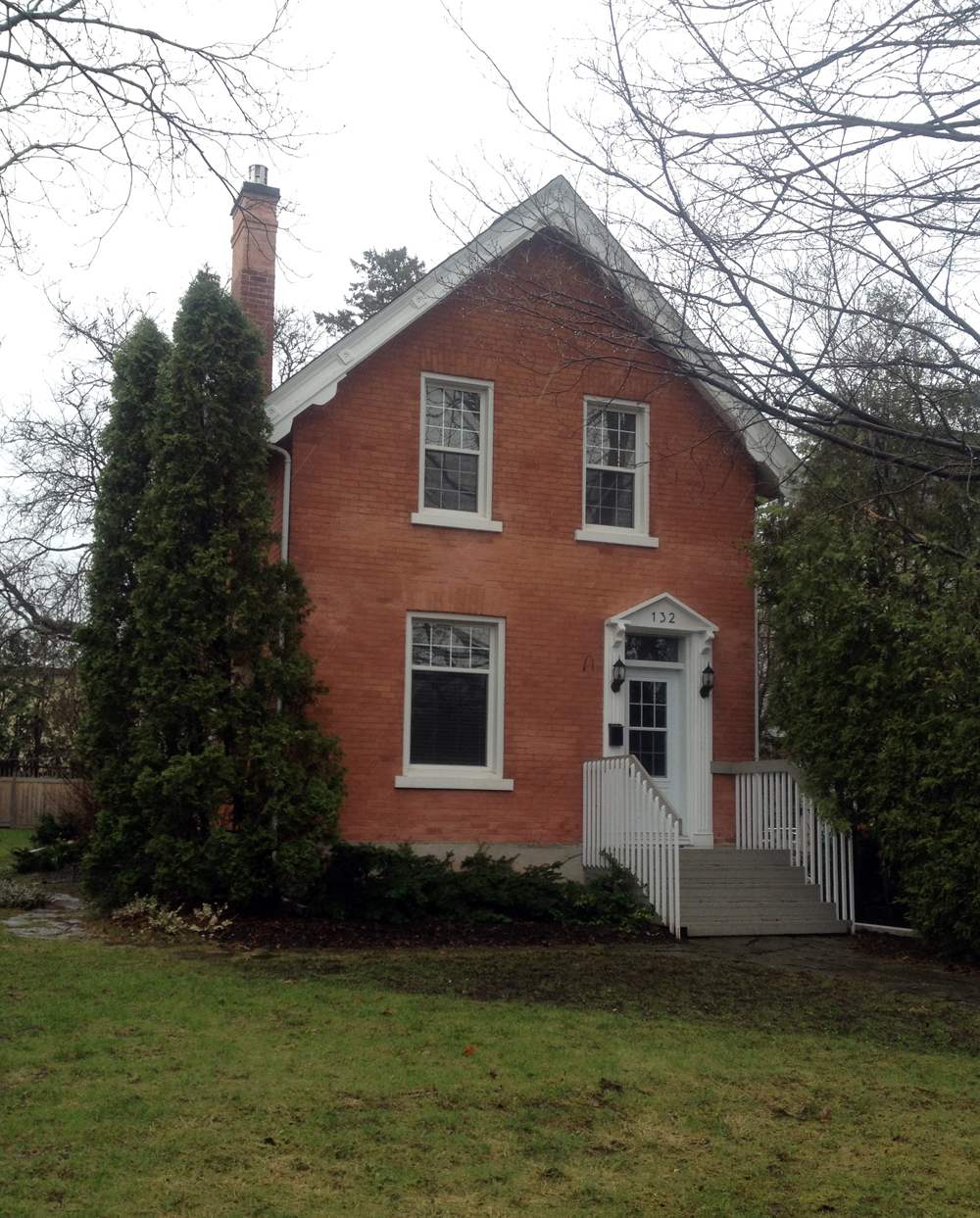
The Morrow House - 132 Billings Ave
The Morrow House
The Belot House and  Britta the tour guide
The Belot House, and Britta our tour guide
The Foreman's House circa 1823. Protected as they build on adjacent lot.
The Foreman’s House circa 1823. Protected as they build on adjacent lot.
The Benson House circa 1920
The McCann House
The McCann House – 2241 Old Lilac Lane

30 Days of Biking – The End

On the last day of this year’s 30 Days of Biking I decided to take my winter wheeler in for a well deserved tune up. Upon my arrival I wasn’t surprised to learn they had a back log. At this time of year everyone is anxious to shake the dust off their summer steeds and ride! So I made an appointment and pedalled back home.

I’m very pleased I took the 30 Days of Biking pledge. It allowed me to focus on the importance of biking to accommodate short daily tasks as well as longer commuter routes. I probably won’t be blogging as often as I have been over the last month, but I do intend on continuing to find a daily reason to go for a ride.

To get to the bike shop and back I followed my favourite Westboro-ly route, described in detail in this post. Here are a few additional hi-lites to add to its appeal.

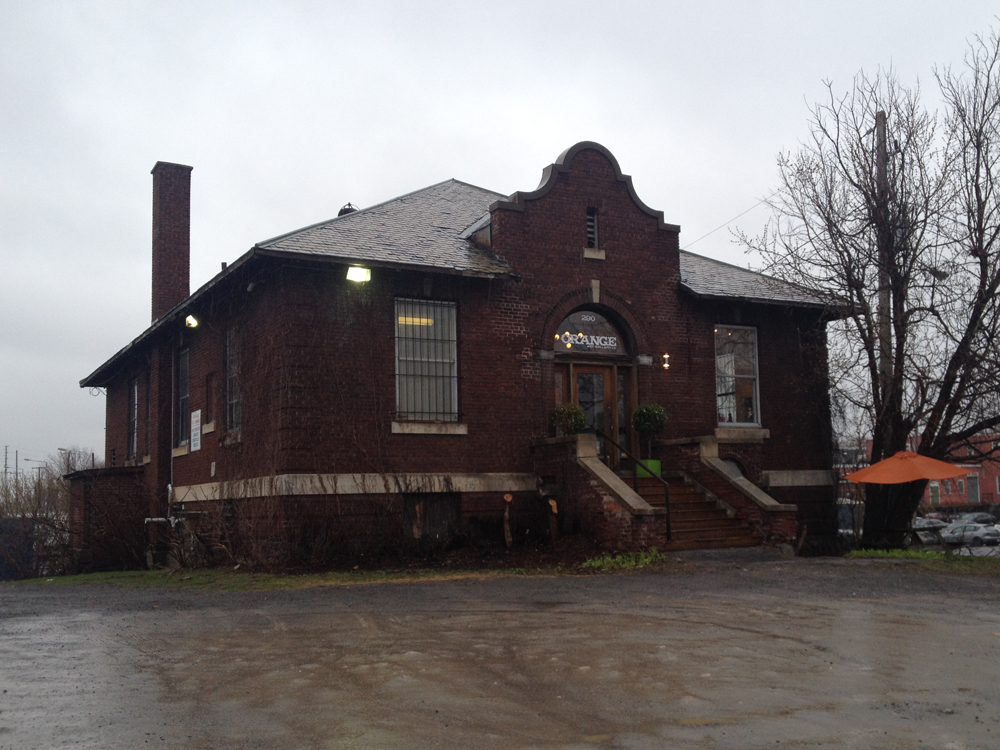
Orange Art Gallery has recently taken up residence in this great little old building that sits on the edge of the City Centre parking lot on the way to and from the O-Train path.

Little old building in City Centre

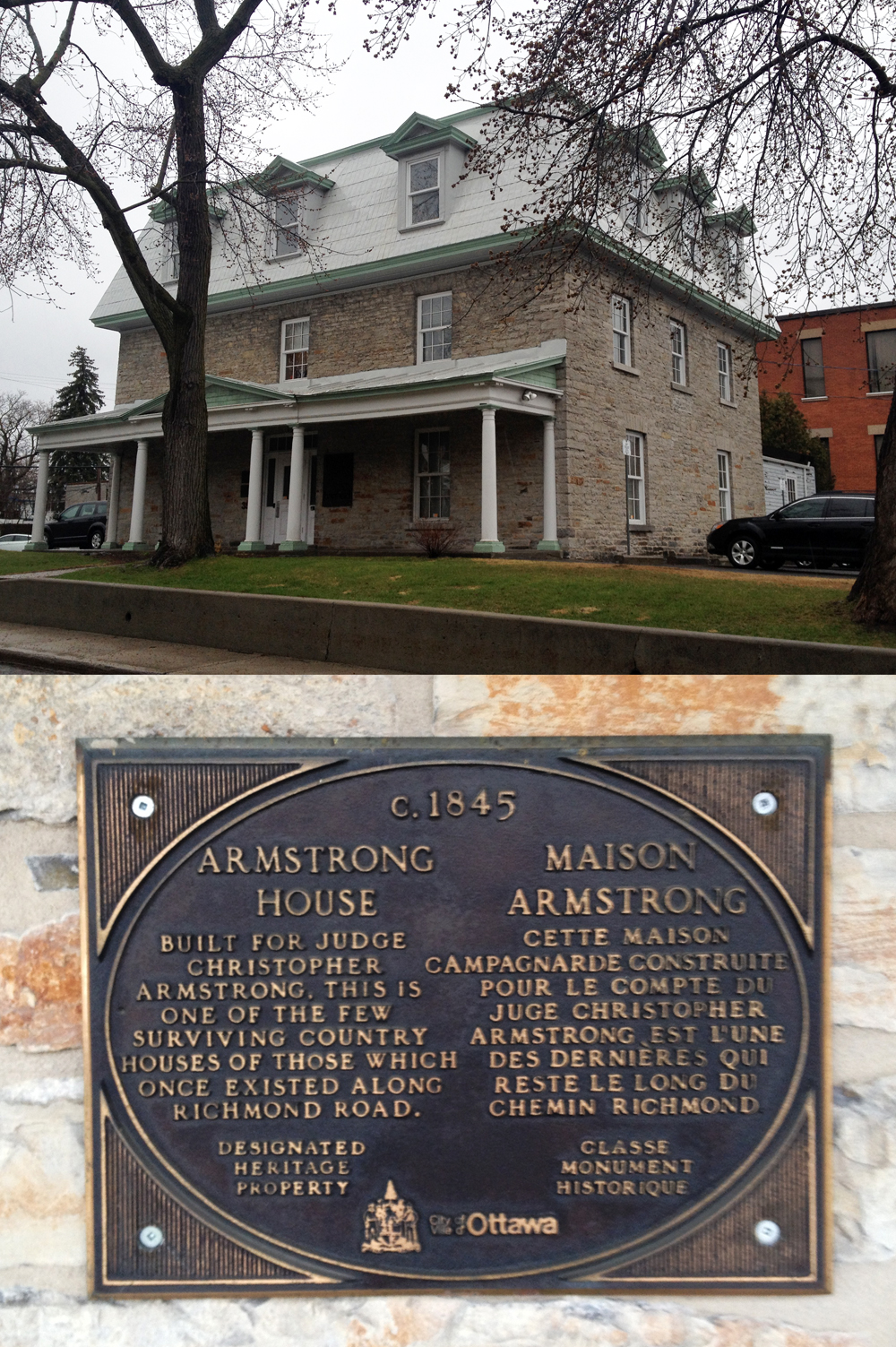
This well preserved heritage building also stands proud on Armstrong, one block north of Wellington.

Armstrong House
Armstrong House

Big rocks on front yards can be interesting, even more so with iron snails crawling verrrry slowwwwly across their surface, like this one along Armstrong closer to Parkdale.

Snail!
Snail!

So there you have it. ‘Twas a fine month of riding!

30 Days of Biking – Day 28 : Ride through Hintonburg to do some banking, then along the river home.

Today I biked to to the bank. My main branch is on Sparks St, but the Sparks St BIA is so rabidly anti-biking they not only forbid riding, they chop locks and confiscate bikes whenever it meets their fancy. Fortunately we live in the age of bank machines, so on day 28 of 30 Days of Biking I wove my way over to the one in Hintonburg. Transaction completed, I headed north to the Ottawa River and meandered along its shore towards home. Here’s how.

Detailed description of routes to the bank can be found on my Day 2 blog entry, a combination of which I followed today. To get back home I rode north along Hinchey towards the river. Hinchey dead ends but there’s an accessible opening onto NCC lands.

Path access at end of Hinchey

A bit further on there’s a fine view of the bridge onto Lemieux Island.

Bridge to Lemieux Island

There isn’t an official trail through this area, but the paths are well trodden and very bike-able. I took the one to the right which led to the intersection of Slidell St and the parkway.

So many paths to choose from....
So many paths to choose from….

From there I rolled onto the bike path and headed home.

30 Days of Biking – Day 26 : Riding to the Canadian Museum of Science and Technology

I needed to pick something up at the Museum of Science and Technology so I rode there, on Day 26 of 30 Days of Biking. Blue line on the map shows route I followed there. Red line is the one I took to get home.

One thing I like about riding at this time of year is the opportunity to notice details within the landscape less visible once the trees have sprouted leaves. Such as this pavilion, attached to the back of the slowly disappearing Sir John Carling Building presently being torn down. I hope it avoids the wrecking ball. You can take this narrow path up to take a closer look.

Up the path........ to see the pavilion
Up the path…….. to see the pavilion

I then biked through the Arboretum, crossed the locks across from Carleton U, and rode up the bike path towards Mooneys Bay.

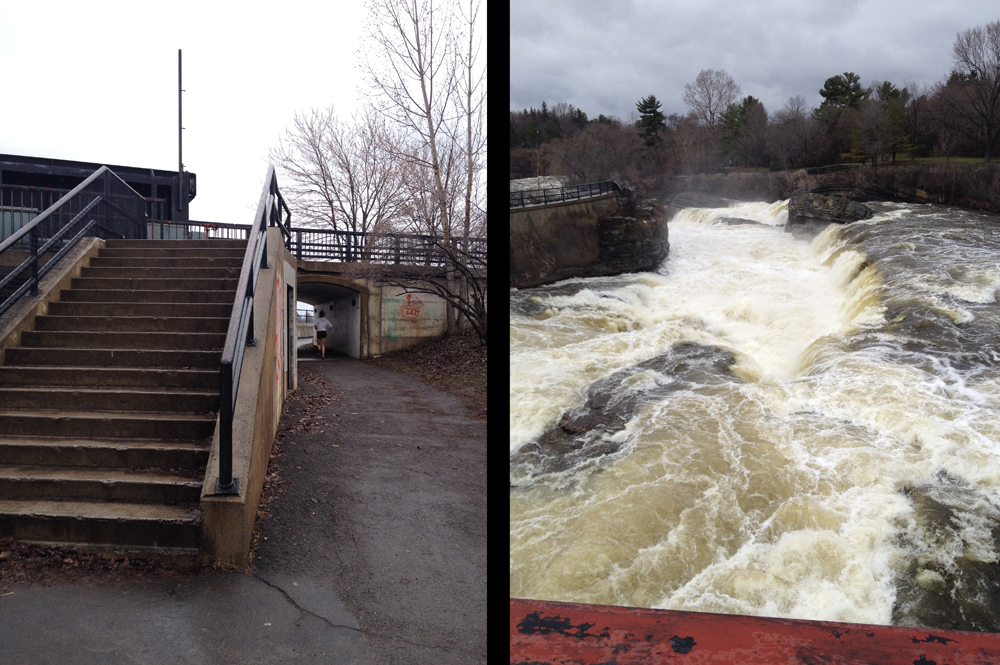
The path gets a little convoluted at Mooneys Bay. You can ride over the falls along the path on the west side of the street, but you won’t see the falls, which are pretty spectacular at this time of year. or you can cross back under the road and ride over the falls the east side, as I did and indicated on the above map, where you will catch great views of the falls. It means carrying your bike up a few steps.

Stairs to climb..... to view the falls
Stairs to climb….. to view the falls

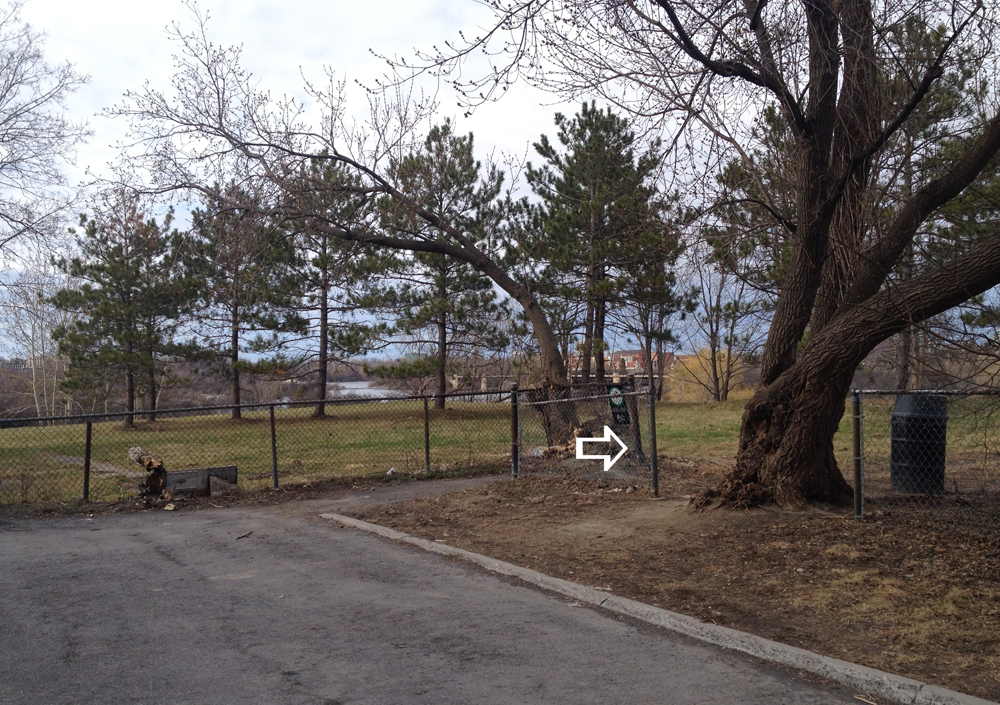
I rode down along the Rideau River Eastern Pathway (no more flooding) then turned up Pleasant Park Road, which around Pleasant Park Woods, isn’t so pleasant. This huge swath of trees has been cut down because of the Emerald Ash borer bug.

Sad Pleasant Park Woods

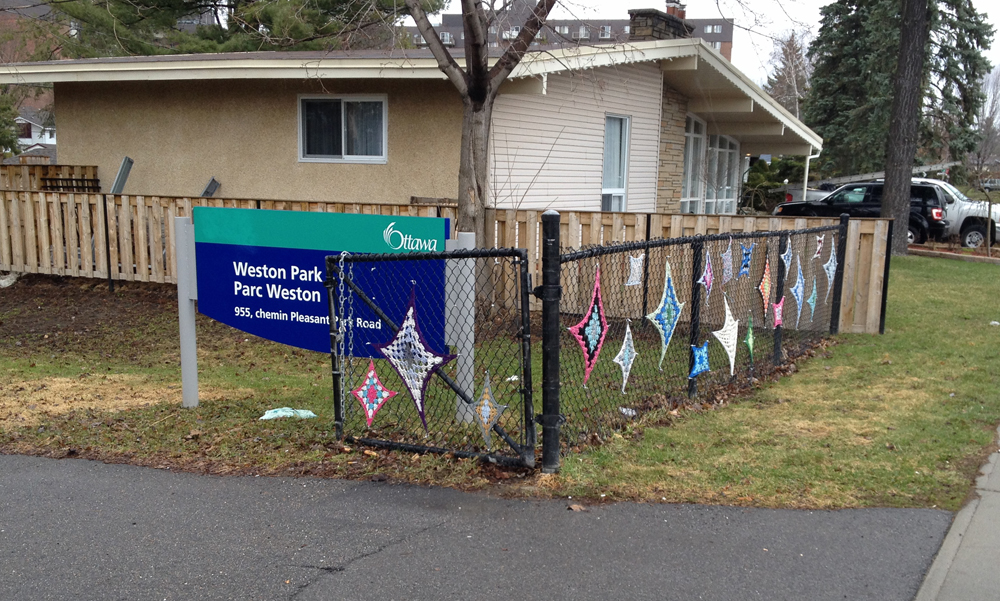
I took a short cut through Weston Park to Weston Drive. It’s the one with the colourful works of crochet stretched on the chain link fence.

South entrance to Weston Park

Weston Street is on the other side of Weston Park, which I followed to Othello St. I rode north along Othello then cut through the Elmvale Acres Shopping mall parking lot to the intersect at Smyth Road and St Laurent Boulevard.

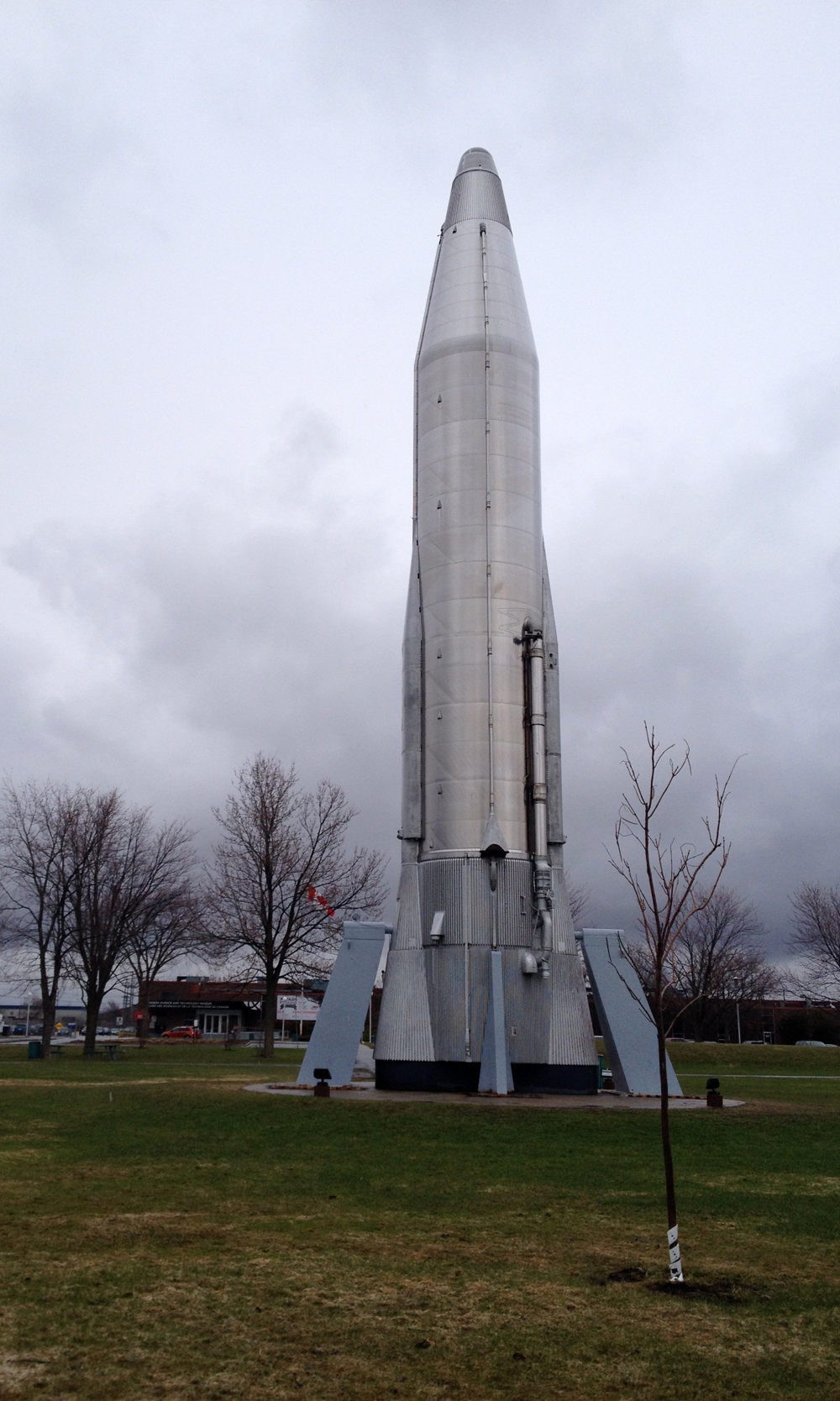
I then rode through the huge park in front of the museum, which brought me up close to a giant old locomotive and the big silver rocket.

Hello rocket!
Hello rocket!

Bike parking is located just to the north of the main entrance.

Museum is behind you.
Bike rack near museum entrance. Not that white dome

On my way home I turned off Pleasant Park road onto the bike path that goes past the allotment gardens and followed the same route described in this post.

Et voila – only 4 more days to go!

30 Days of Biking – Day 25 : Late night ride to Nepean Point and back

Day 25 was so crazy busy that I didn’t have a chance to hop on my bike, so to meet my 30 Days of Biking pledge I decided to go for a late night ride down to Nepean Point behind the National Gallery. It was great. I rode along the Ontario side of the river and back along the Quebec side. Here’s how.

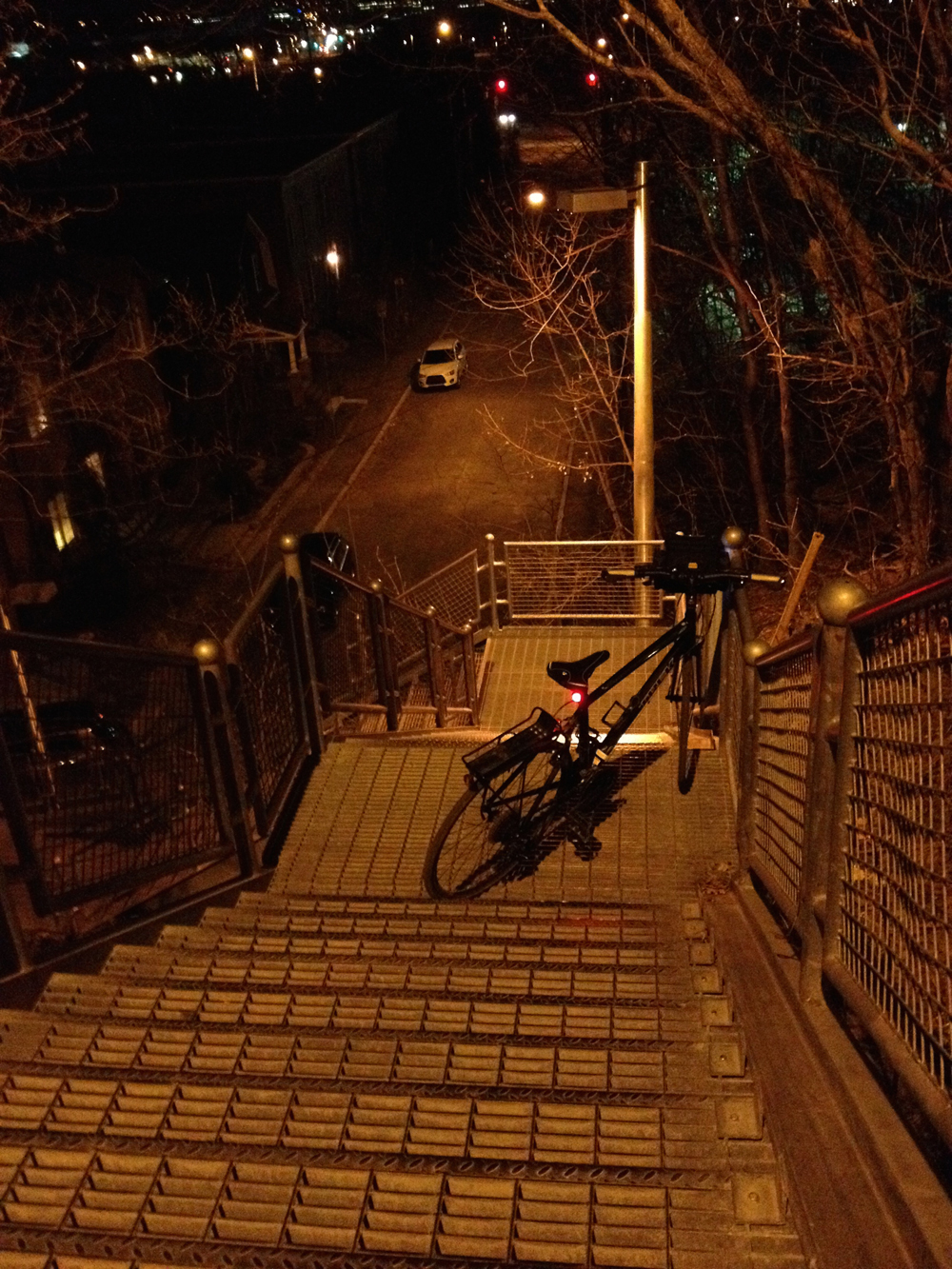
To get down to the Ottawa River Pathway from Chinatown I took the stairs at the end of Empress Avenue. Good lighting and bike ramp.

Empress Ave stairs down Nanny Goat Hill

On a late night ride through La Capitale Nationale one is reminded of how well we light our national edifices. Take, for example, the always impressive Library and Archives Canada, as seen from the Ottawa River Pathway.

National Archives at night

And of course there’s always fabulously lit Chateau Laurier, as seen from the Rideau Canal locks.

Chateau at night
Chateau at night

Maman, the spider sculpture by Louise Bourgeous, sits infront of The National Gallery, across the street from the elegantly lit Notre Dame Cathedral.

Maman et Notre Dame
Maman et Notre Dame

Off the path up to Nepean Point sits this Majestic sculpture, composed of lamp posts blown over by Hurricane Catrina in New Orleans.

Majestic at night
Majestic at night

Looking across the river from Nepean point you can see and hear the sound of the car wheels humming over the Alexandra Bridge’s metal surface.

Aleaxandra Bridge from Nepean Point

It’s a fantastic place to watch summer storms roll in along the Ottawa River, or to watch the Equinox sunrise.

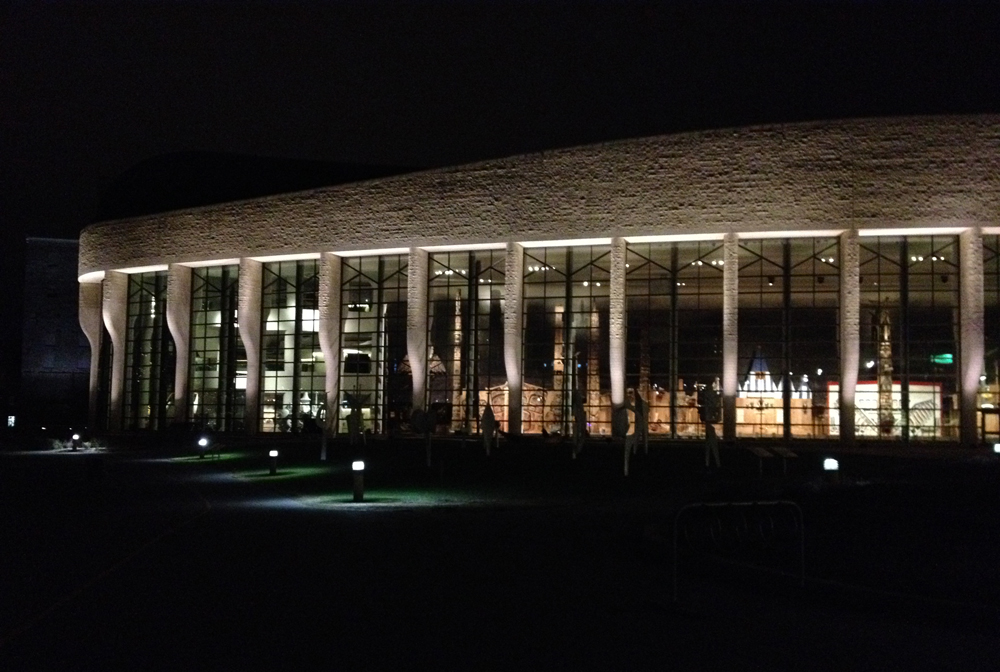
I crossed the river along the bike path and zig zagged down to the Voyageurs Pathway behind the Canadian Museum of History. It’s a great time of day to view the large impressive sculptures within the Grand Hall. Many of these works were meant to be viewed from a distance which is possible when looking through the windows from outside into the space at night.

CMH

View into the Grand Hall

I rode along the Voyageurs pathway, which was very serene, to the Portage Bridge where I crossed back into Ottawa as rider number 1044 for the day.

NCC counter

Et voila!