Ottawa Labour Day Ride: Visiting Sites Dedicated to Workers

Labour Day celebrates workers and the labour union movement across Canada on September 1st of each year. Here is a 5km bike ride that visits four commemorative installations dedicated to workers within the National Capital Region and beyond.

We begin our tour in Chinatown at the corner of Somerset Street and Empress Avenue where you will find the Chinese Canadian Railway Workers Memorial. This memorial pays tribute to the contribution and sacrifice of the 17 000 Chinese Canadian railway workers who helped build the Canadian Pacific Railway from 1880 to 1885.

Chinese Canadian Railway Workers Memorial

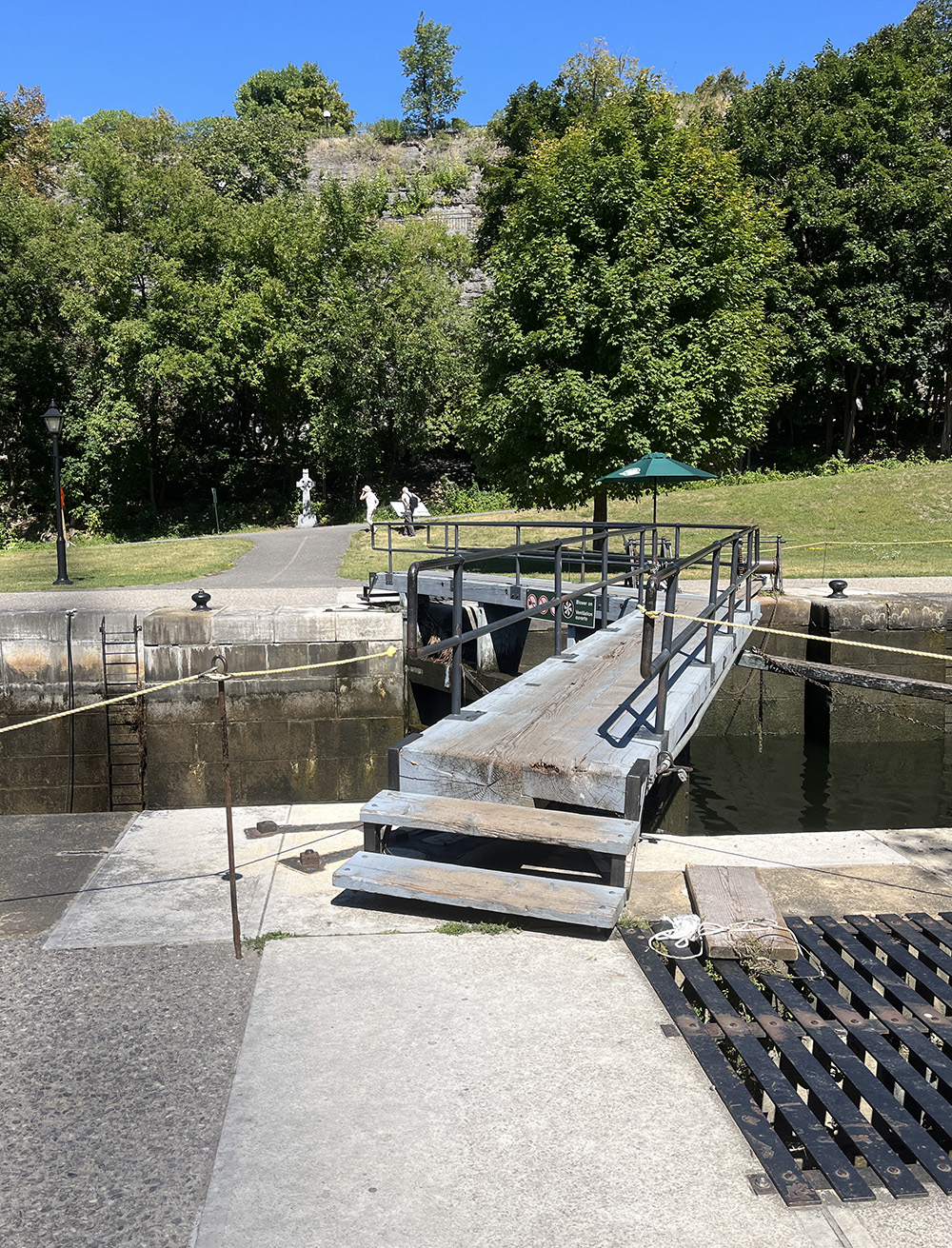
leaving the Chinese Canadian Railway Workers Memorial, ride north along quiet Empress Avenue, then east on Primrose Avenue, and then north along Cambridge Street North which turns right and becomes Laurier Avenue. Follow the bike line along Laurier Avenue all the way to City Hall. Just beyond City Hall, before you take the bridge over the Rideau Canal, turn right on the short off-ramp, then turn left along the bike path that heads north under the bridge along the Rideau Canal. Just before reaching Sappers Bridge that passes under Wellington Street, you will encounter a short set of stairs. These have metal troughs along which you can push your bike to avoid having to carry it up the stairs. Ride under the bridge, then down the hill. The canal locks wil be to your right and Parliament Hill high up above to your left. Cross over to the other side of the canal across the second-to-last set of locks closest to the Ottawa River.

Once on the opposite side of the canal you will notice the Rideau Canal Memorial Cross dedicated to hundreds of Rideau Canal workers who died building the Rideau Canal betweem 1826-1832. An accompanying interpretive panel helps to explain the context in which these workers found themselves and the hardships they endured.

Top of lock across the canal
Commemorative Cross dedicated to Rideau Canal workers

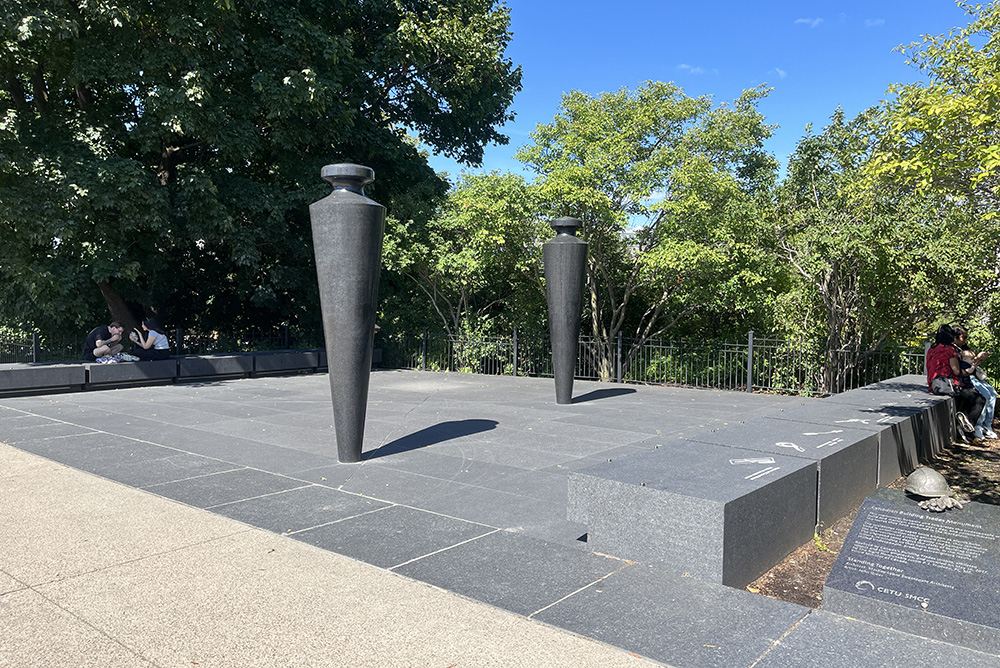
Next, head up along the road to the left of the cross. At the top of the hill, turn right into Major’s Hill Park and follow the path indicated on the map to the Canadian Building Trades Monument.

As described in the accompanying stone engraved text, ‘This monument honours and celebrates the tradespeople who build and maintain Canada every day, and commemorates the losses they have endured in the workplace’.

The two principal vertical sculptures depict plumb bobs, tools used in construction since ancient times. The engraving goes on the explain ‘..they symbolize the intersection of earthly gravity and human ingenuity’. A number of other tools are etched into the long horizontal plinths located on either side of the plumb bobs, which double as benches for resting visitors.

Canadian Building Trades Monument

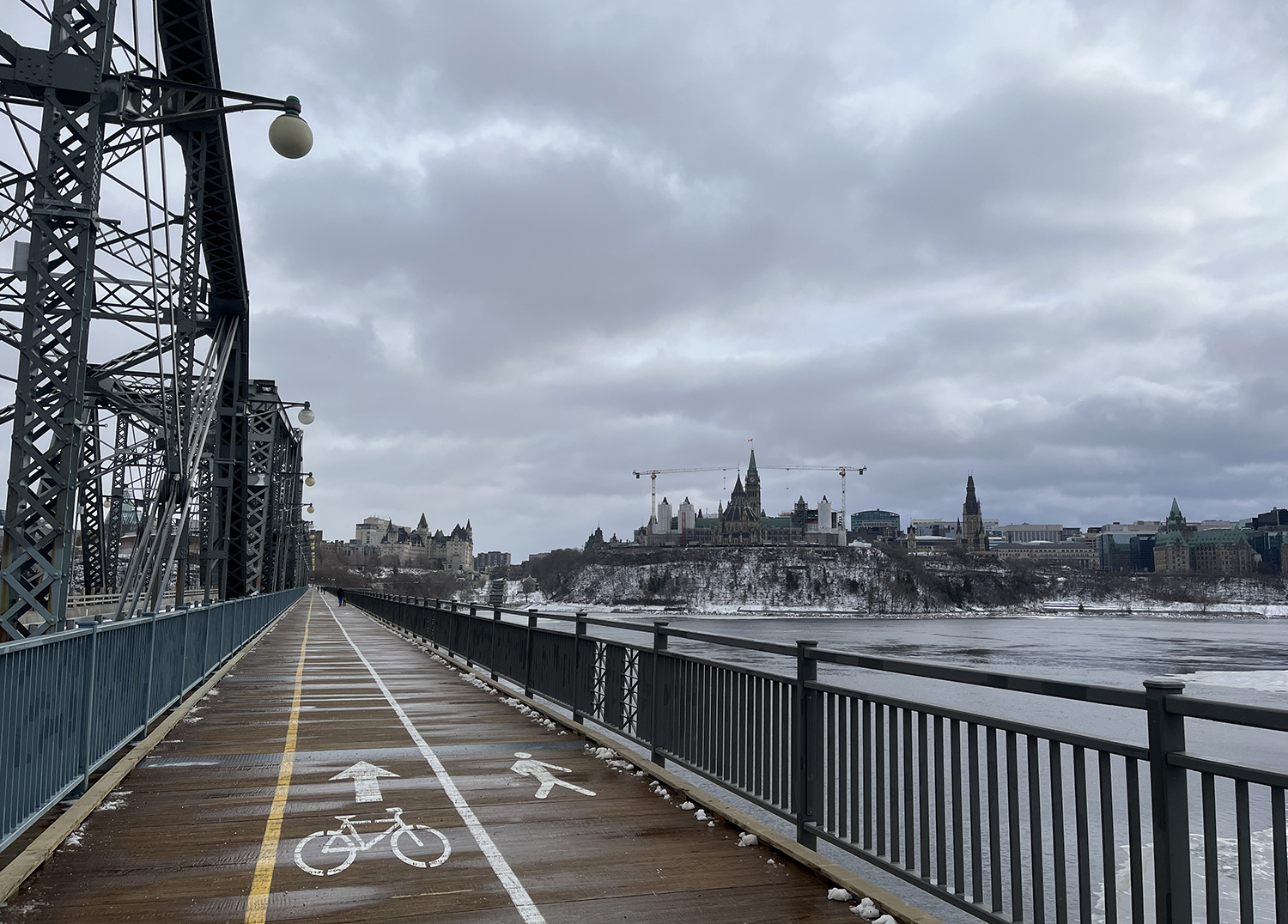
Our final stop on this ride is just across the Ottawa River in Gatineau. Take the boardwalk bike lane over the Alexandra bridge, cross the intersection and continue along the  Sentier de l’Île pathway that runs along Boulevard des Allumettières. Slightly before reaching Boulevard Maisonneuve you will see an interpretive panel dedicated to  Les Allumettières . These were female workers in the local EB Eddy plant who fabricated wooden matches from the 1800’s up until 1928 when the plant closed. The working conditions they endured were extremely dangerous and unhealthy. This interpretive panel goes into more detail on the incredible challenges Les Allumettières encountered.

Have a great Labour Day!


Bike Tour of Tulips in the Capital

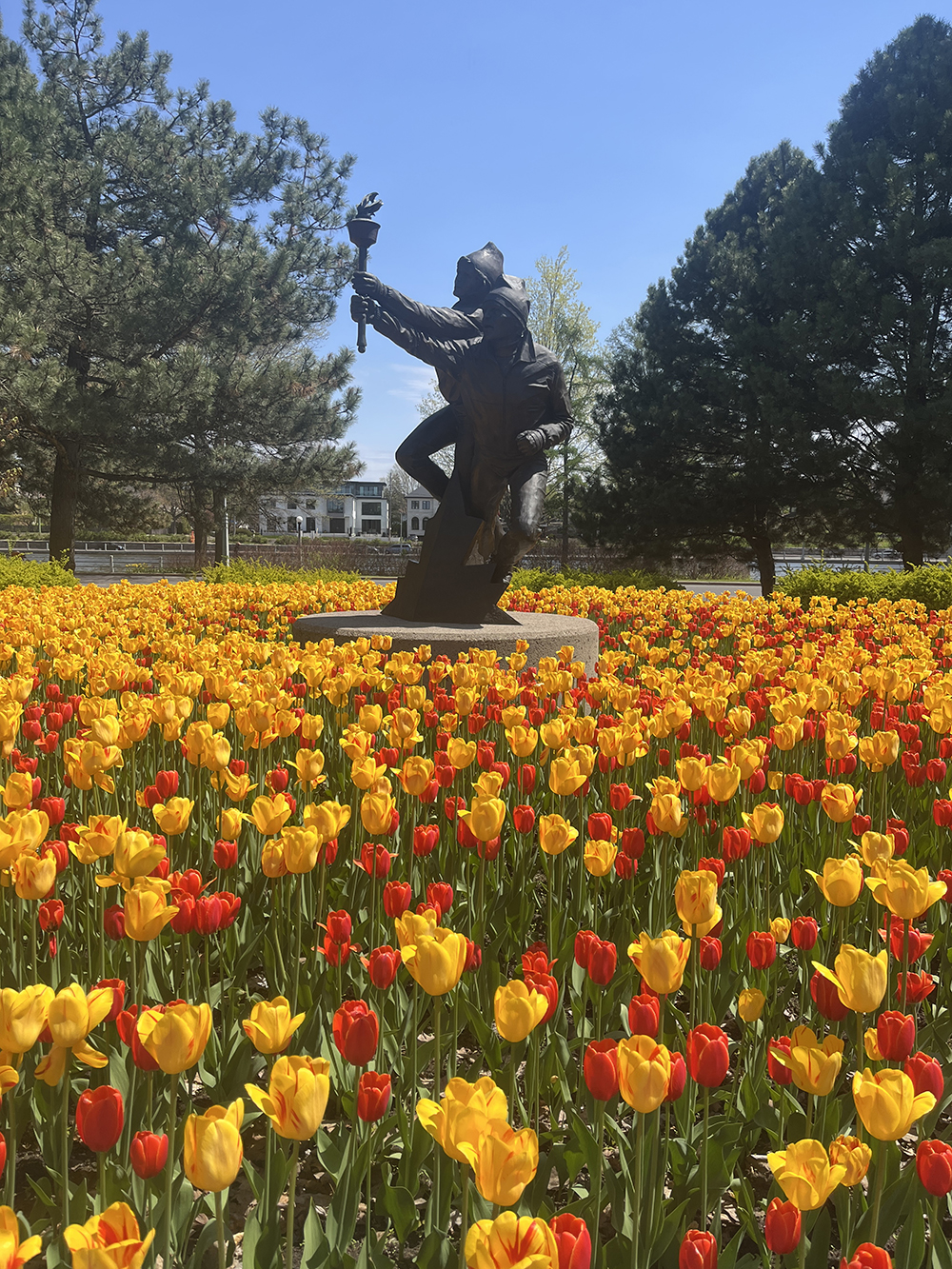
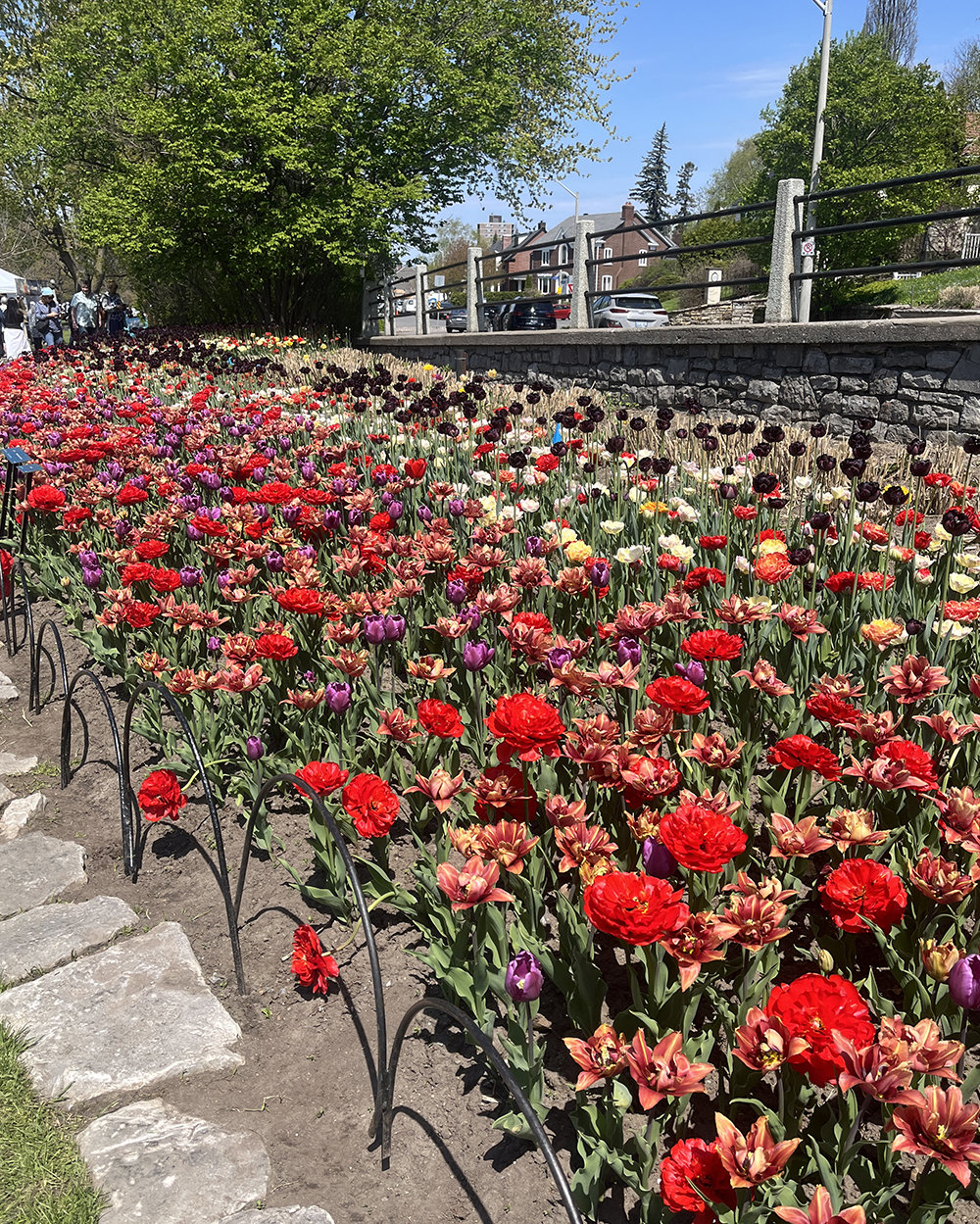
The tulips are in bloom! This bike tour samples the feast of colour provided by wonderful beds of tulips planted throughout the city.  

 Our tour begins downtown at the corner of Murray St and Mackenzie Ave on the edge of Majors Hill Park where you will see some beautiful beds of tulips.

Head up and through Majors Hill Park where you will see more great displays of of our featured flower. 

Cross Mackenzie Ave at the lights located on the southern end of the park, behind the Chateau Laurier.

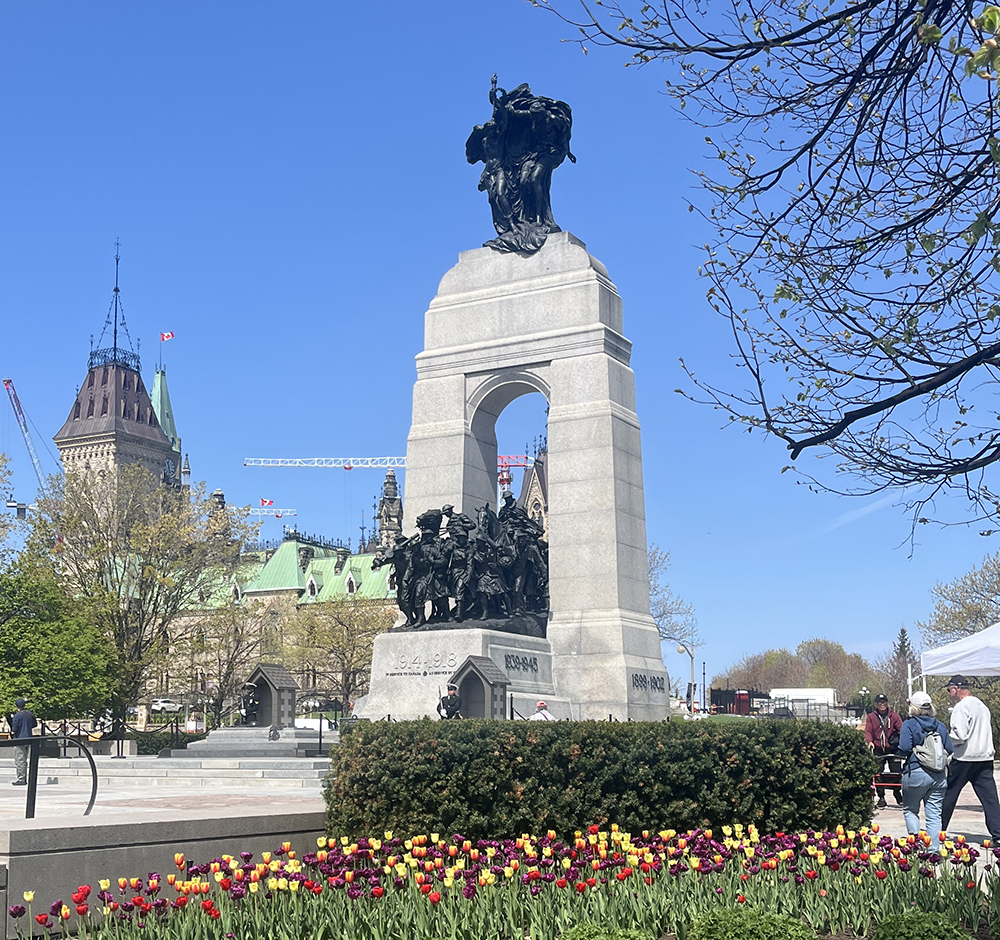
Take the bi-directional bike path a short distance north to Wellington St, then turn right on Wellington before navigating over to the War Memorial. Very nice displays can be seen in front of the memorial.

There is a bike path across from the War Memorial that heads down behind the National Arts Centre and along the Rideau Canal before becoming the Rideau Canal Western Pathway. Follow this path along the canal, past more beautiful flora displays, all the way to Princess Patricia Way. Cross Queen Elizabeth Driveway over to the path that continues parallel on the opposite side. The impressive arrangement can be found just south along this path.

Continue on this path, then cross back to the pathway that runs along the canal, just after passing under the Bank St Bridge. Just as you arrive at Dow’s Lake, cross Prince of Wales Drive oce again into Commissioners Park. This is the main site of Ottawa’s seasonal tulip display.

The path weaves its way north west through the park past colourful displays of tulips around Dows lake. 

The best time to do this ride is early on a weekday morning before the crowds arrive. The flowers still look great at all times, however you will most likely  require walking your bike through the park at other times of the day, especially on weekends when it becomes a bit of a mob scene.

Our ride ends at western end of Commissioners Park, at the corner of Preston St and Prince of Wales Drive. One bed of pink and purple tulips in the park is the Queen Juliana Gift Bed. These tulips are an annual gift of thousands of bulbs from the Dutch Royal Family in memory of the bond between Canada and Holland after Canada’s participation in the liberation of the Netherlands during World War II. As well in 1943, while they were staying in Ottawa after fleeing the war, Dutch Princess Juliana gave birth to her third child, Margriet at the Ottawa Civic Hospital.


Bike Tour Visiting Three Big Waterfalls!

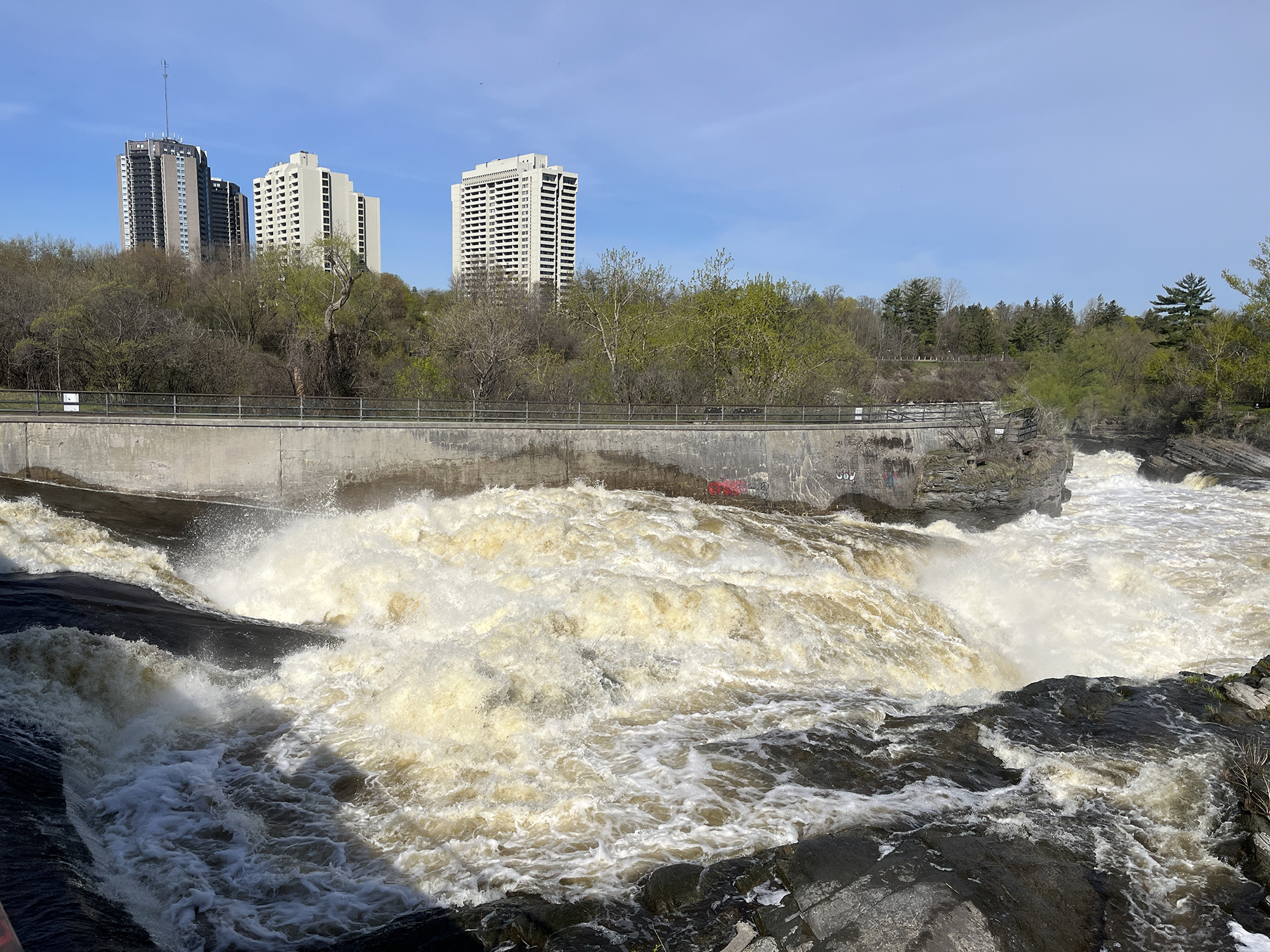
We are lucky to have three nice waterfalls in the city – Hog’s Back Falls along the Rideau River, the Chaudière Falls on the Ottawa River and the Rideau Falls where the Rideau River spills into the Ottawa River. The spring runoff makes them particularly awesome at this time of year, however all of these falls are still worth checking out any time of the year. Here is a 14km bike tour almost entirely along bike paths that visits all three sites.

Hog’s Back Falls was originally a set of rapids known as the Three Rocks Rapids, but the building of the Rideau Canal resulted in the more spectacular version we have now. More on the transformation from rapids to falls is described in these two links:

A Rapid Ride: The Billings shoot Hogs Back “Falls”.  

 Washed Away The Story of the Building of the Hogs Back Dam.

Hogs Back Falls

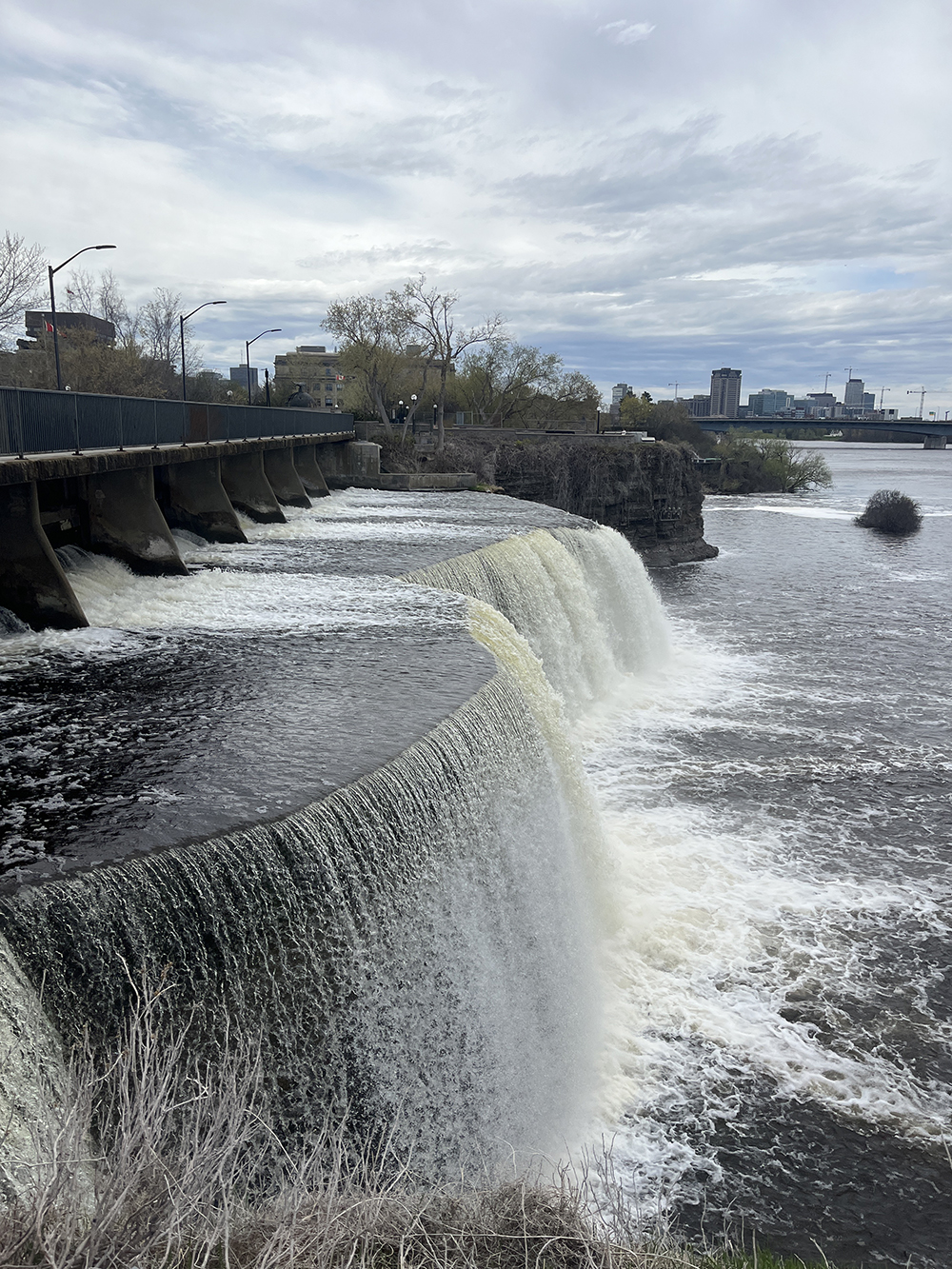
Next stop – the Chaudière Falls on the Ottawa River, just west of Parliament Hill. When french explorer Samuel de Champlain  arrived at the falls he noted how its elongated curved form and volume of water flowing over it ressembled a boiling cauldron, or chaudière. More on the history of the Chaudière Falls can be found here.

The above map shows three great locations from which you can view the falls.
Chaudière Falls in the Spring from close
Chaudière Falls in the Spring from far

Last stop – the Rideau Falls! The Rideau River ends by spilling down into the Ottawa River in most spectacular form resembling a huge curtain of water, or in French a ‘rideau’ of water.  

Rideau Falls in late Spring
Rideau Falls in early Spring (major melt!)

Et voila!

Blooming Magnolia Ride!

Local nature enthusiast James Wilson has written ‘One of the biggest and most floriferous Magnolias in Ottawa is this Merrill Magnolia (Magnolia x loebneri ‘Merrill’) is on the horticulture grounds at Algonquin College. It is 30 feet tall and 30 feet wide. It is in full bloom today.’. Oooh, gotta check that out!

Then I thought of another wonderful bunch of Magnolias in the Arboretum. So, for lovers of these wonderful smelling flowers, here’s a 10km bike route starting from the amazing display in the Arboretum to the Merrill Magnolia at Algonquin College. The ride is almost entirely along multi-use pathways.

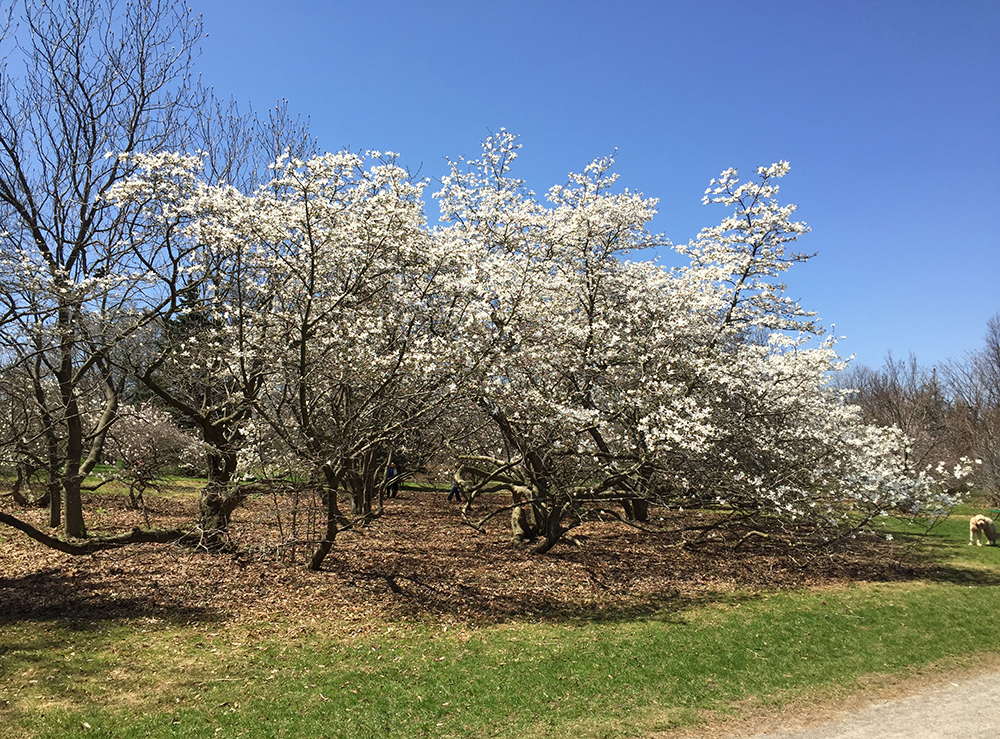
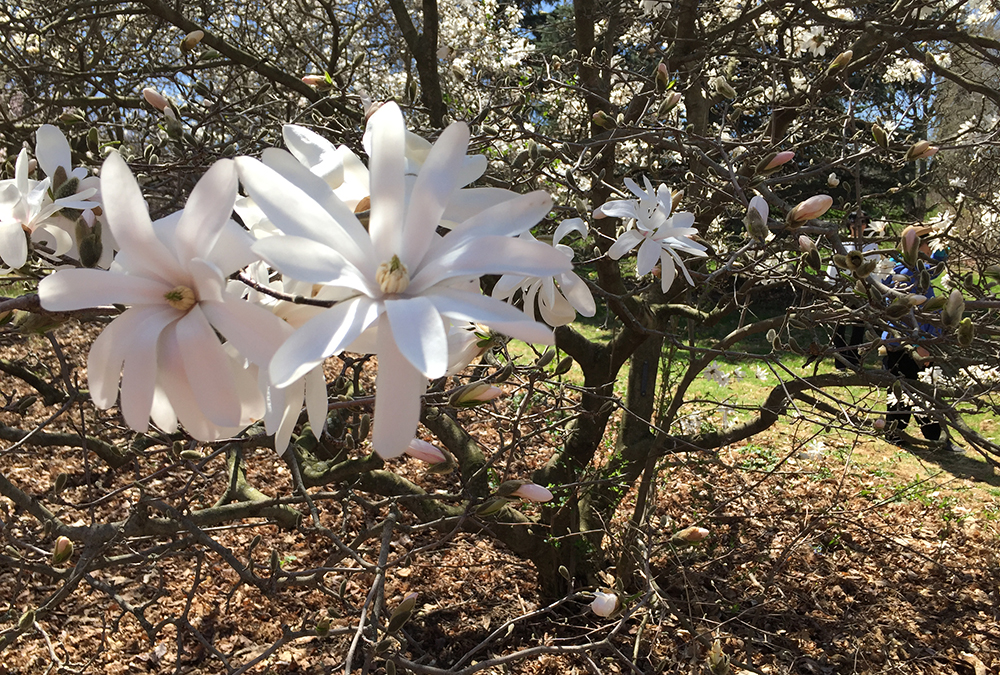
The Arboretum magnolias are just off the gravel path at the northern end of the Arboretum near Prince of Wales Drive.

Magnolias in the Arboretum

After checking out the beautiful display in the Arboretum, follow the gravel road that heads up the hill alongside Prince of Wales Drive. The gravel along this dirt road is usually packed, but can be a bit unpredictable throughout the year. Alternatively one could cross Prince of Wales at the signalised pedestrian lights and ride along the paved shoulder/unprotected bike lane along Prince of Wales, as noted by the purple line on the map.

Up the hill along the gravel path, or… along Prince of Wales Drive

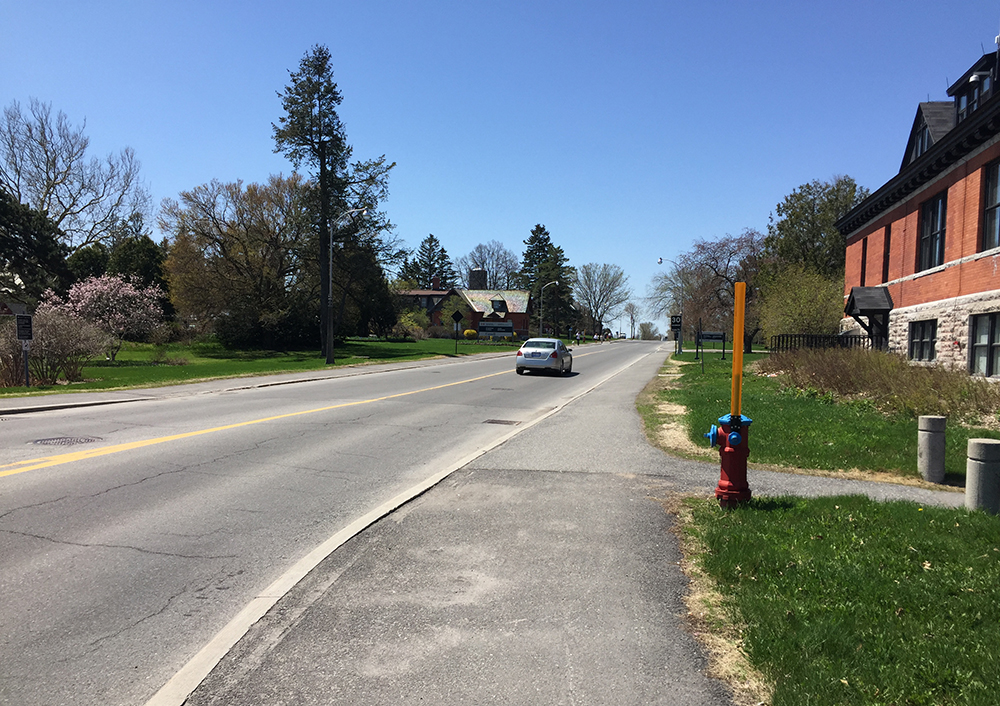
From the traffic circle at the top of the hill head west along the National Capital Commission (NCC) Scenic Driveway. Unfortunately the Experimental Farm Pathway only starts a few hundred meters along the NCC Scenic Driveway, just in front of the big red barn, and there is no shoulder or bike lane along the section between the traffic circle and the barn. However the sidewalks are paved.

NCC Scenic Driveway between the traffic circle and the start of the Experimental Farm Pathway
Start of Experimental Farm Pathway

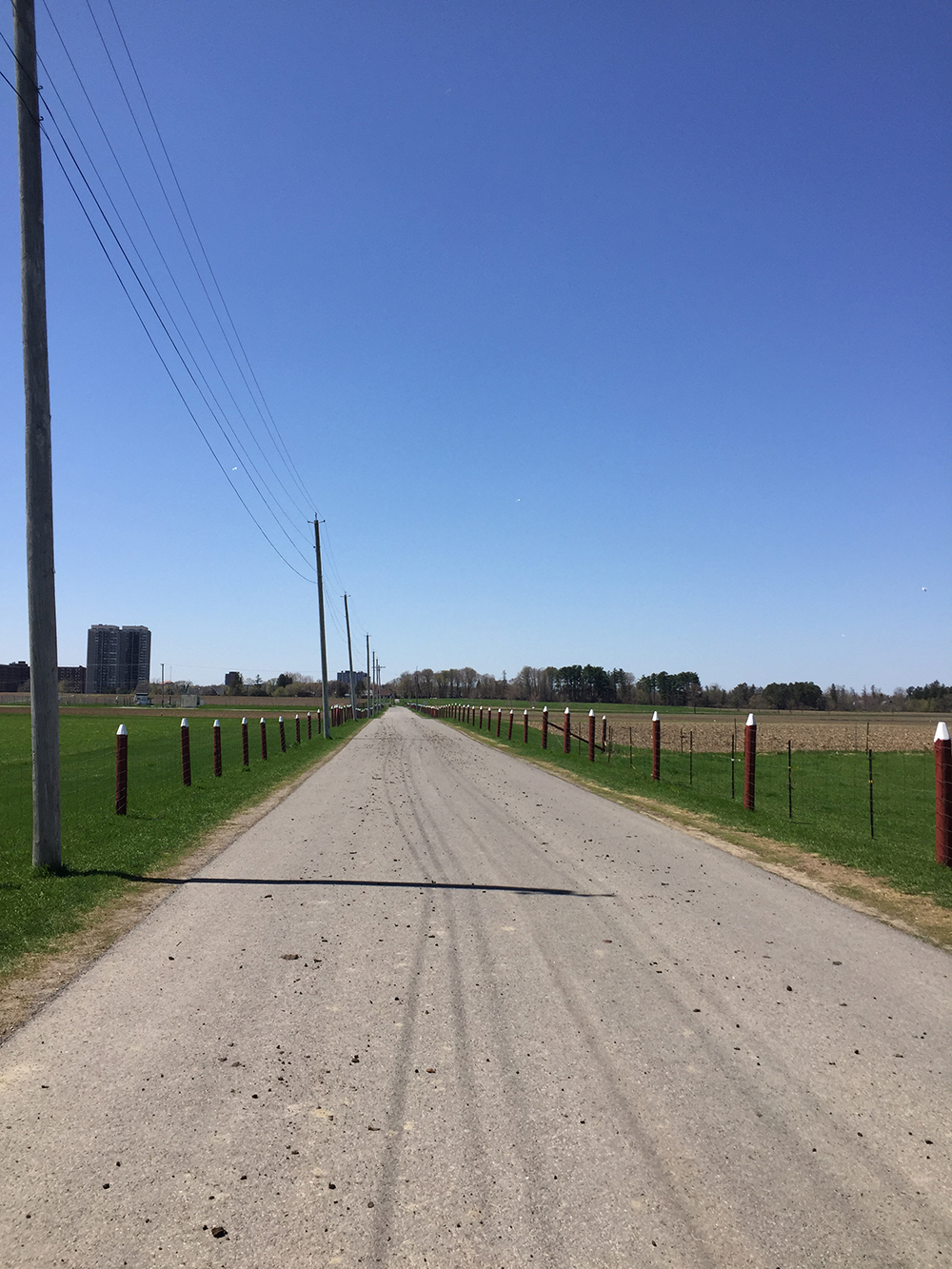
After riding a short distance along the pathway beyond the barn turn onto quiet Morningside Lane and then west again along equally pleasant Cow Lane that cuts through fields on either side.

Cow Lane

Then it’s back onto the pathway, on the other side of Ash Lane.

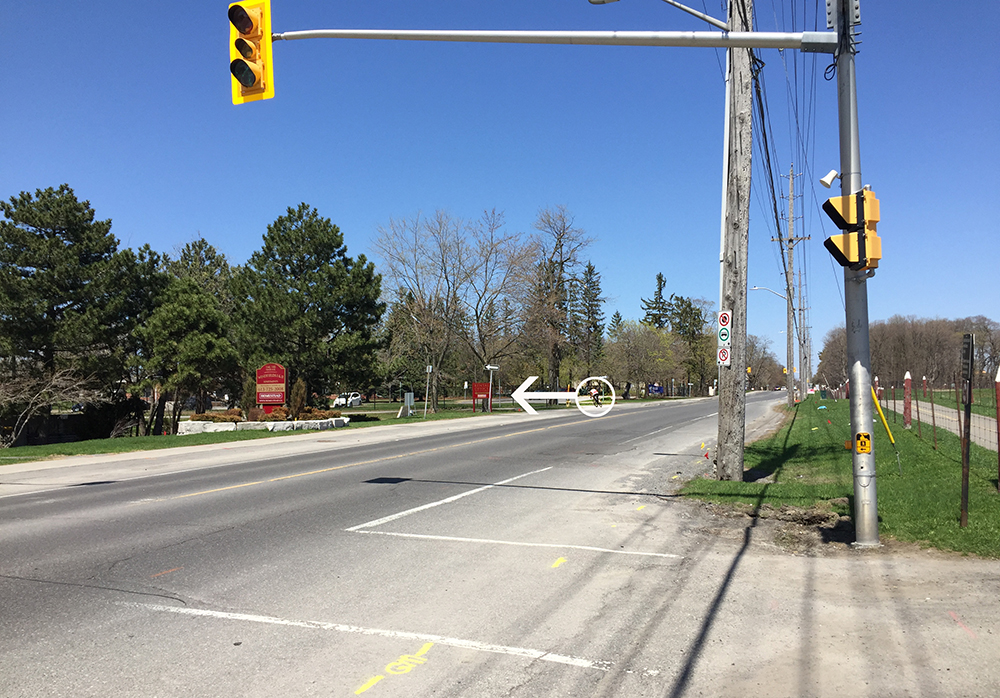
One confounding little spot for those travelling along the Experimental Farm Pathway for the first time is the continuation of the pathway across Fisher Avenue. This is because the path on the west side of Fisher is not alligned with the path on the east side. Instead it starts a short distance north, and is very poorly indicated or noticeable from the east side.

Where the cyclist in the circle is turning? That’s where the pathway continues across Fisher

Beyond this little navigational mess the Experimental Farm Pathway continues merrilly through a myriad of wonderful landscapes.

Just before arriving at Woodroffe Avenue you will happen upon the Baseline/Woodroffe Stormwater Management Pond. At this point take a left off the Experimental Pathway to Navaho Drive. Follow Navaho Drive across Baseline and continue straight when it becomes Wabisheshi Private. Continue along Wabisheshi through the Algonquin College campus until it ends at College Ave. Turn right on College Ave and take College Ave to the Algonquin College horticulture grounds. The entrance to the grounds is on the left and the glorious Merrill Magnolia is just on the right as you enter the grounds.

The Merrill Magnolia at Algonquin College Horicultural Grounds

One can also follow this same route throughout the summer to visit the Horticultural grounds which are quite beautiful.

Path through the Algonquin College Horticultural Grounds

Et voila!

Biking to Pointe-Gatineau in the Winter

Pointe-Gatineau is a nice destination any time of the year, particularly the southern tip where the Gatineau and Ottawa rivers meet. The views across both waterways are fantastic.

The ride to Pointe-Gatineau in the summer is very direct and idyllic along the Voyageurs pathway, but this path isn’t cleared in the winter, so I put out a call to r/Gatineau and was rewarded with the following suggested route:

Our adventure begins on the Ottawa side of the Alexandra Interprovincial Bridge.

Start!

Once across the river, ride along the De l’Île pathway that starts on the north-east corner of Rue Laurier and Boulevard des Allumettières.

Start of the De l’Île Pathway

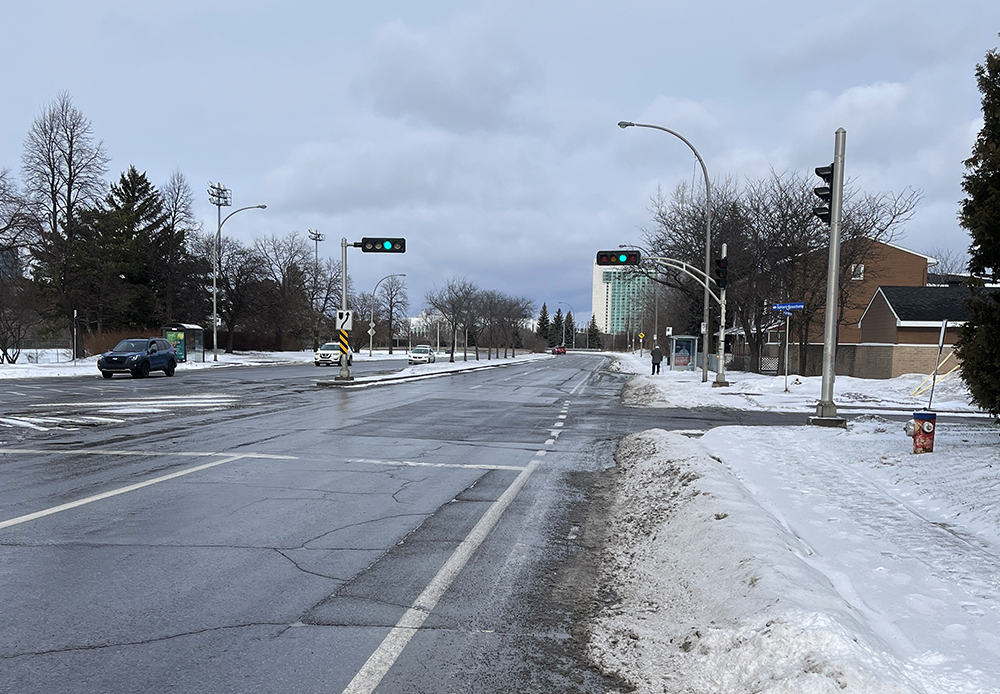
This path meanders through parkland, parallel to Boulevard des Allumettières, before angling diagonally through a residential area. Follow it all the way to Rue Saint-Rédempteur. Turn right onto Saint-Rédempteur and ride along the bike lane. This can be a busy street, and while the bike lanes seem to be cleared, there might be a few snow drifts piling up against the sidewalk. So, you know… there’s the sidewalk if you don’t feel safe.

Bike lane along Rue Saint-Rédempteur

Saint-Rédempteur turns into Boulevard Montclair. Follow the bike lane all the way to just before reaching the Rapidbus Corridor where you can turn right onto the service road/bike path that runs along the Corridor. The first section from Montclair to the edge of the Casino property is cleared but not salted so my studded tires came in handy.

First section of bike path along the Rapidbus Corridor

Beyond the Casino the path is cleared and salted, all the way to, and over, the Gatineau River.

Cleared & salted sections of the Rapidbus path

The path curls under the Rapidbus Corridor, then up and along the bridge, over the Gatineau River.

Path overthe Gatineau River

You have now officially arrived in Pointe-Gatineau, but I wanted to get down to the point of the Pointe where the two rivers meet. To do so I turned right off the path and rode behind the SmartCentres Gatineau shopping mall to Boulevard de la Gappe.

Service road behind the mall

Turn right onto the bi-directional bike lane that runs along Boulevard de la Gappe, and cross Rue St-Louis to the bike path that runs along the Gatineau River.

Biking across Rue St-Louis

Continue along this pathway down river, which will bring you to where the Gatineau River spills into the Ottawa River.

Approaching the Pointe

You can continue to bike around the point which the path follows west along the Ottawa River. Lots of interpretive panels on the history of this area can be discovered along this section. More about the history of Pointe-Gatineau can be found here.

Et voila! To get back to Ottawa just retrace your treads.

Back to Ottawa

Happy trails!

Biking to Carleton University

Biking to Carleton University has gotten significantly safer from a number of directions with the recent opening of the pedestrian bridge over the Rideau River on the south side of campus, just beside the O-Train bridge.

Rideau River Bridge

The following map is an update to a previous one I posted a number of years ago with approaches to Carleton, taking into consideration the new bridge.

If anyone needs a more specific route to campus please send me a starting cross street and I’ll post it.

From the north (Hintonburg) : purple bike logo

This route is mostly along quiet streets before cutting through the Experimental Farm. One point of note is the intersection of Maple Drive and the National Capital Commission Scenic Driveway, or Driveway. To bike the 200 meters along the Driveway from Maple Drive to Morningside Lane, cross the Driveway to the paved entrance infront of the big red barn. There’s a bi-directional bike lane that starts just beyond the barn that gets you safely to Morningside Lane.

Cross the Driveway at the intersection with Maple Drive to get to the bi-directional path on the opposite side.

From the south (Riverside Park) : blue bike logo

The new bridge at Carleton allows you to ride almost entirely along the Rideau Rideau Eastern Pathway before reaching the bridge. If, however, your destination is closer to the Rideau Canal side of campus, you can ride over the Rideau River at the Hogs Back Falls and ride along the Rideau Canal Eastern Pathway, as indicated by the purple line on the map.

From the east (Alta Vista) : green bike logo

This is the route that most benefits from the introduction of the new bridge, allowing cyclist to avoid having crossing the dangerous Bank Street bridge over the Rideau River.

From the west (Bel Air Heights) : yellow bike logo

This route is almost entirely along the Experimental Farm Pathway.

For more details on the history and installation of the new bridge check out this great post by Hans on the Bike.

Happy trails!

Modernist Sculptures From 1960 to 1970

This year marks the sixtieth anniversary of the first International Sculpture Symposium in North America that took place in Montreal’s Mount Royal Park. Back in 1964, twelve sculptors from around the world were given two months to create monumental works in stone and metal, eleven of which are still standing. This was a significant event in the introduction of modernist sculpture to Canada. A wonderful NFB film, La forme des choses, documents the on-site progress of the sculptors. In celebration of this event, the following bike tour visits a number of sculptural installations on display in our region that were conceived in the period leading up to and after Montreal’s International Sculpture Symposium, specifically from 1960 t0 1970.

We begin with Samothrace by Quebec artist Armand Vaillancourt. This cast iron sculpture was created in 1966, just two years after Montreal’s International Sculpture Symposium which Valliancourt participated in. Samothrace is installed on Sussex Drive, between the York Steps and the Connaught Building.

Samothrace by Armand Vaillancourt, 1966

Our next stop is along the Rideau Canal where sits Meditation Piece by Elza Mayhew from British Columbia. This bronze sculpture was commissioned in 1966 for the EXPO 67 Sanctuary Building in Montreal. The building was pyramid shaped and this piece was placed in the centre, around which benches were installed for quiet meditation. 

Meditation Piece by Elza Mayhew, 1966

Up on the National Arts Centre roof terrace you will find this massive untitled bronze sculpture by Charles Daudelin. He began to conceive this work in 1965 when he was invited to participate in a competition for this site specific design. Because of the imposing mass of the new National Arts Centre building Charles saw the need for a sculpture to be on a horizontal plane to fittingly occupy the space. He chose to place it on stilts to create an impression of lightness. The final work was completed and installed in 1968. To view this amazing work you will need to climb a short flight of stairs (i.e. carry your bike) easily accessed just behind the sculpture of Oscar Peterson on Elgin Street.

Untitled by Charles Daudelin, 1968

A few blocks west on O’Connor Street stands Ancestor I by British sculptor Barbara Hepworth. It is from a series of nine sculptures titled The Family of Man which she sculpted in 1970. Various casts of the works can be found worldwide. It is one of the last major works that Barbara Hepworth made before she passed away in 1975.

Ancestor I by Barbara Hepworth, 1970

Infront of the Bank of Canada building on Wellington you will find Flight by Sorel Etrog. This sculpture was commissioned in 1966 to be displayed in the Canada pavillion at Expo 67.

Flight – Sorel Etrog, 1966

Next we cross the River and weave our way to a small island situated at the start of the Ruisseau de la brasserie in Gatineau. Near the southern tip of this small island sits Explorateur II by Victor Tolgesey. Constructed in the period leading up to the first lunar landing, this piece made from Corten steel resembles a stranded space explorer resting in this serene setting. Tolgesy was born in Hungary and emigrated to Canada in 1951.  From the early 1950’s to 1980 he lived and worked in Ottawa.

Explorateur II by Victor Tolgesy, 1968

Here ends our bike tour of some great modernist public sculptures conceived in between 1960 and 1970. Have a safe ride.

A Tour of InsulBrick Covered Homes Around Ottawa & Gatineau – Updated!

InsulBrick is a tar coated fibreboard siding introduced in the 1930’s that was  super popular up to and throughout the 1960’s. It has a slightly embossed stone or brick pattern, enhanced with added granular material on the outer surface. It hasn’t been manufactured since the early 70’s, so what’s out there is the real McCoy. All surviving examples show signs of aging, some gracefully, others, not so much. Regardless, all suggest a rich history of protecting generations of occupants thoughout all the conditions imposed by our wildly diversified climate. 

10 years ago I posted a first bike tour of local InsulBrick covered houses. The following route re-visits the surviving examples, along with others that I have since discovered around town. There seems to be no desire by local heritage groups to preserve examples of this vanishing form of mid-century faux-wunder-cladding, so I have included photos of the buildings that have since vanished, identified as white ghost markers on the map. You can see what they looked like by clicking on their respective markers.

InsulBrick has also become a popular generic term to describe the tar impregnated exterior covering first patented in 1932 as Inselbrick and includes Inselstone, Inselwood and a few other imitations. 

First stop is this great example at the corner of Armstrong St and Hinchey Avenue in Hintonburg. Many other older houses along Armstrong have recently been torn down and replaced with boxy infills but this house survives! I spoke to the owner, a very friendly french woman, who said they have no plans to replace or cover the insulBrick surfaces. One senses a lot of tender loving care goes into maintaining this home.

Armstrong & Hinchey

Next stop is on Breezehill Ave S. which could very easily be mistaken for a brick house, but it’s InsulBrick! The clearest  indication is how the pattern does not reproduce the 2 to 1 overlapping stacked brick pattern on the corner where the walls meet. The clever use of ivy helps too.

283 Breezehill Ave S

There are two more examples in this neighbourhood two blocks over on Champagne Ave S. This first one has a faux cut stone pattern.

49 Champagne Ave S

A few doors down you will find this more eclectic example.

30 Champagne Ave S

Our next destination is 642 MacLaren Street, and what a beauty it is! So well preserved, one has to take a really close look to see that it is in fact InsulBrick. As mentioned at the Breezehill stop, corners are where the truth is told. To hide how Insulbrick patterns don’t correspond to real brick at corner junctions, a corner strip is often applied, as was in this case.

642 MacLaren

A few blocks over on Florence St this house has been holding its own, with the preserved carved porch detailing on the porch set in contrast to the darker InsulBrick.

28 Florence St

Over on 446 Lisgar St the InsulBrick was poorly added to the front portion of an already existing building. This example is really showing it’s age, especially in contrast to the original brick still visible on the back portion of the building. Most of the houses visited on this tour were originally clad in Insulbrick, but it wasn’t uncommon for additions to older homes, once additions were added, that Insulbrick be used. For example the 100+ year old house we live in in Centretown, not far from this house on Lisgar, had a first and second floor addition added to the back mid-century that was clad in Insulbrick. It in turn was covered with wood siding. The penetrable nature of Insulbrick allows it to be easier to simply cover it with modern siding versus removing it. I imagine there are a great many houses throughout the city that still retain the original InsulBrick siding that is covered up.

446 Lisgar St

In the Overbrook neighbourhood you will find this example with a combination of stucco and Insulbrick in a manner that avoids showing the telltale corner detailing.

93 Queen Mary St

Now we ride over the mighty Ottawa River and check out some InsulBrick clad homes on the Gatineau side. First stop is on the edge of the Gatineau River along Rue Jacques Cartier, a bit north of the Lady Aberdeen Bridge. It appears to be holding its own.

407 Rue Jacques Cartier

A bit further up-stream you will find another imitation grey-stone example.

1635 Rue St-Louis

Next it’s over to the Wrightville neighbourhood where you will find this multi-tonal brick pattern at the corner of Demontigny & Amherst. These tiles might have been made in different batches that may have matched when installed but have weathered differently over time. Other than that it looks in great shape.

Corner of Demontigny & Amherst

Two doors down is another surviving InsulBrick house.

64 Rue Amherst

Further east on Rue Falardeau sits this surviving InsulBrick-er.

57 Rue Falardeau

Over on Rue Kent sits this poor little house that’s on it’s last legs. I believe it and a number of adjacent houses are intended to be torn down by a developer.

Rue Kent

Over on Rue de Notre-Dame-de-l’Ile this house has InsulBrick on the front and adjacent sides. On the side visible in this photo it has been covered with vinyl siding.

289 Rue de Notre-Dame-de-l’Ile

Our final stop brings us a block north where you will find this combo InsulBrick pattern with a stone on the first floor and brick on the top floor.

288 Rue Champlain

So there you have it – a tour of some of the few remaining InsulBrick covered houses in the region.

Et voila!

Victoria Day Bike Ride

Here is a bike ride with a Victoria Day theme! This route begins at the base of the statue of Queen Victoria on Parliament Hill and heads up to the small Chelsea Pioneers Cemetery where Private Richard Rowland Thompson lies buried. Private Thompson was the sole Canadian recipient of a Queen’s Scarf of Honour, one of eight scarves crocheted by Queen Victoria in her final year of life.  

The statue of Queen Victoria is located just to the west of the Centre Block on Parliament Hill.

Statue of old Queen Vic

Exit Parliament Hill heading west and turn right after passing through the RCMP bollards. Then take Vittoria Street that passes behind the Confederation building and infront of the Supreme Court, before turning left to get to Wellington St .

Leaving the Hill, turn right just beyond the RCMP bollards

There’s a bike lane along Wellington that starts infront of the National Archives. Follow this lane across Portage Bridge to the Quebec side of the Ottawa River. Once across the bridge get on the Voyageurs Pathway by circling under the Portage Bridge. Follow Voyageurs Pathway all the way to a fork  just in front of a hydro site. Head right at the fork.

Exit off Voyageurs Pathway towards Gatineau Park

This leads to Rue Belleau, a quiet street with bike lanes leading to the intersection at Boulevard Alexander-Taché. The start of the Gatineau Park Pathway is immediately across this intersection.

Follow the beautiful Gatineau Park Pathway up through the park all the way to Chemin de la Mine.

Heading up the Gatineau Park Pathway

Access Chemin de la Mine from the pathway and head north along the bike lane on the shoulder of the road. 

Chemin de la mine bike lane

Turn right onto Notch Road which also has bike lanes.

Turn right onto Chemin de Kingsmere then right onto the bike lane along Chemin Old Chelsea east heading over the Gatineau Autoroute, all the way to Route 105.

Turn left up the 105 and ride along the abutting bike lane all the way to the small sign indicating the entrance to the Chelsea Pioneer Cemetery .

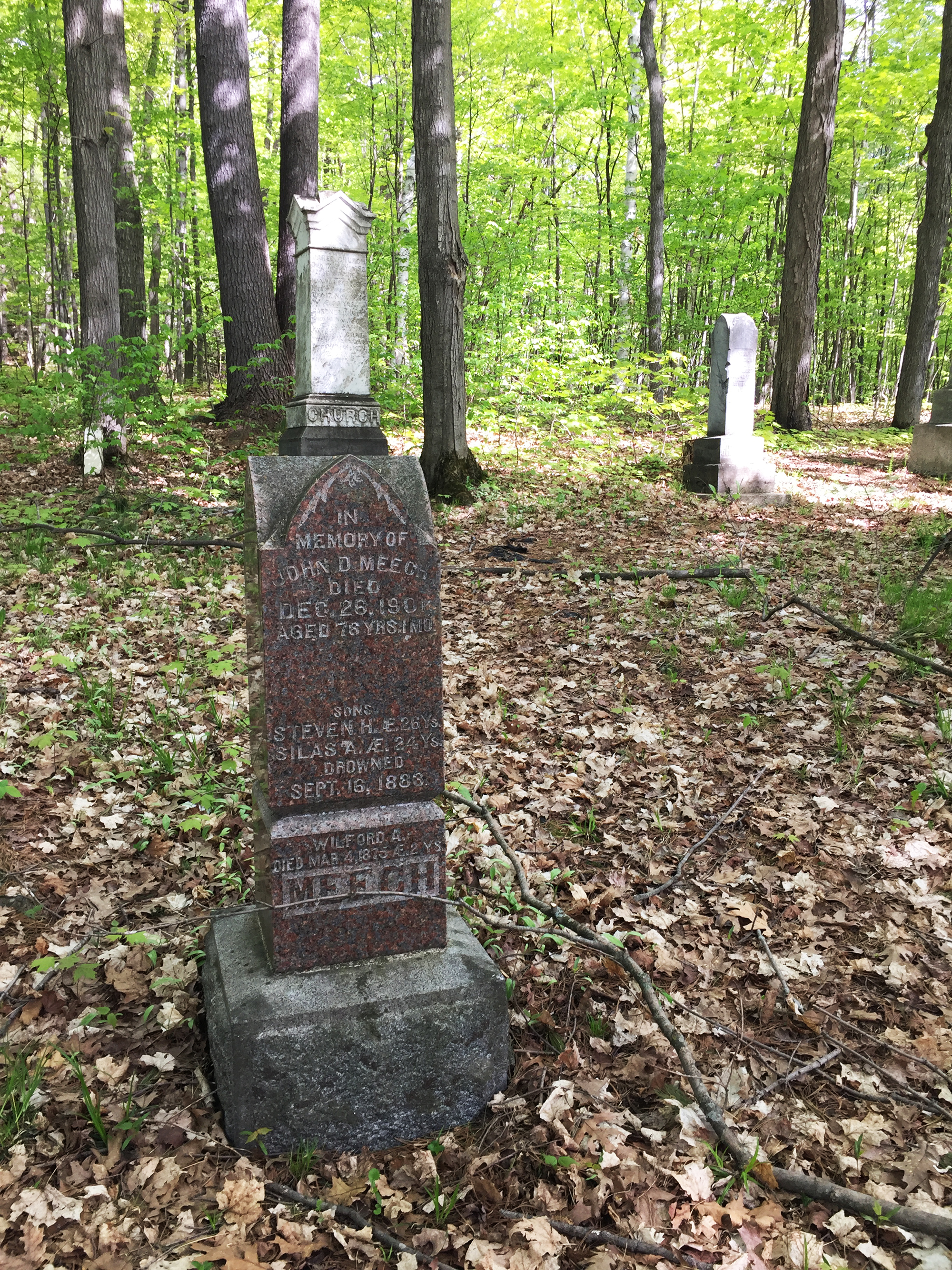
At the end of this short dirt road you will arrive at the small cemetery and the resting place of Private Richard Rowland Thompson. He was awarded the Queen’s Scarf of Honour for saving the life of a wounded colleague and staying with him throughout the Boer War Battle of Paardeberg. He also attempted to save another as the fighting raged about him.  

Grave of Richard R. Thompson

The graveyard itself is very simple and serene, a quiet place to rest before heading back to Ottawa.

Chelsea Pioneer Cemetery

Exiting the cemetery continue north along the 105 before turning onto Chemin Scott which also has bike lanes heading into Old Chelsea.

Chemin Scott intersects Chemin Old Chelsea which you can hop back onto and retrace your route back to Ottawa. The approximate total distance is 44km.

Et voila!

Biking To See Some Beautiful Trilliums!

The most amazing display of trilliums I’ve happened upon in our region can be found in a section of forest near the southern edge of Gatineau Park, and they are in full bloom right now! Here’s a bike route to get there.

This ride begins on the Portage Bridge over the Ottawa River. The route travels along a combination of surfaces including paved pathways, roads, stone dust paths, and packed dirt trails through the forest.

If anyone needs a route to get to the starting point please let me know.

View down river from Portage Bridge

On the Gatineau side of the bridge follow Voyageurs Pathway by turning left under the bridge.

Voyageurs Pathway curling under the Portage Bridge on the Quebec side

The path continues alongside Rue Laurier before veering closer to the river’s edge through Parc des Portageurs.

Where the path heads away from the road towards the river’s edge

Continue along the Voyageurs Pathway which weaves up and down  through trees with great views towards the Ottawa River. The path is named after the Voyageurs who portaged their canoes past this section of rapids.

Voyageurs Pathway weaving through the tress

Just beyond the small beach in Parc Moussette take the exit off the path to  Boulevard de Lucerne, then to Rue St-Dominique, then ride across the intersection of Boulevard Alexandre-Taché. Follow the bike path along Boulevard Alexandre-Taché linking Rue St-Dominique to the Moore Farm Pathway.

Bike path along Boulevard Alexandre-Taché

Ride up along the stone dust path through the heritage farm. The stone dust is pretty loose in some stretches, so if you have skinny tires you may have to push your bike along those short sections, or ride on the grassy edge of the path.

Stone dust path through Moore Farm

A bit further along the path just beyond the barn, turn right onto a smaller dirt path.

Exit onto dirt path

A short distance further along it becomes a packed gravel path. My guess is that it once was an railway bed.

Old railway path

The gravel path enventuaqlly veers left and becomes a a dirt trail through the woods. There are a few roots and rocks to negotiate along this path, but for the most part I found it to be well worn and easily negotiable on my hybrid bike.

End of gravel path….to dirt path

I started to notice a few trilliums immediately upon turning onto this dirt path. Gradually more and more appeared as I rode along, as they began to spread out on either side of the path. Absolutely magical.

Trilliums

Eventually the path arrives at an intersection.  Unfortunately these paths aren’t marked. By heading straight ahead the path becomes more rugged and there’s a fenced off compound on the right. That’s a prison. Don’t want to go that way. Instead I turned left at the intersection.

Left at the intersection

The trail continues under some power lines. This monstrous hydro pole confirmed I was heading in the right direction.

Under the power lines

Not too far along from the hydro lines the path gets a little rocky. I suggest walking your bike through this short section leading down to the paved Pioneers Pathway.

Rocky section at the end of the trail

Trail joins up with the paved Pioneers Pathway

Continue along the Pioneers Pathway under the bridge and up to where it intersects the Gatineau Park Pathway. Turn left onto the Gatineau Park Pathway and followed it all the way back down to Boulevard Alexandre-Taché.

Riding down the Gatineau Park Pathway

There are lights to get across Boulevard Alexandre-Taché to Rue Belleau, which has bike lanes.

View down Rue Belleau

At the end of Rue Belleau there is a link to the Voyageurs Pathway . Followed Voyageurs Pathway back to our starting point atthe Portage Bridge and across the river.

Et voila!