A Tour of InsulBrick Covered Homes Around Ottawa & Gatineau – Updated!

InsulBrick is a tar coated fibreboard siding introduced in the 1930’s that was  super popular up to and throughout the 1960’s. It has a slightly embossed stone or brick pattern, enhanced with added granular material on the outer surface. It hasn’t been manufactured since the early 70’s, so what’s out there is the real McCoy. All surviving examples show signs of aging, some gracefully, others, not so much. Regardless, all suggest a rich history of protecting generations of occupants thoughout all the conditions imposed by our wildly diversified climate. 

10 years ago I posted a first bike tour of local InsulBrick covered houses. The following route re-visits the surviving examples, along with others that I have since discovered around town. There seems to be no desire by local heritage groups to preserve examples of this vanishing form of mid-century faux-wunder-cladding, so I have included photos of the buildings that have since vanished, identified as white ghost markers on the map. You can see what they looked like by clicking on their respective markers.

InsulBrick has also become a popular generic term to describe the tar impregnated exterior covering first patented in 1932 as Inselbrick and includes Inselstone, Inselwood and a few other imitations. 

First stop is this great example at the corner of Armstrong St and Hinchey Avenue in Hintonburg. Many other older houses along Armstrong have recently been torn down and replaced with boxy infills but this house survives! I spoke to the owner, a very friendly french woman, who said they have no plans to replace or cover the insulBrick surfaces. One senses a lot of tender loving care goes into maintaining this home.

Armstrong & Hinchey

Next stop is on Breezehill Ave S. which could very easily be mistaken for a brick house, but it’s InsulBrick! The clearest  indication is how the pattern does not reproduce the 2 to 1 overlapping stacked brick pattern on the corner where the walls meet. The clever use of ivy helps too.

283 Breezehill Ave S

There are two more examples in this neighbourhood two blocks over on Champagne Ave S. This first one has a faux cut stone pattern.

49 Champagne Ave S

A few doors down you will find this more eclectic example.

30 Champagne Ave S

Our next destination is 642 MacLaren Street, and what a beauty it is! So well preserved, one has to take a really close look to see that it is in fact InsulBrick. As mentioned at the Breezehill stop, corners are where the truth is told. To hide how Insulbrick patterns don’t correspond to real brick at corner junctions, a corner strip is often applied, as was in this case.

642 MacLaren

A few blocks over on Florence St this house has been holding its own, with the preserved carved porch detailing on the porch set in contrast to the darker InsulBrick.

28 Florence St

Over on 446 Lisgar St the InsulBrick was poorly added to the front portion of an already existing building. This example is really showing it’s age, especially in contrast to the original brick still visible on the back portion of the building. Most of the houses visited on this tour were originally clad in Insulbrick, but it wasn’t uncommon for additions to older homes, once additions were added, that Insulbrick be used. For example the 100+ year old house we live in in Centretown, not far from this house on Lisgar, had a first and second floor addition added to the back mid-century that was clad in Insulbrick. It in turn was covered with wood siding. The penetrable nature of Insulbrick allows it to be easier to simply cover it with modern siding versus removing it. I imagine there are a great many houses throughout the city that still retain the original InsulBrick siding that is covered up.

446 Lisgar St

In the Overbrook neighbourhood you will find this example with a combination of stucco and Insulbrick in a manner that avoids showing the telltale corner detailing.

93 Queen Mary St

Now we ride over the mighty Ottawa River and check out some InsulBrick clad homes on the Gatineau side. First stop is on the edge of the Gatineau River along Rue Jacques Cartier, a bit north of the Lady Aberdeen Bridge. It appears to be holding its own.

407 Rue Jacques Cartier

A bit further up-stream you will find another imitation grey-stone example.

1635 Rue St-Louis

Next it’s over to the Wrightville neighbourhood where you will find this multi-tonal brick pattern at the corner of Demontigny & Amherst. These tiles might have been made in different batches that may have matched when installed but have weathered differently over time. Other than that it looks in great shape.

Corner of Demontigny & Amherst

Two doors down is another surviving InsulBrick house.

64 Rue Amherst

Further east on Rue Falardeau sits this surviving InsulBrick-er.

57 Rue Falardeau

Over on Rue Kent sits this poor little house that’s on it’s last legs. I believe it and a number of adjacent houses are intended to be torn down by a developer.

Rue Kent

Over on Rue de Notre-Dame-de-l’Ile this house has InsulBrick on the front and adjacent sides. On the side visible in this photo it has been covered with vinyl siding.

289 Rue de Notre-Dame-de-l’Ile

Our final stop brings us a block north where you will find this combo InsulBrick pattern with a stone on the first floor and brick on the top floor.

288 Rue Champlain

So there you have it – a tour of some of the few remaining InsulBrick covered houses in the region.

Et voila!

Victoria Day Bike Ride

Here is a bike ride with a Victoria Day theme! This route begins at the base of the statue of Queen Victoria on Parliament Hill and heads up to the small Chelsea Pioneers Cemetery where Private Richard Rowland Thompson lies buried. Private Thompson was the sole Canadian recipient of a Queen’s Scarf of Honour, one of eight scarves crocheted by Queen Victoria in her final year of life.  

The statue of Queen Victoria is located just to the west of the Centre Block on Parliament Hill.

Statue of old Queen Vic

Exit Parliament Hill heading west and turn right after passing through the RCMP bollards. Then take Vittoria Street that passes behind the Confederation building and infront of the Supreme Court, before turning left to get to Wellington St .

Leaving the Hill, turn right just beyond the RCMP bollards

There’s a bike lane along Wellington that starts infront of the National Archives. Follow this lane across Portage Bridge to the Quebec side of the Ottawa River. Once across the bridge get on the Voyageurs Pathway by circling under the Portage Bridge. Follow Voyageurs Pathway all the way to a fork  just in front of a hydro site. Head right at the fork.

Exit off Voyageurs Pathway towards Gatineau Park

This leads to Rue Belleau, a quiet street with bike lanes leading to the intersection at Boulevard Alexander-Taché. The start of the Gatineau Park Pathway is immediately across this intersection.

Follow the beautiful Gatineau Park Pathway up through the park all the way to Chemin de la Mine.

Heading up the Gatineau Park Pathway

Access Chemin de la Mine from the pathway and head north along the bike lane on the shoulder of the road. 

Chemin de la mine bike lane

Turn right onto Notch Road which also has bike lanes.

Turn right onto Chemin de Kingsmere then right onto the bike lane along Chemin Old Chelsea east heading over the Gatineau Autoroute, all the way to Route 105.

Turn left up the 105 and ride along the abutting bike lane all the way to the small sign indicating the entrance to the Chelsea Pioneer Cemetery .

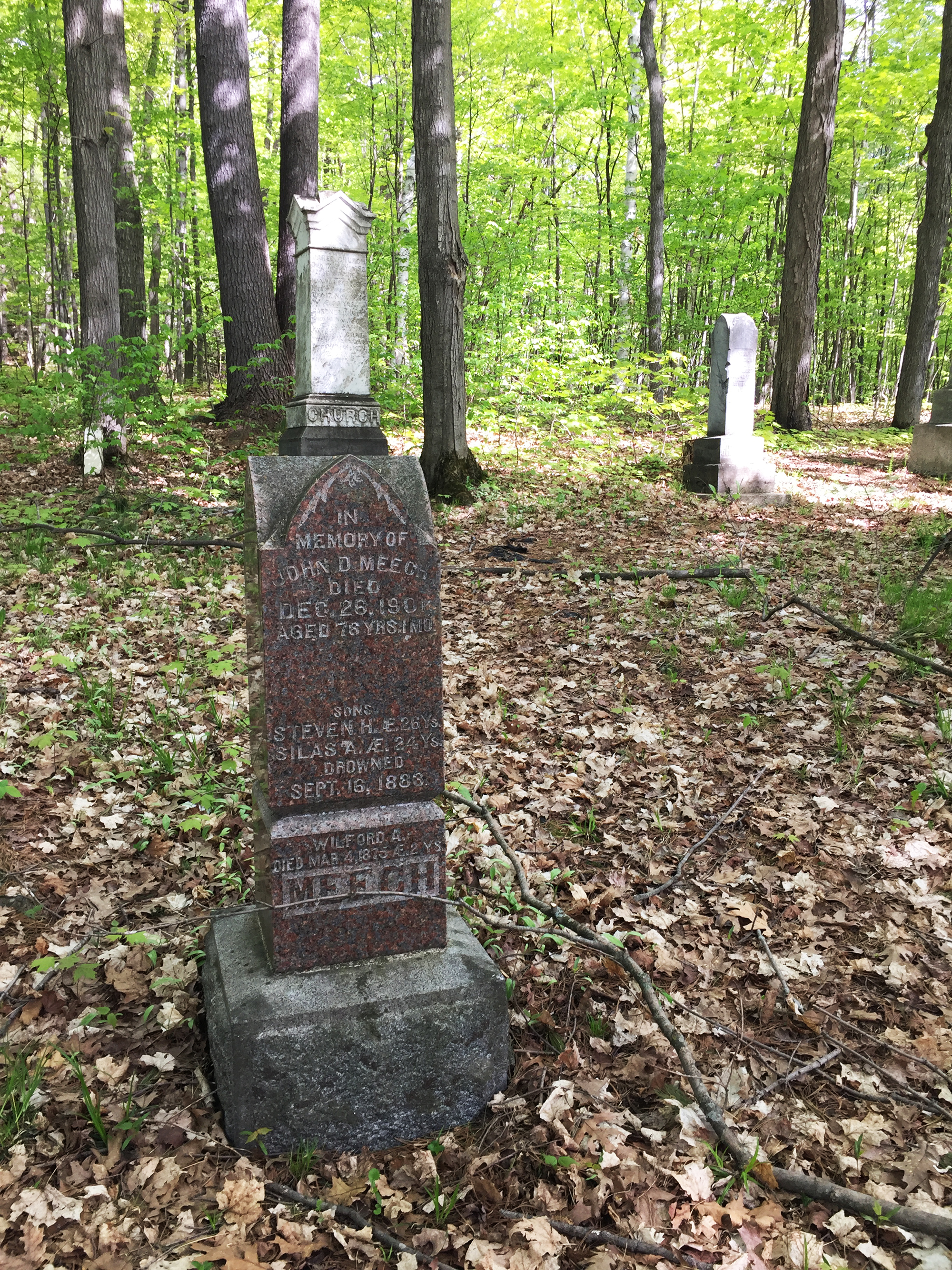
At the end of this short dirt road you will arrive at the small cemetery and the resting place of Private Richard Rowland Thompson. He was awarded the Queen’s Scarf of Honour for saving the life of a wounded colleague and staying with him throughout the Boer War Battle of Paardeberg. He also attempted to save another as the fighting raged about him.  

Grave of Richard R. Thompson

The graveyard itself is very simple and serene, a quiet place to rest before heading back to Ottawa.

Chelsea Pioneer Cemetery

Exiting the cemetery continue north along the 105 before turning onto Chemin Scott which also has bike lanes heading into Old Chelsea.

Chemin Scott intersects Chemin Old Chelsea which you can hop back onto and retrace your route back to Ottawa. The approximate total distance is 44km.

Et voila!

Biking To See Some Beautiful Trilliums!

The most amazing display of trilliums I’ve happened upon in our region can be found in a section of forest near the southern edge of Gatineau Park, and they are in full bloom right now! Here’s a bike route to get there.

This ride begins on the Portage Bridge over the Ottawa River. The route travels along a combination of surfaces including paved pathways, roads, stone dust paths, and packed dirt trails through the forest.

If anyone needs a route to get to the starting point please let me know.

View down river from Portage Bridge

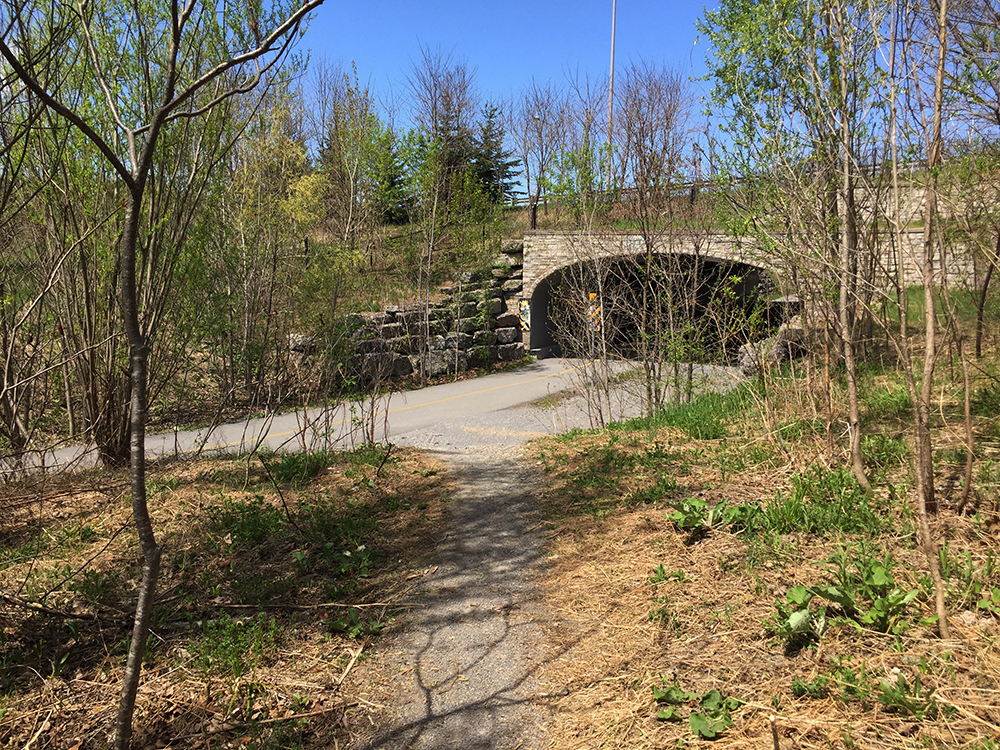
On the Gatineau side of the bridge follow Voyageurs Pathway by turning left under the bridge.

Voyageurs Pathway curling under the Portage Bridge on the Quebec side

The path continues alongside Rue Laurier before veering closer to the river’s edge through Parc des Portageurs.

Where the path heads away from the road towards the river’s edge

Continue along the Voyageurs Pathway which weaves up and down  through trees with great views towards the Ottawa River. The path is named after the Voyageurs who portaged their canoes past this section of rapids.

Voyageurs Pathway weaving through the tress

Just beyond the small beach in Parc Moussette take the exit off the path to  Boulevard de Lucerne, then to Rue St-Dominique, then ride across the intersection of Boulevard Alexandre-Taché. Follow the bike path along Boulevard Alexandre-Taché linking Rue St-Dominique to the Moore Farm Pathway.

Bike path along Boulevard Alexandre-Taché

Ride up along the stone dust path through the heritage farm. The stone dust is pretty loose in some stretches, so if you have skinny tires you may have to push your bike along those short sections, or ride on the grassy edge of the path.

Stone dust path through Moore Farm

A bit further along the path just beyond the barn, turn right onto a smaller dirt path.

Exit onto dirt path

A short distance further along it becomes a packed gravel path. My guess is that it once was an railway bed.

Old railway path

The gravel path enventuaqlly veers left and becomes a a dirt trail through the woods. There are a few roots and rocks to negotiate along this path, but for the most part I found it to be well worn and easily negotiable on my hybrid bike.

End of gravel path….to dirt path

I started to notice a few trilliums immediately upon turning onto this dirt path. Gradually more and more appeared as I rode along, as they began to spread out on either side of the path. Absolutely magical.

Trilliums

Eventually the path arrives at an intersection.  Unfortunately these paths aren’t marked. By heading straight ahead the path becomes more rugged and there’s a fenced off compound on the right. That’s a prison. Don’t want to go that way. Instead I turned left at the intersection.

Left at the intersection

The trail continues under some power lines. This monstrous hydro pole confirmed I was heading in the right direction.

Under the power lines

Not too far along from the hydro lines the path gets a little rocky. I suggest walking your bike through this short section leading down to the paved Pioneers Pathway.

Rocky section at the end of the trail

Trail joins up with the paved Pioneers Pathway

Continue along the Pioneers Pathway under the bridge and up to where it intersects the Gatineau Park Pathway. Turn left onto the Gatineau Park Pathway and followed it all the way back down to Boulevard Alexandre-Taché.

Riding down the Gatineau Park Pathway

There are lights to get across Boulevard Alexandre-Taché to Rue Belleau, which has bike lanes.

View down Rue Belleau

At the end of Rue Belleau there is a link to the Voyageurs Pathway . Followed Voyageurs Pathway back to our starting point atthe Portage Bridge and across the river.

Et voila!
Biking to see Daffodils in the Rockcliffe Park Rockeries

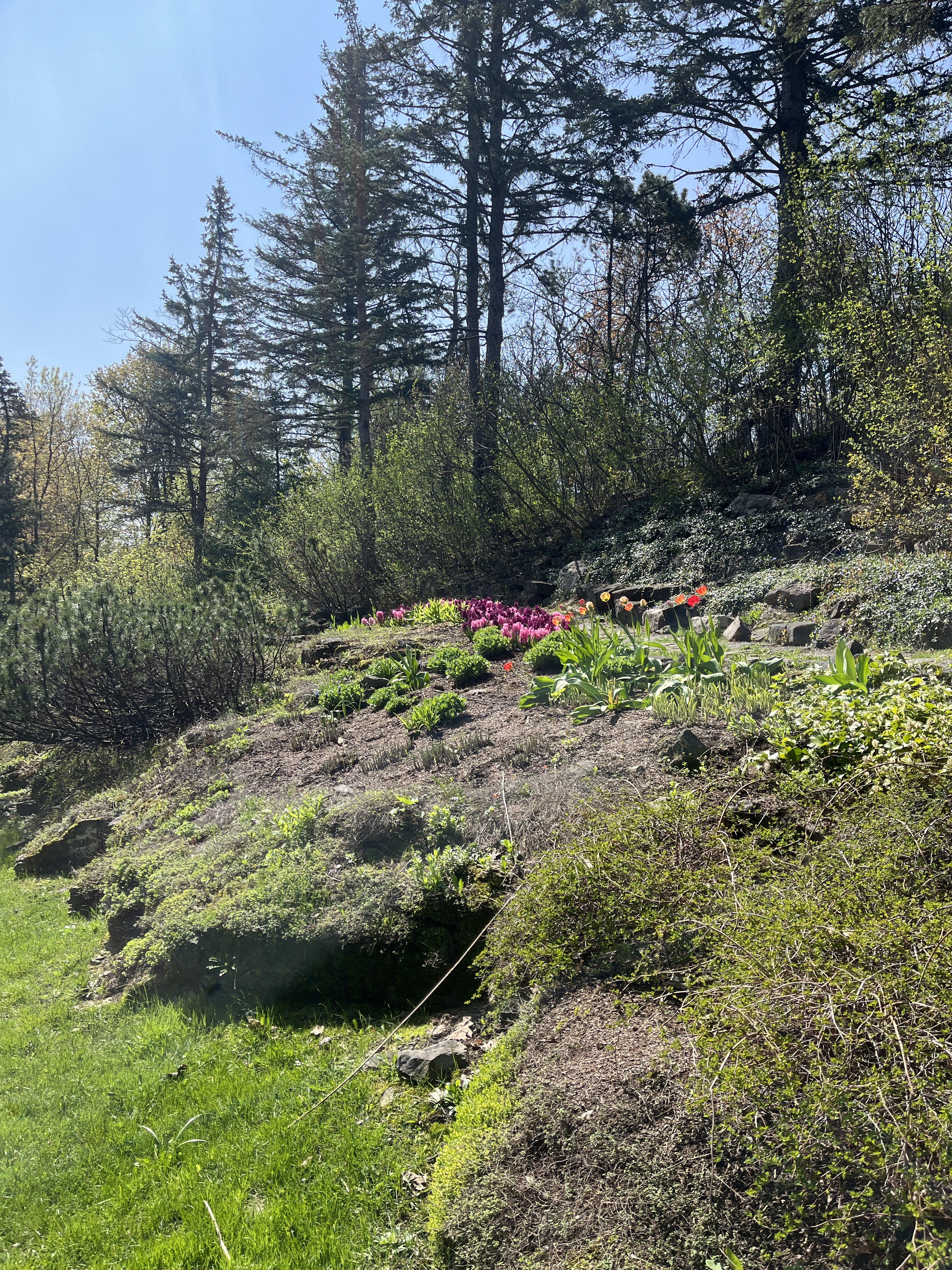
It’s not too late to take in the wonderful display of blooming daffodils strewn throughout the Rockcliffe Rockeries. The Rockeries is a lovely public park tucked in the eastern edge of the Rockcliffe neighbourhood overlooking the Ottawa River. Once arrived there’s a path you can follow that cuts through the park. Here’s a 9km bike route to get there from Centretown.

This route follows bike lanes or paths for most of the way. The only spots missing bike lanes are the short connection along Colonel By Drive between the end of the Rideau Canal Eastern pathway to Sussex, and the section of Princess Avenue between the two round-abouts. N.B. – While riding along the Ottawa River pathway, just before arriving at the Rockeries, do NOT cross the Sir George-Étienne-Cartier Driveway (indicated by the red marker on the map) but continue along the paved path on the right side of the road.

There are other flowers and curiosities to discover there as well.

… including tulips.

The Timber Route

The  Ottawa River timber trade was the nineteenth century production of squared timber along with other wood products. As the major industry of the historical colonies of Upper and Lower Canada, the trade was instrumental in establishing communities on both sides of the river that became Ottawa and Gatineau. This 3km ride along bike paths and multi-use pathways visits various interpretive displays along the Ottawa River that help describe the history and significance of the timber trade in the region.

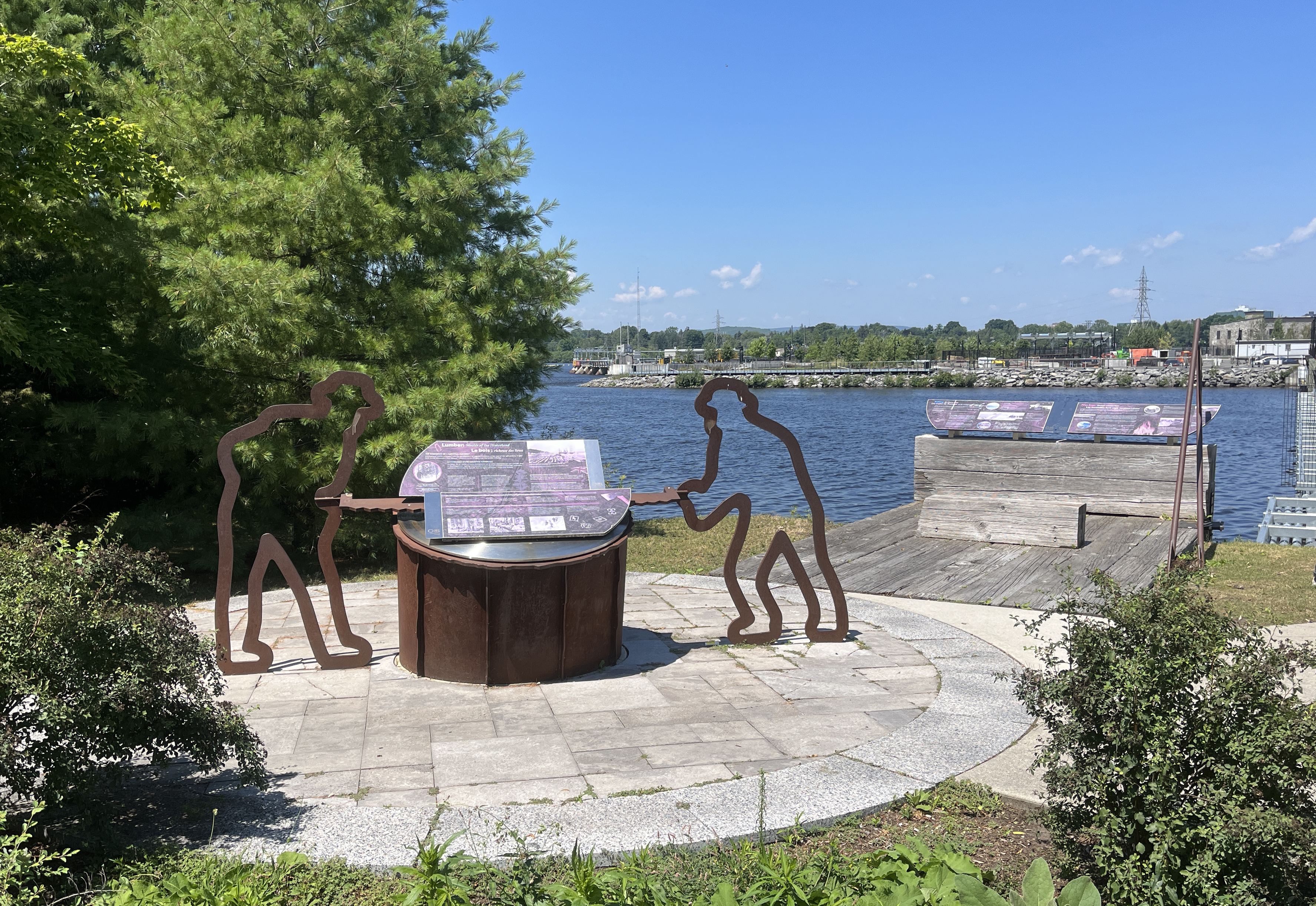
Our ride begins just off the Ottawa River Pathway behind the War Museum. Here you will find an interpretive display describing the 19th century origins of the local lumber industry. You can stand on a crib, multiples of which formed a timber raft. Interpretive panels describe how in the 1800’s you would have seen giant rafts made up of cribs in the river before you. The interpretive panels also describe how these timber rafts, composed of hundreds of logs, would become temporary floating villages for the Raftsmen delivering the timber down the Ottawa River.

Interpretive display along the Ottawa River Pathway behind the War Museum

Further east along the Ottawa River Pathway you will happen upon Mill Street Brew Pub located in an old grist mill built in 1842. On the east side of the building, looking out across the river, you will see a timber slide. This is where the aforementioned cribs would float down to avoid the Chaudière Falls. In 1972 the V shaped slide visible from this spot replaced the wider square shaped slide that originally accomodated the width of the cribs. More on the history of the slide can be found here.

Timber slide visible

Ride under the Portage Bridge and follow the paths that circle up and onto the bridge. Take the segregated bike lane across the bridge to the Gatineau side of the river, then turn down to the right along the Voyageurs Pathway that runs along the waters edge.

Along this pathway you will happen upon this interpretive panel describing the history of this shoreline, providing context to when the lumber trade was dominant.

History of the shoreline

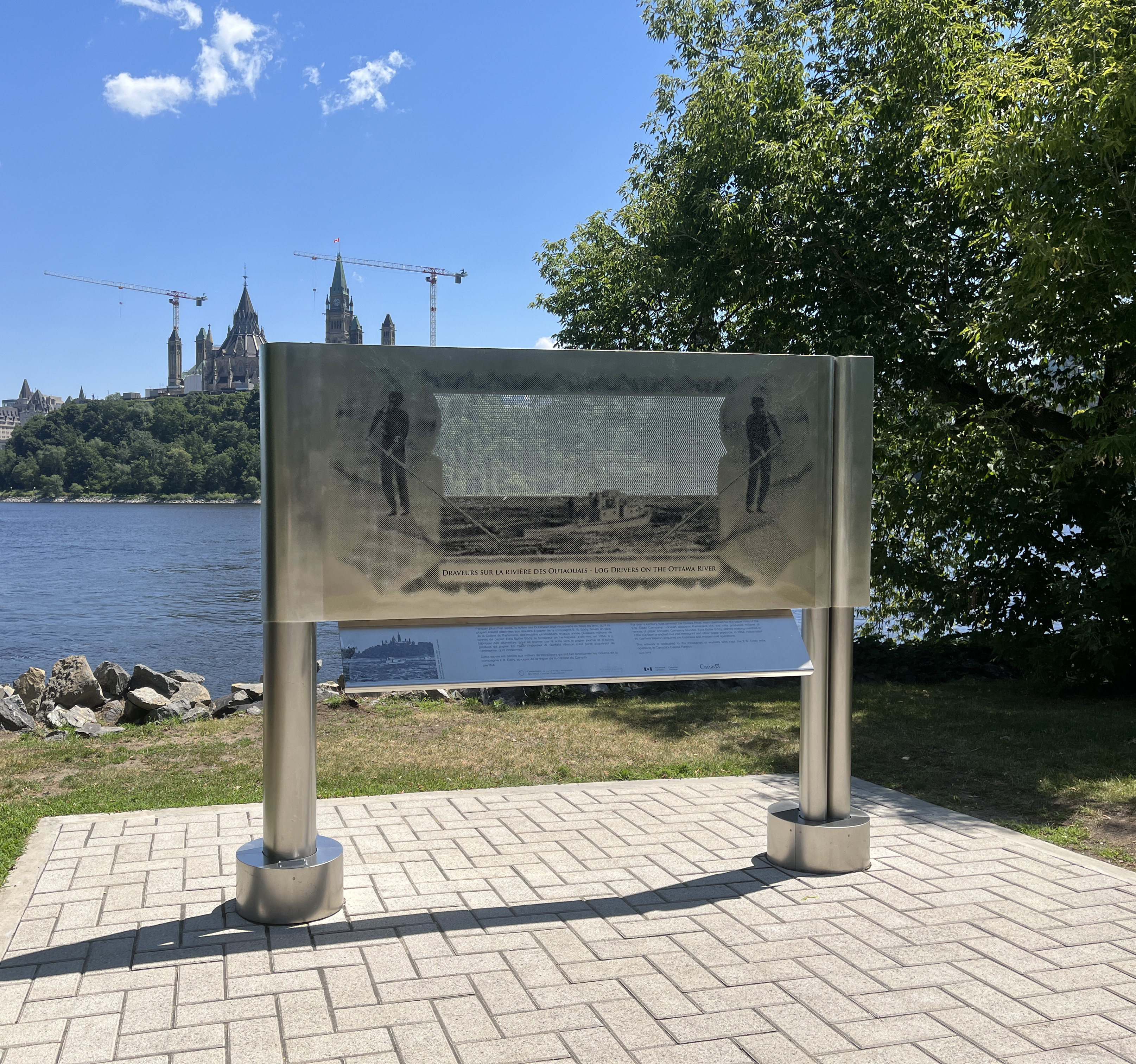
A short distance further along the path you will find this vertical display celebrating log drivers whose job was to break up piles of logs to avoid log jams.

Log Drivers

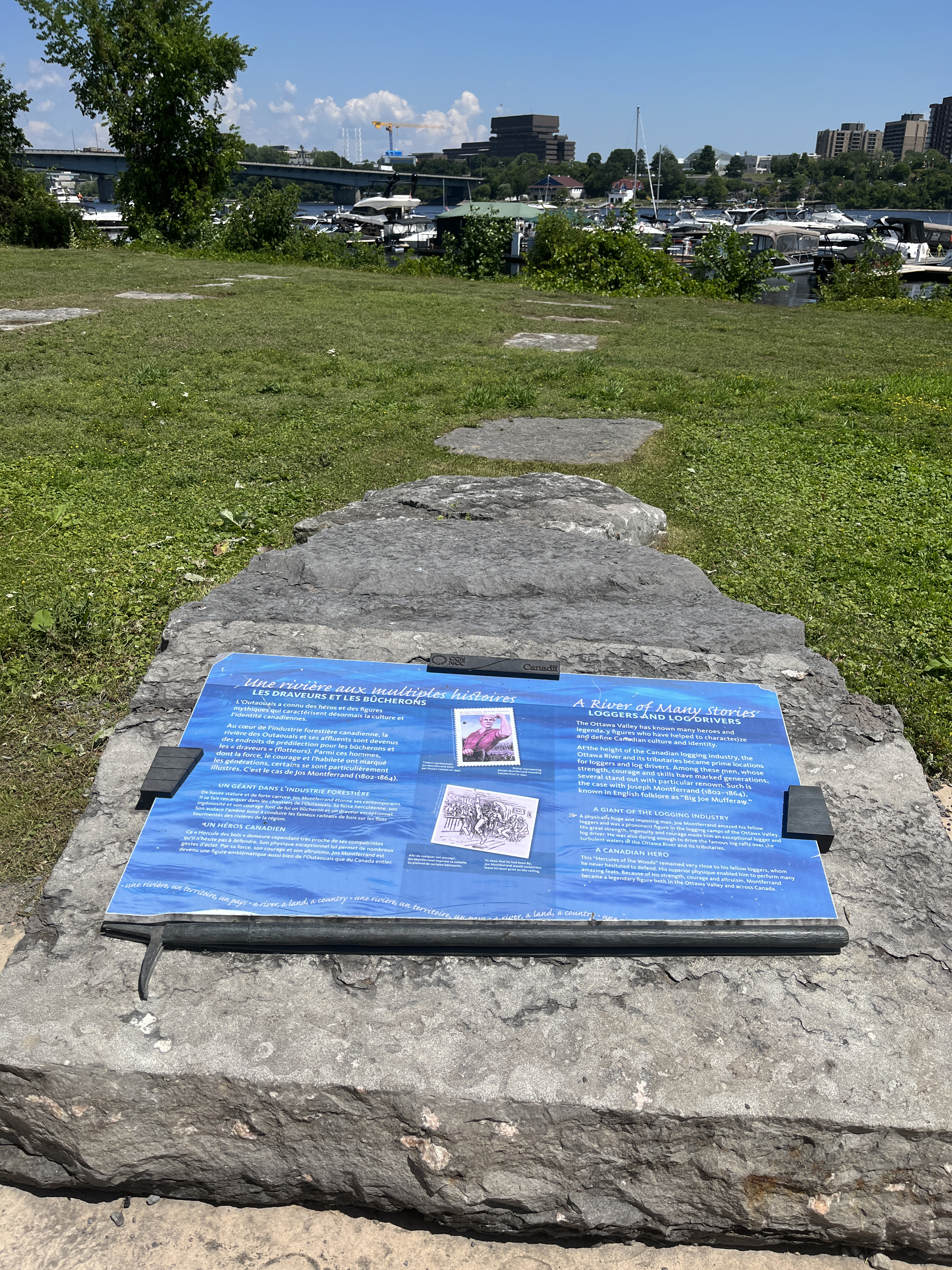
Continue along the Voyageurs Pathway under the Alexandra Bridge into Jacques Cartier Park. A short distance into the park you will find a display of three interpretive panels, one of which hi-lites the story of Big Joe Mufferaw, a legendary lumberman from the era of the timber trade.

Big Joe Mufferaw

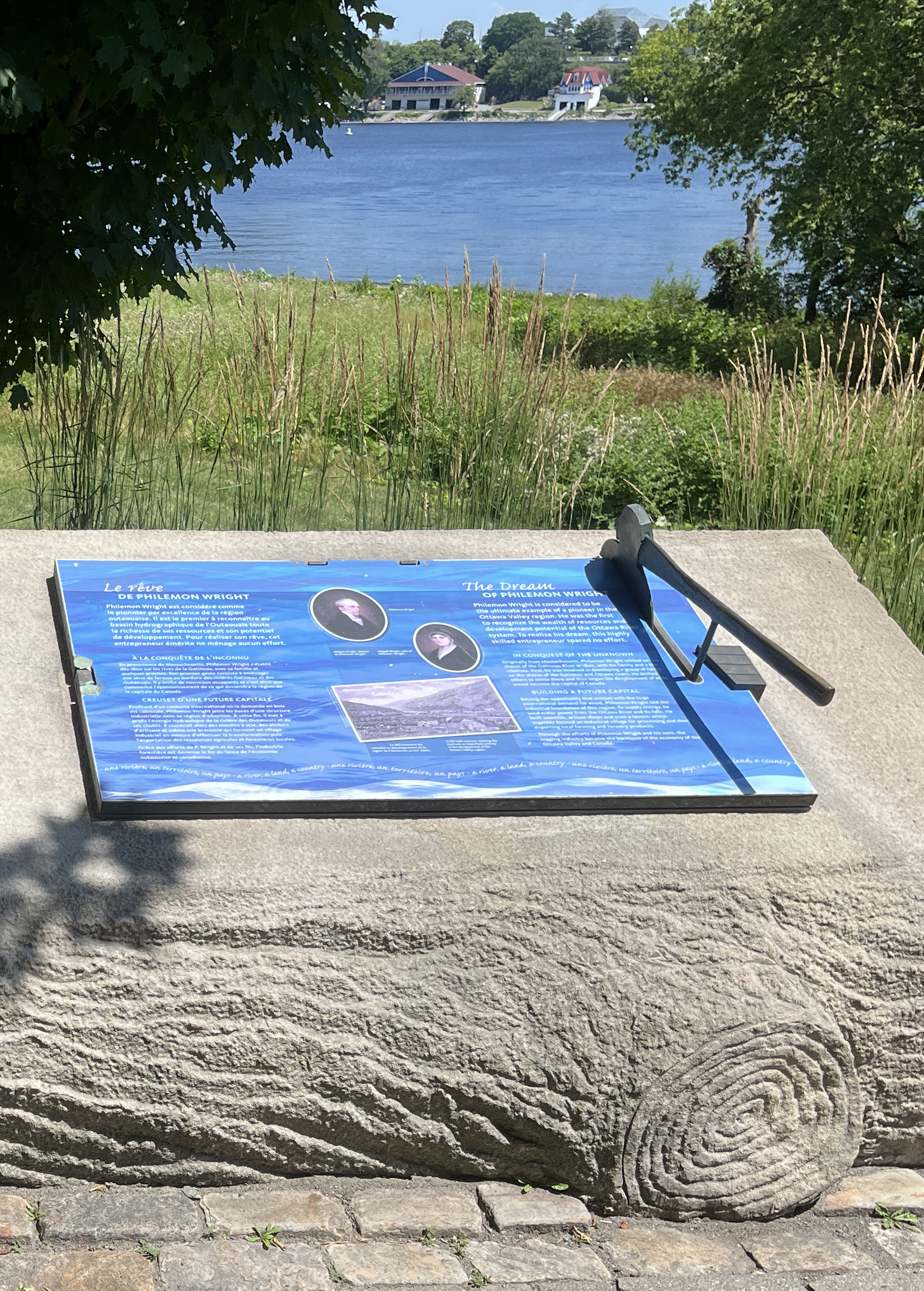
Further along the pathway beside a small heritage house called Maison Charon you will find another display of three panels, one of which describes Philemon Wright the first settler who started up the local lumber trade. Included in this display is a scale reproduction of a broad axe. This important tool was used to square logs so that they may be assembled into crips and rafts before floating down river.

Philemon Wright

For those who would like to read more about the era of the Ottawa River timber trade I recommend checking out this link.

Et voila! Happy trails.

Biking from Downtown to the Ottawa International Airport and/or the EY Centre

The Ottawa International Airport is a comfortable 13-15 km ride from downtown. The following route is my favourite. The EY Centre is a huge convention space used for various events and is very close to the airport, so I’ve included a slight detour that’ll get you there as well (orange line on the map).

.
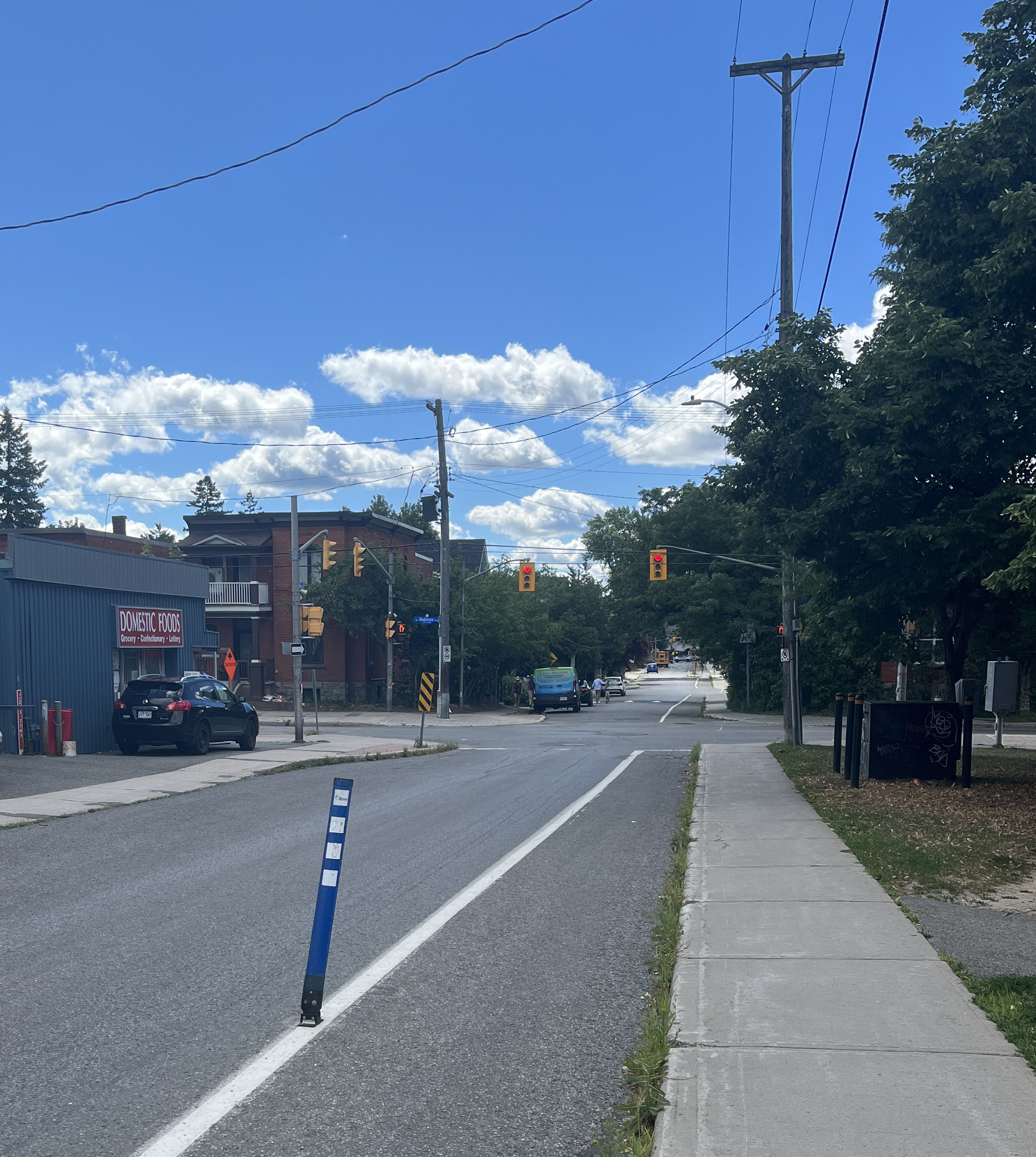
Starting off from the corner of Laurier Avenue and Percy St, head south along the Percy bike lane. (Percy and Laurier is an intersection easily accessible from many points within the downtown core via the Laurier Bike Lane).

Bike lane along Percy

Percy continues on the opposite side of the Queensway sans bike lane.

Percy south of the Queensway

Turn right on Fifth Avenue and cross Bronson Avenue at the intersection.

Traffic lights at Fifth Avenue heading across Bronson
Traffic lights at Fifth & Bronson

Once across Bronson continue down Madawask Drive, then onto the pathway that cuts through Commissioners Park.

Access to path through Commissioners Park from Madawaska Drive
Lovely path through Commissioners Park. Always lots of flowers.

Follw this path to the intersection of Preston Street and Prince of Wales Drive.

Approaching Prince of Wales and Preston

Cross the lights to get to the bike path that runs through the Arboretum along the edge of Dow’s Lake and the Rideau Canal.

Path through the Arboretum along the Rideau Canal
Path through the Arboretum

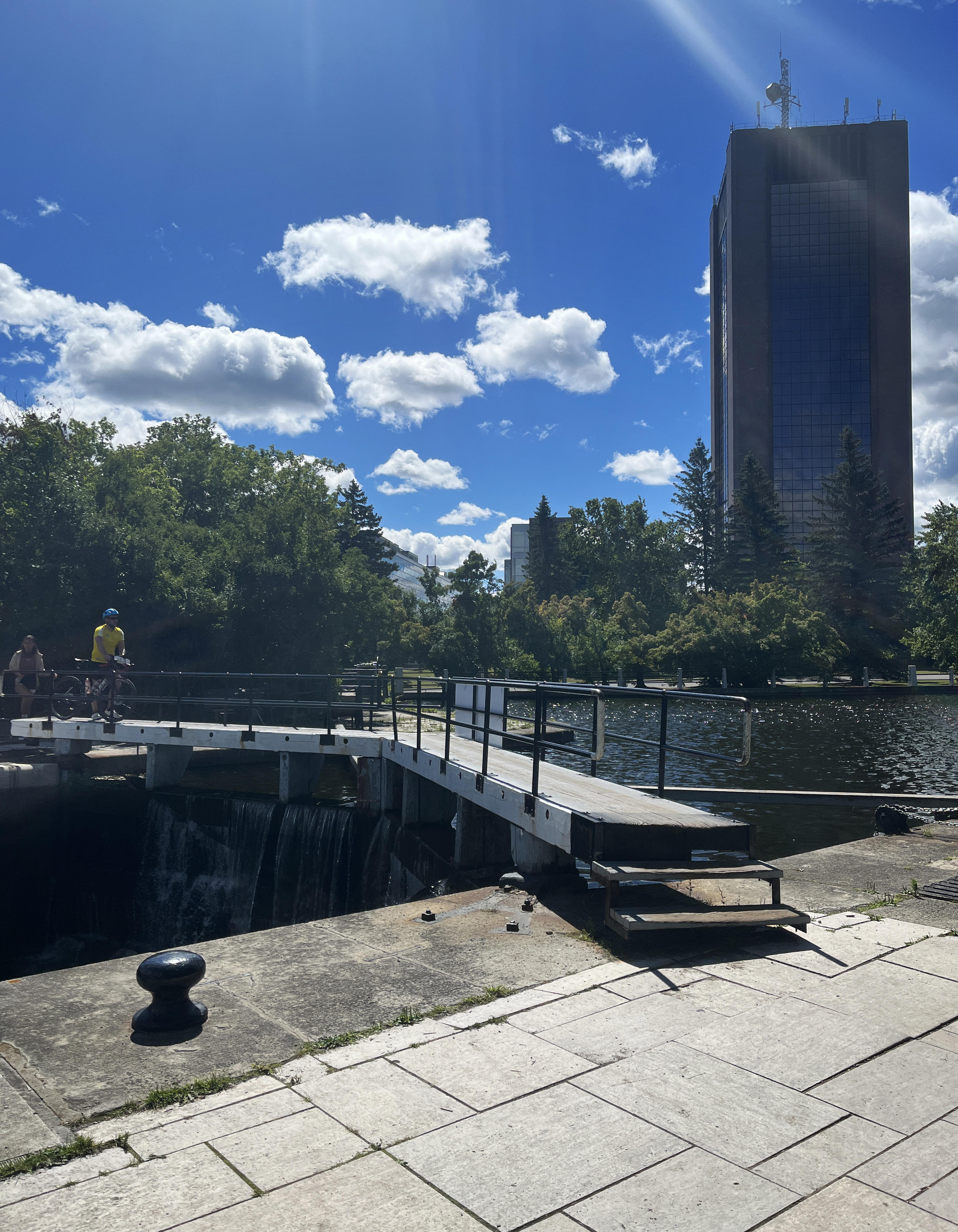
Pushed you bike over the canal locks opposite Carleton University and turn right along the Rideau Canal Pathway as far as Mooney’s Bay.

Up & over the locks

The path continues over the Rideau River along Hogs Back Road. Once over the Hogs Back Falls bridge take the path to the right that goes through Mooney’s Bay park

Once over the Hogs Back Falls bridge take the path to the right that goes through Mooneys Bay park
Path to the right that goes through Mooney’s Bay park

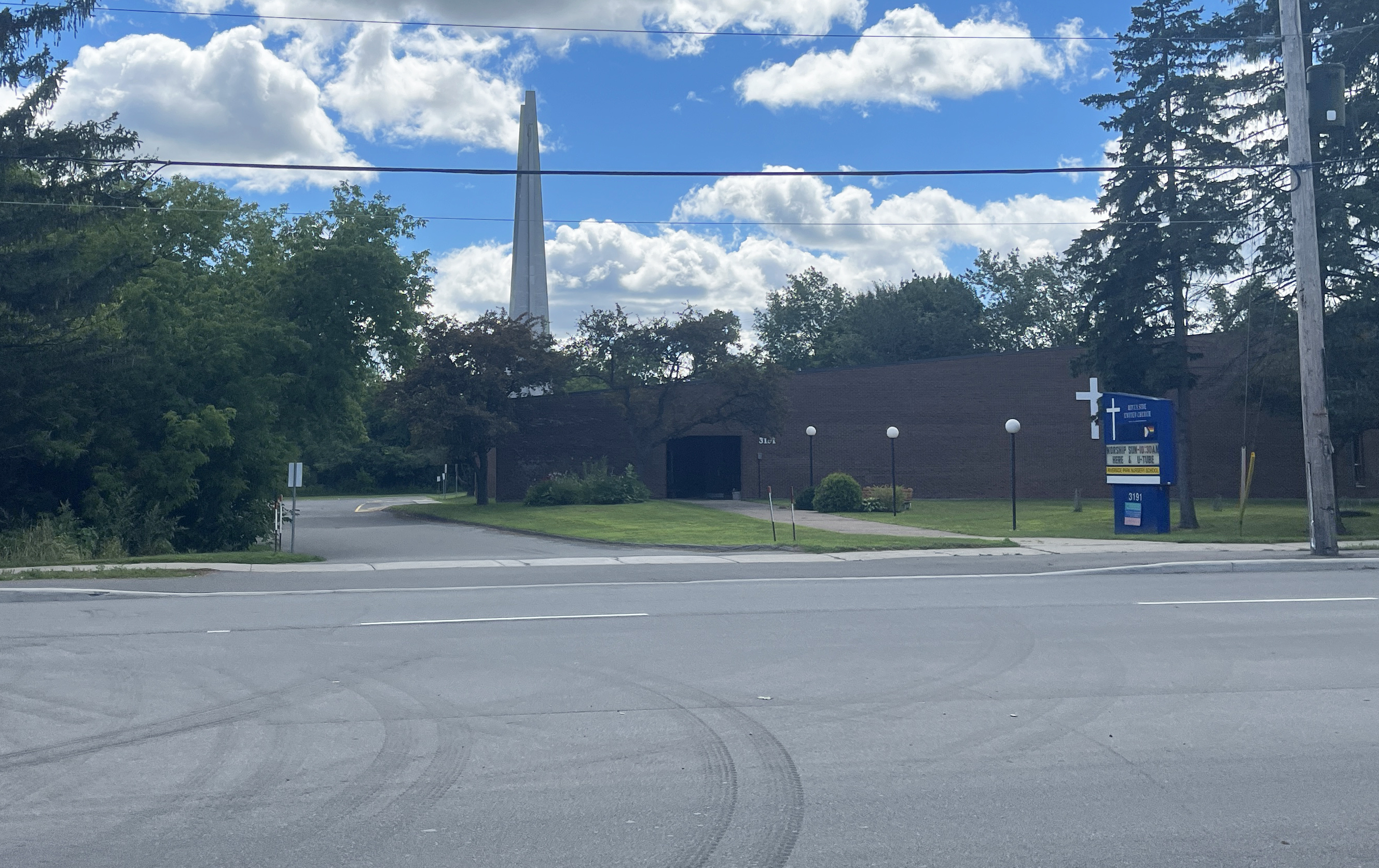
On the other side of Mooney’s Bay Park the path continues along Riverside Drive for a short distance until it ends at Walkley Road. Riverside Drive is a very busy street with lots of speeding traffic. There are raised paved shoulders along Riverside beyond Quesnel Drive, but not between Walkley Road and Quesnel Drive. To avoid this section, ride on the packed grass beside the sidewalk along Riverside for a short distance and cross Riverside to the parking lot of the Anglican Church.

Intersection of Walkley and Riverside Drive
Entrance to church parking lot off Riverside

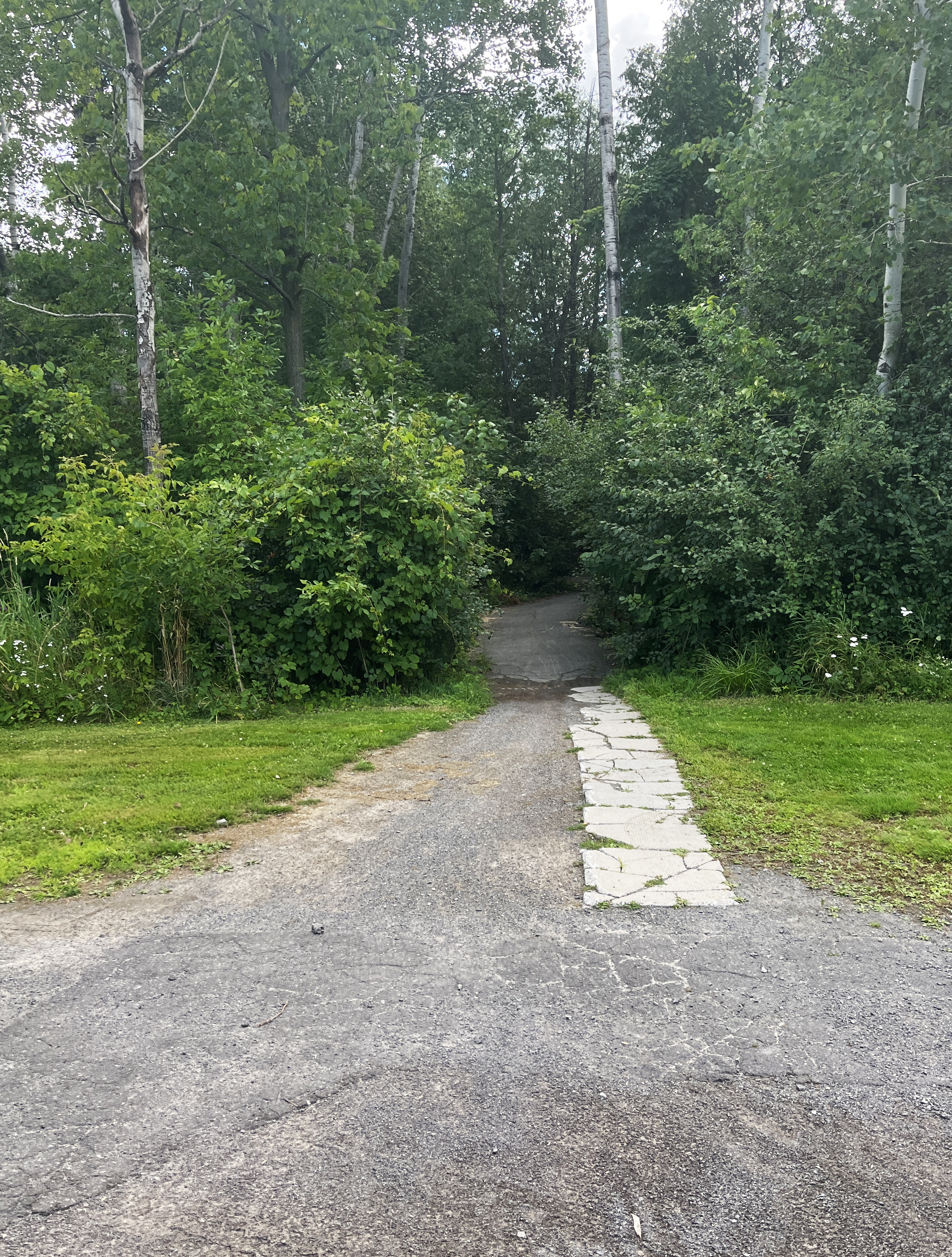
Ride through to the opposite side of the church parking lot to the short path that cuts through to Otterson Drive.

Path from church parking lot to Otterson Drive

Turn right onto Otterson, and take the short path that links to Quesnel Drive. Follow Quesnel Dr that ends at Riverside Drive. Get back on Riverside Drive and continue south along the previously mentioned raised paved shoulders. They extend from Quesnel to Uplands Drive.

Paved shoulder along Riverside Drive

Turn left onto Uplands Drive and follow it for a short distance before turning right along Bowesville Road.

Mid way down Bowesville there’s a NO THROUGH TRAFFIC sign, and a smaller green one below it that asks pedestrians and cyclists passing through to remain on the road. That’s because it cuts through the Ottawa Hunt & Golf Club. There’s a steel gate a bit beyond the signs, however there’s space to ride by just to the right.

Signs midway down Bowesville, and gate a bit further on.

Once beyond the golf club property cross Hunt Club Road at the lights and continue south along Paul Benoit Driveway. This is a very pleasant road to ride along. Traffic isn’t too speedy, the posted limit being 50km/h. There is also a paved path that runs along the west side of the road.

Path along Paul Benoit Driveway

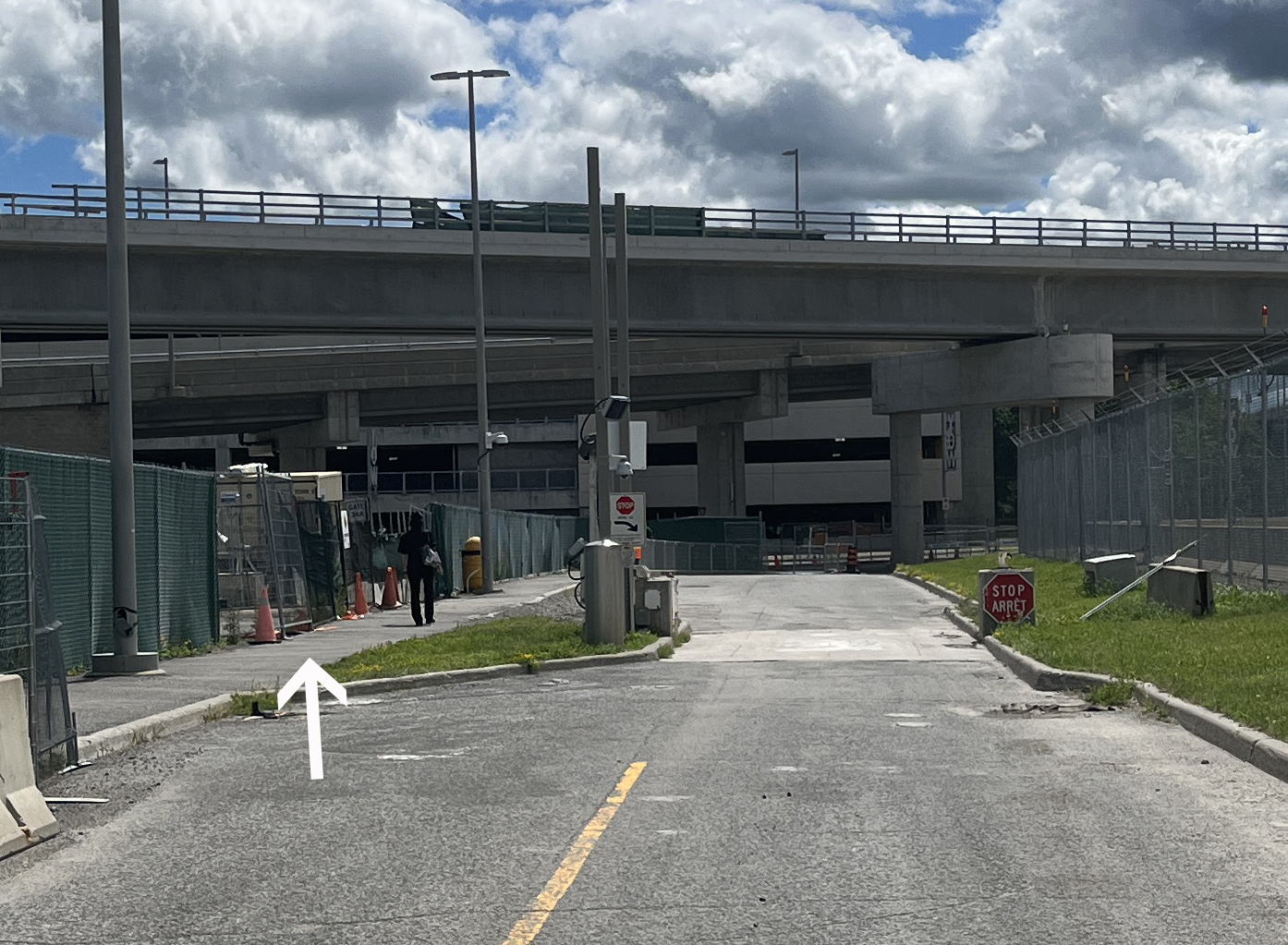
Normally, to get to the terminal turn right off of Paul Benoit Driveway onto Kiowa Pr, cut through the employee parking, then left at the end of the parking lot, which becomes a lane airport employees use to walk back and forth to their cars. This lane leads right to the arrivals doors in front of the terminal. At the time of writing they were constructing the O-Train connection to the airport, which required a slight deviation to the normal route, as per the green line indicated on the above map. i.e., rather than cut through the employees parking, ride to the end of Kiowa Pr to Clear Skies Pr, then turn left onto Clear Skies Pr, which leads to the aforementioned lane that brings you to the entrance to the terminal.

Turn right onto Kiowa Pr
Connection from Clear Skies Pr to path leading to front of airport terminal

There are bike racks infront of the concrete pillars located just outside the entrance to the airport.

Bike racks
Bike racks

Accessing the EY Centre

If you are heading to the EY Centre (orange line on the above map) turn left off of Paul Benoit Driveway onto Breadner Blvd, which has ample room for cars and bikes.

Breadner Blvd

Turn right onto Uplands Drive, which is a busy street, but also has wide paved shoulders. The entrance to the EY Centre is a short distance further along Uplands.

Uplands Dr

Follow the same route heading back to Ottawa, except for the last stretch north of the Queensway where the bike lane follows Bayswater versus Percy, as indicated by the purple line on the above map.

Et voila!
Biking to Ikea and Lee Valley From Centretown

I rode out to Ikea and Lee Valley to pick up some items for this summer’s production of Shakespeare’s  The Tempest, being performed by A Company of FoolsI designed the set. It opens next week and will be performed in parks around the city throughout the summer. Check out their show calendar to see when there is a performance in a park near you! 

This bike route is an update to one originally posted in the summer of 2012. I followed the Ottawa River Pathway and the Pinecrest Creek Pathway as far as Iris Street on the way there, and then the Experimental Farm Pathway back. A lovely loop.

The overall route hasn’t changed much over the last ten years, however the ongoing construction of the LRT extension heading west along the SJAM Parkway, and then south along the transit way, has resulted in a dog’s breakfast of mini-detours along the Pinecrest Creek Pathway. The detours aren’t too drastic, just very zig-zaggy and choppy. I hope the bike infrastructure will be the same as before, or better, once all construction is completed. Until then, I anticipate this messy bit will remain for a couple of years to come.

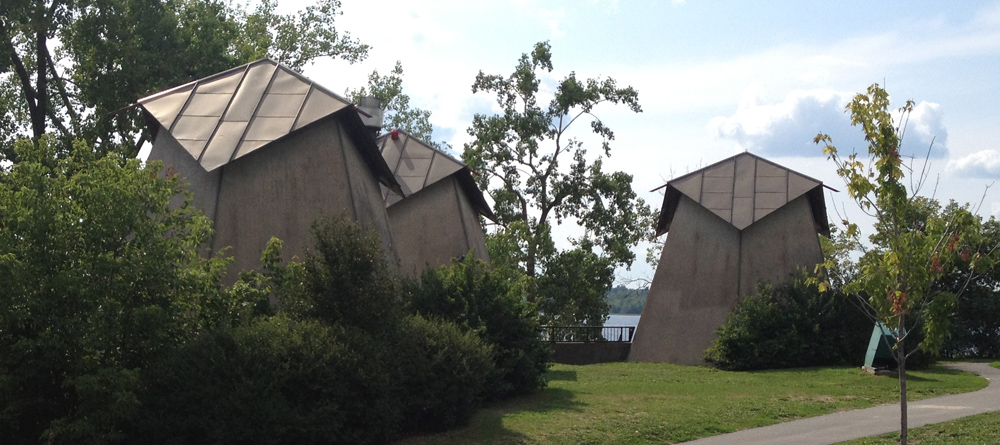
Love these service pavilions at Westboro Beach, designed by architect James Strutt. They remind me of Don Quixote’s windmills.  Check out other bike tours that visit buildings Strutt designed around the region by clicking here.

Westboro Beach pavillions

The Ottawa River Pathway isn’t being drastically affected by the construction. If you like construction sites, look left. If you like majestic rivers, look right.

Ottawa River Pathway heading west

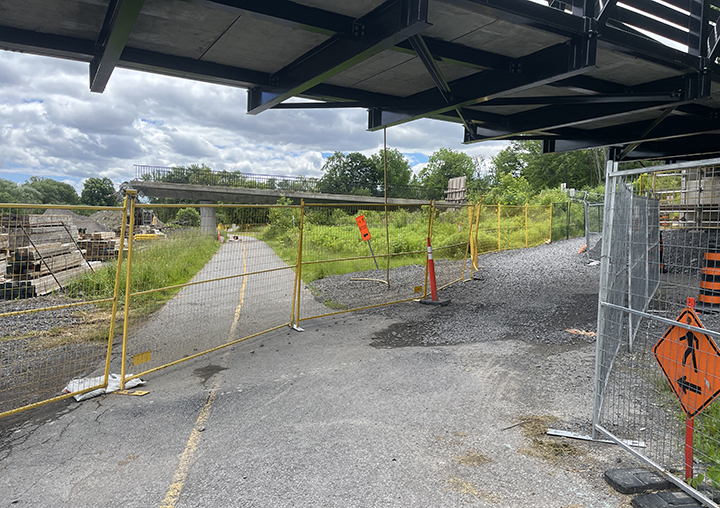
This is the type of choppy detour you may expect to find along the Pinecrest Creek Pathway.

Pinecrest Creek Pathway heading south

Heading back along the Experimental Farm Pathway, just east of Woodroffe Avenue, they are installing what seems to be a huge reservoir. Looking forward to see what becomes of that.

Reservoir just east off Woodroffe

So there you go. Happy trails!

10 Year Anniversary!

It’s been 10 years since I began this blog. It started out as a fun efort to share bits about biking around the area. A few years prior I had set out on a mission to ride all the streets in the region at least once. After happening upon so many amazing discoveries, I wanted to share a few right here. All good and fun, and I got better, spurred on by positive feedback. Then the big epiphany hit. While attending a Bike Ottawa annual general meeting, a German academic doing research in some American university made a presentation on bike stats from cities around the world. Amongst a dazzling array of anecdotal tid-bits, the ultimate stat he spouted was, the safest cities to bike in have the most per-capita cyclists. i.e. strength in numbers. So now I had a mission – to try to help boost the number of local riders! And save the planet, but I digress. So I decided to post more detailed safe cycling routes for locals and tourists alike, and I also tossed in ‘Hey, need a safe route? send me your start & finish & I’ll figure it out!‘, for which people were extremely appreciative.

Well, much has changed over time. For example, Bike Ottawa has developed an amazing tool that allows you to plot out the safest route from A to B, based on your comfort level. There are also other extremely passionate local cycling advocates like this guy who are doing a fantastic job keeping us informed about changes and needs required to our local cycling infrastructure.

So, my posts will mostly go back to ressembling its origins, i.e., shorter, a bit more anecdotal, and spontaneous. I’ll still post longer routes when inspiration hits, and offer suggestions on routes when requested. I hope pertinent stuff still comes of it.

Cycle on!

Ukraine in Ottawa – A Bike Tour

The original version of this route was posted in 2014. In the wake of the present invasion of Ukraine I have revisited and updated the route in the hopes that it may be used by those who wish to to pay tribute to the incredible resilience of the Ukranian people, and to help better understand the Ukranian community amongst us.

Canada is home to one of the largest number of persons of Ukrainian descent outside of Ukraine. Most reside in the western provinces, however many have chosen Ottawa as their home. This bike tour visits edifices around town representing the Ukrainian diaspora within Canada’s capital.

We begin our ride at the Ukrainian Embassy located at the corner of Somerset and O’Connor. Ukraine purchased this building at 310 Somerset St from the federal NDP party in 1994. It’s been their embassy ever since.

Ukrainian Embassy

Our next stop is just a few blocks south east. On December 2nd, 1991 Canada recognized Ukraine’s independence. Suddenly in need of an embassy, this building on Metcalfe St was purchased with the help of funds gathered by Ukrainian-Canadians. This location has served as a consular building ever since the embassy moved to its present location.

Ukrainian Consular Building

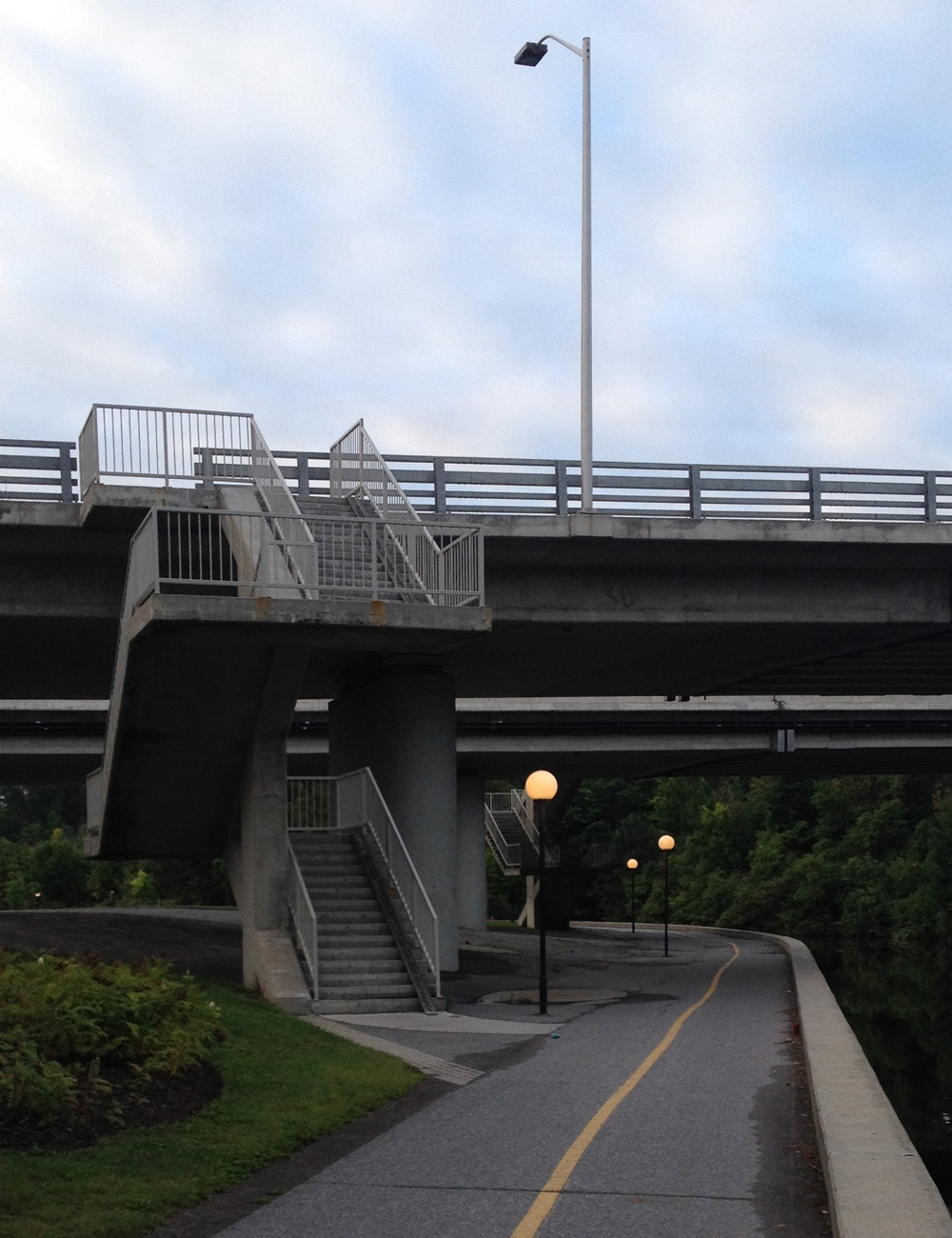
Next stop – the Saint John the Baptist Ukrainian Catholic Shrine near the corner of Heron Road and Prince of Wales Drive. To get there I rode south along the O’Connor bike lane before turning left on Fifth Ave and crossing the canal over the Flora Foot Bridge. I then rode along the Rideau Canal Eastern Pathway all the way up to where Heron Road crosses overhead. I accessed Heron by pushing my bike up the mini bike ramp along the edge of the stairs.

Heron stairs

There is a bike lane along Heron Road. Just over the bridge I took this well trodden path righ that leads to the back of the church.

path off Heron

The statue on the edge of the parking lot is a monument to Taras Shevchenko (1841-1861), artist and national hero for his promotion of Ukrainian independence.

The church (or Sobor, or Shrine) was completed in 1987. An annual Capital Ukraininan Festival is held at this site.

Next destination is the Ukrainian Orthodox Cathedral at 1000 Byron Avenue. To get there I cut through the Experimental Farm, along Island Park Drive, then west along Byron. There is serious disruptive construction for the new LRT extension along Byron, thus the slight detour as one approaches our final stop. The Cathedral opened in 1978. More on it’s history can be found here.

Et voila – Slava Ukraini!


The Gatineau Ship Wreck! (re-visited)

The very first bike route posted on Ottawa Velo Outaouais was to a little known ship wreck in Gatineau. Time to re-visit the ride to see how they, (both the route and the wreck), have survived the vagaries of time. Although the last few years have been rough on the route, with Jacques Cartier Park being closed off to recooperate from that wacky topiary festival a few years back, and the boardwalk along the river blocked for repairs, I am pleased to announce that all is clear. Here we go!

Our ride begins in Centretown, beside the Chinatown arch. Head north along Cambridge St N which eventually veers right to become Laurier Ave before arriving at Bronson Avenue. The rest of this ride is entirely along bike lanes or paths. Follow the route indicated on the map to get across the Ottawa River over the Portage Bridge.

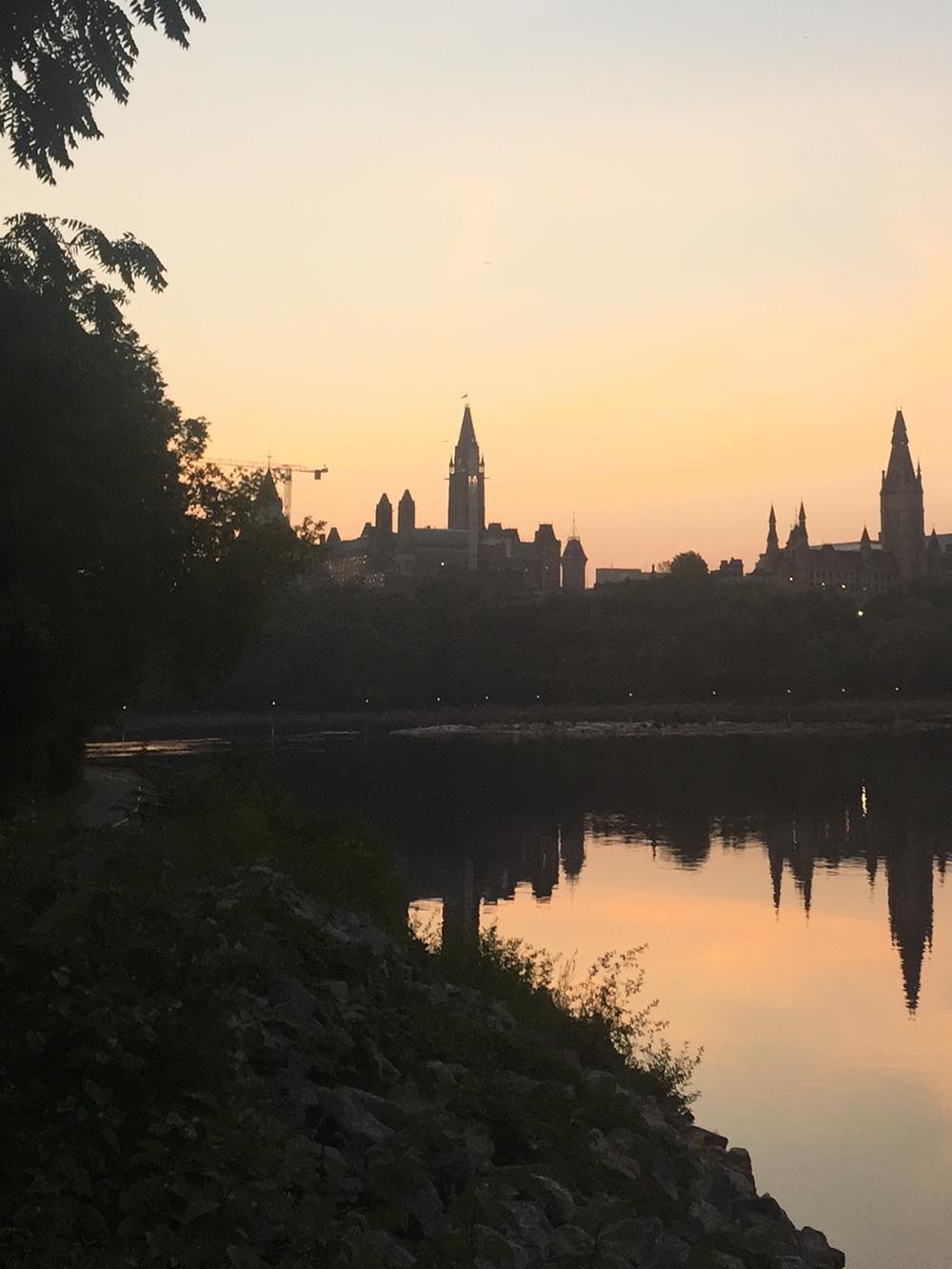
Once across the bridge, turn right along the Voyageurs Pathway where you will experience the most picturesque view of Parliament Hill as you ride down towards the waters edge.

Parliament Hill from the Voyageurs Pathway

Continue along the Voyageurs Pathway through Jacques Cartier Park, and then along the aforementioned boardwalk that floats above the shoreline.

Boardwalk along the Ottawa River just east of Maison Charron

Continue along Voyageurs that weaves it’s way for a nice stretch until you happen upon a gravel path leading off to the right. Turn onto this gravel path. If you pass the big green NCC sign, you’ve gone too far.

Turn on to this gravel path before you get to that big green NCC FIP (Federal Identity Program) sign barely visible in this photo

There are two right turns off this gravel path, the first of which leads to a very nice lookout across the river. Definitely worth visiting if you have the time, but you want the next exit that’ll get you to where we wanna go, which runs along the Lac Leamy discharge into the Ottawa River. Further along this path, closer to the Ottawa River you will discover THE SHIPWRECK!

Gatineau Shipwreck!

According to this source, this ship was originally launched in 1959. In the 70’s it was converted into a a disco-casino pleasure cruise, then in 1976 into a floating cottage. It caught fire in the 80’s and waspulled to this location. So, thar she lies…. for the rest of us to enjoy!

This summer someone has been using the wreck to moore a sad little white power boat, conveniently blocked by shrubbery in the above photo.

Et voila!

Heading back to Ottawa, one may retrace the route that got you to the wreck, or you can continue north via the blue line on the above map. If you choose to take this route, which is really great and follows paths the entire way, I highly reccomend downloading the above map and checking your progress via GPS as you will encounter many merges and turns with minimal directional signage.

Happy trails!