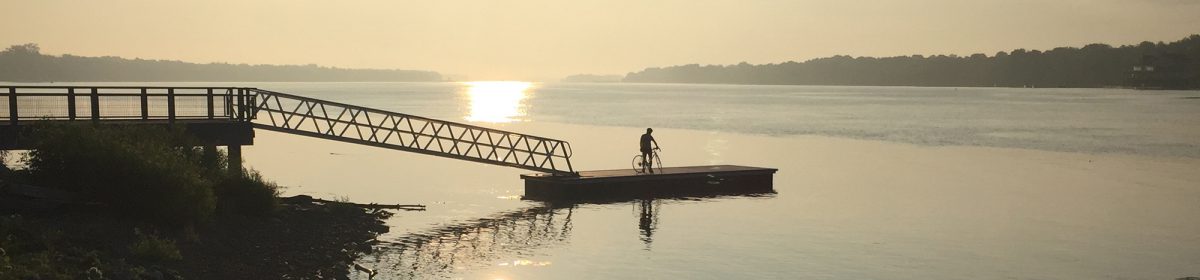
Remembrance Day Bike Tour

Many Canadians are drawn to the November 11th Remembrance Day Ceremonies held at the National War Memorial to pay tribute to those who have fought and given their lives in the service of our great country. There are also a number of lesser known Canadian war memorials throughout the capital commemorating groups within the Canadian military, or specific struggles in which Canadian soldiers have served. The following bike tour visits these memorials, starting from the National War Memorial and ending at the National Military Cemetery. 

.

The National War Memorial was unveiled in 1939 to commemorate those who served in the armed forces during World War 1. Subsequently it has come to symbolize the sacrifice of all Canadian Armed Forces in times of war.
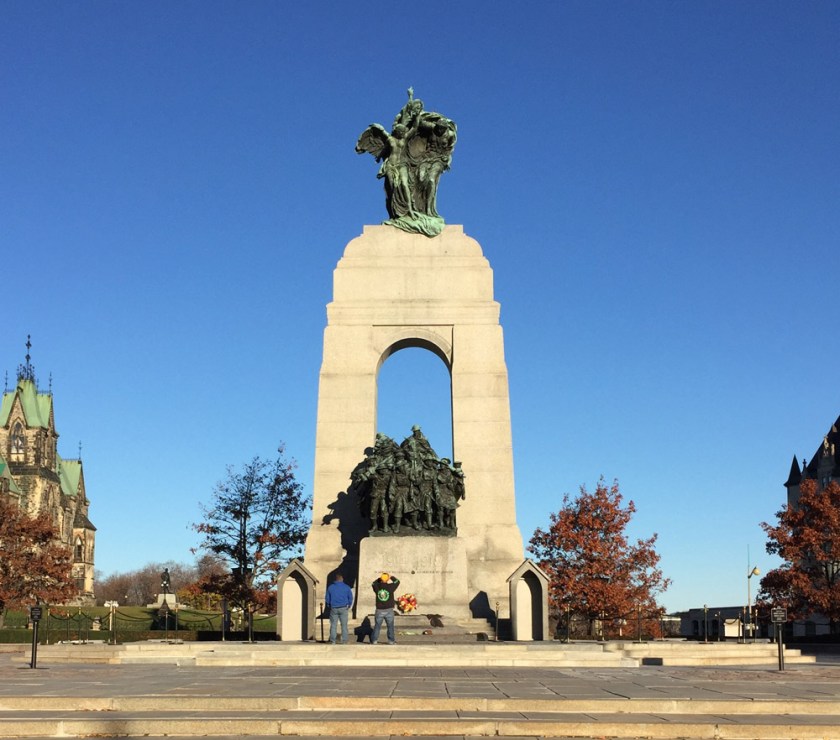
National War Memorial

Immediately in front of the Memorial is the Tomb of the Unknown Soldier. This tomb contains the remains of an unidentified Canadian soldier who died near Vimy Ridge during the First World War and represents the many Canadian soldiers who have no known grave.
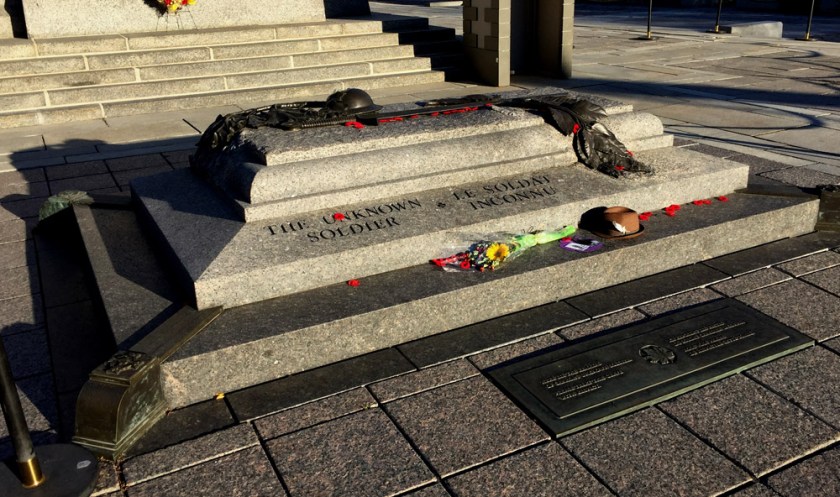
Tomb of the Unknown Soldier

There are bronze panels on the east and west sides of the War Memorial that describe the significance of the Tomb of the Unknown Soldier and the main sculpture – The Response.
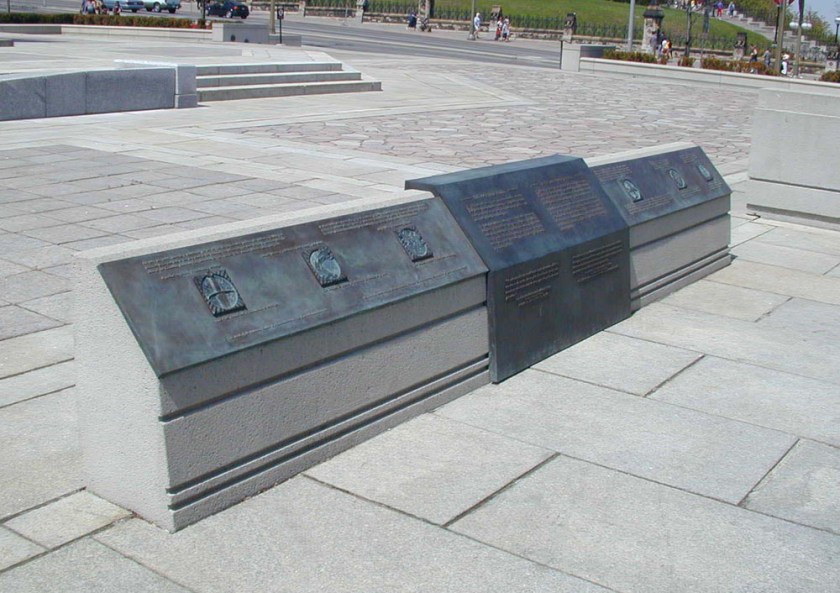
interp-panels
Bronze interpretive panels

Leaving the War Memorial, Head down to the Rideau Canal behind the National Arts Centre. Head south along the canal for a short distance until you are past the National Arts Centre and have crossed under the Mackenzie King Bridge. Turn in to Confederation Park to where the South African War Memorial is located.
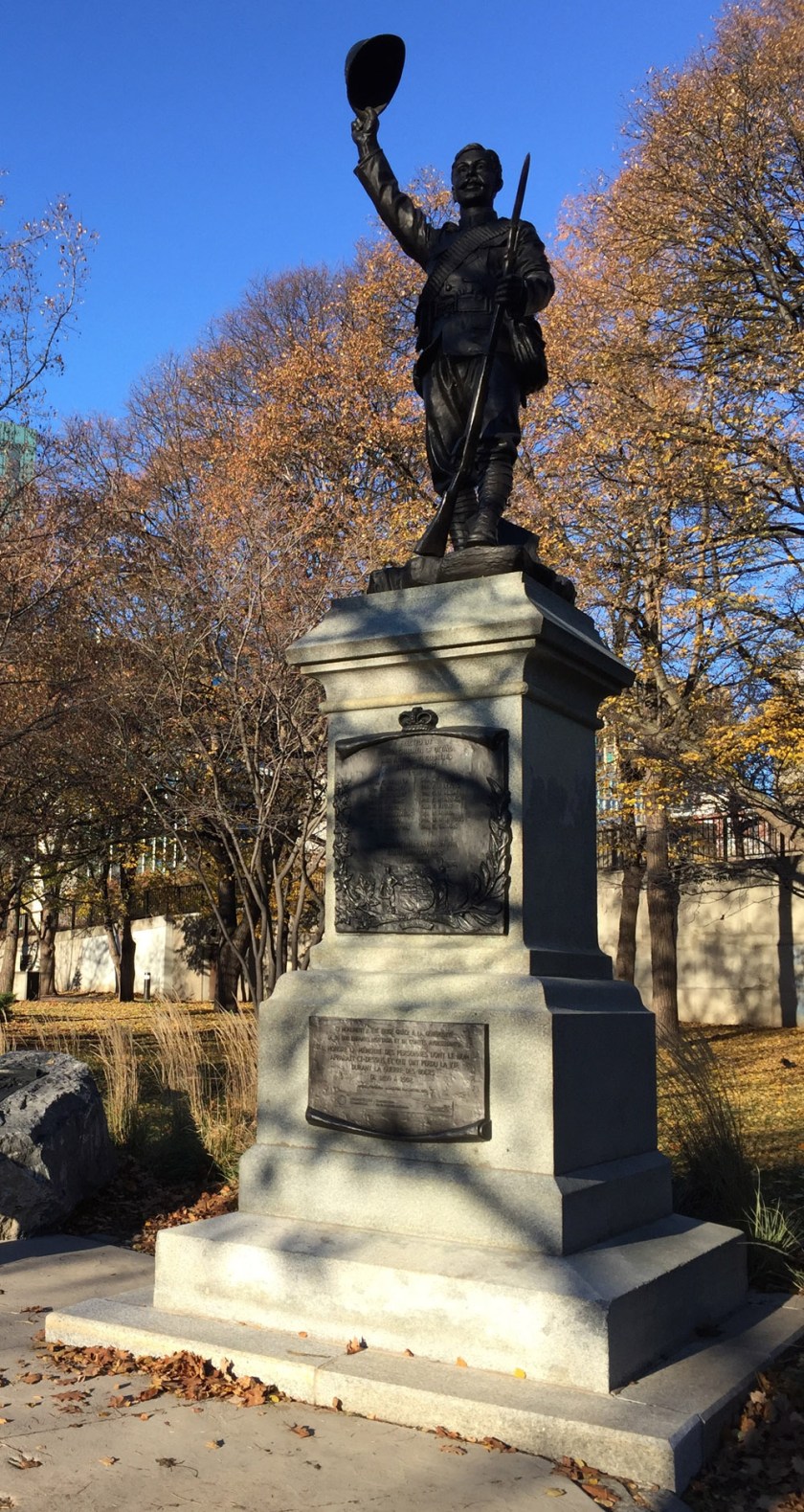
South African War Memorial

Continue through the park to the sidewalk along Elgin Street where one can see the National Aboriginal Veterans Monument.

National Aboriginal Veterans Monument

Cross Elgin Street at Laurier Street and follow the Laurier Bike Lane heading west before turning north along the bike lane that runs along Bay Street. After crossing Wellington at the northern end of Bay, head east for one block to Lyon St. There is a gravel path through the park just to the east of the National Archives building that leads to Lyon. Looking across Wellington up Lyon Street, one sees the Veteran Memorial Buildings and Arch. Beneath the arch connecting the two buildings across Lyon St there is a stone relief carved by Ivan Mestvovic called The Canadian Phalanx in honour of those Canadians who fought in the First World War.
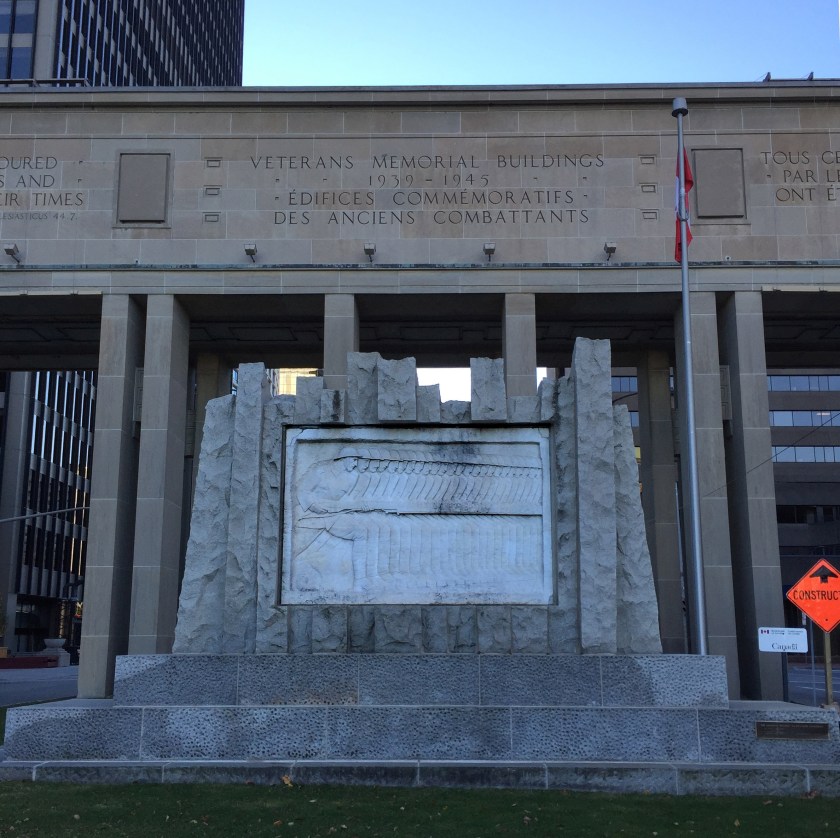
Veterans Memorail Buildings

Head west along Wellington, which has a bike lane beginning at Lyon Street. This bike lane continues across the Portage Bridge. Just before heading over the Ottawa River there is a path off to the right that leads down to the Royal Canadian Navy Monument. UPDATE, November 2019. The path down to the Canadian Navy Monument is blocked off for some major re-landscaping but one can bike down along the Ottawa River Pathway and view the monument from the south shore of the river, as per the route on the above map.

Royal Cananadian Navy Monument 2
Royal Canadian Navy Monument

Head back up to the Portage Bridge and cross over to the Quebec side of the river, then turn east along the Voyageurs Pathway that hugs the shore of the Ottawa River. One of the finest views of Parliament Hill can be seen from this section of path. The Memorial Chamber, located inside the Peace Tower, contains the Books of Remembrance recording every Canadian killed in service from Canada’s first overseas campaign, the Nile Expedition, to the present.
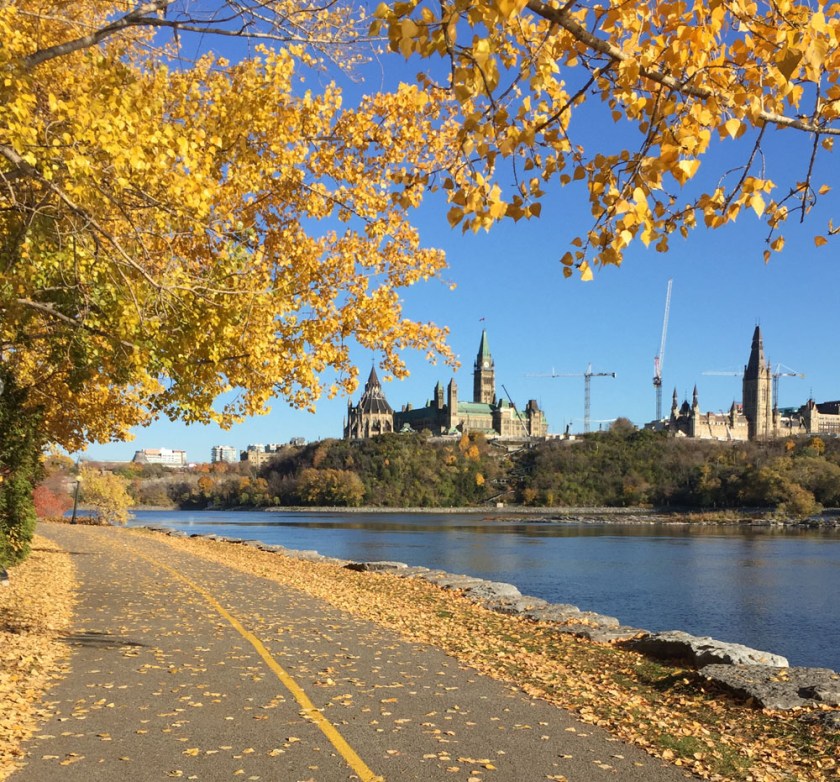
View of Parliament Hill from the Voyageurs Pathway

Our route heads back to Ottawa over the Alexandra Bridge to our next stop, The Peacekeeping Monument, dedicated to Canadians who have served as peacekeepers around the world. It is located on a traffic island along Sussex Drive between the National Gallery and the American Embassy. You can meander through the centre of this monument.

Peacekeeping Monument
View through Peace Keeping Monument

The next section of the tour continues north along Sussex Drive which has a bike lane. The Defence of Hong Kong Memorial is located at the corner of Sussex and King Edward Avenue. This Memorial is dedicated to those Canadian Soldiers who served in the defence of Hong Kong during the Second World War.

Defence of Hong Kong Memorial

The first of the three memorial installations is dedicated to members of the Royal Regiment of Canadian Artillery who gave their lives in battle. A sculpture of Lieutenant-Colonel John McCrae, created by artist Ruth Abernethy. John McCrae was a doctor who participated in the First World War. He was moved to write the poem In Flanders Field in memory of fellow Canadian soldiers killed during the Second Battle of Ypres. It is from this poem that the red poppy was chosen to be the symbol of Remembrance Day.
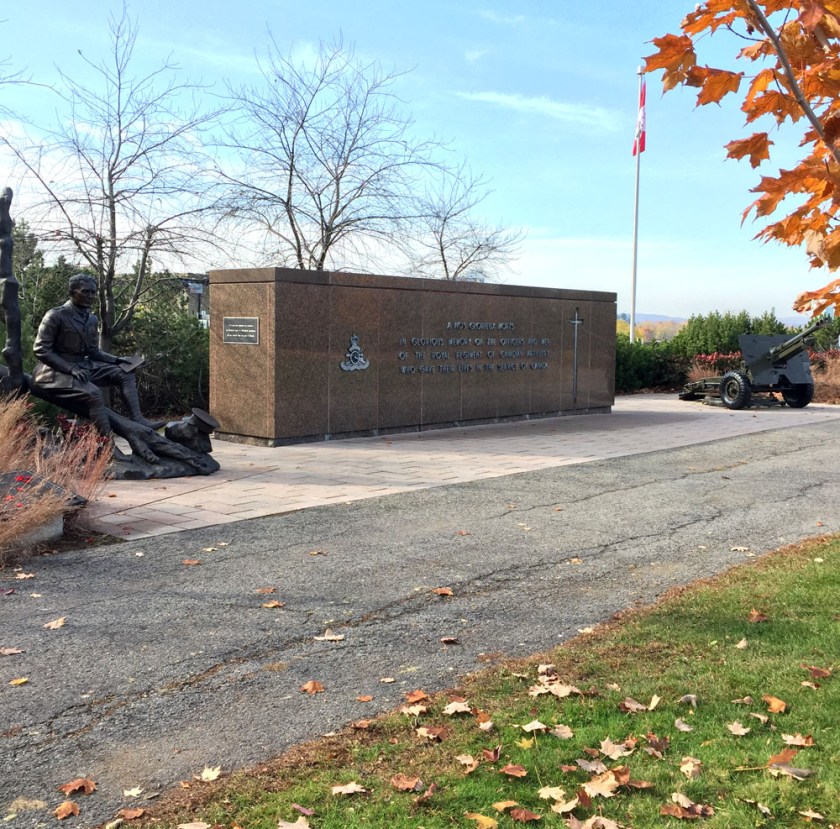
Royal Regiment of Canadian Artillery
Lieutenant-Colonel John McCrae, sculpture by Ruth Abernethy

Across the park are the Commonwealth Air Forces Ottawa Memorial, and the Mackenzie-Papineau Battalion Memorial dedicated to Canadian volunteers of the Mackenzie–Papineau Battalion during the Spanish Civil War.

The Commonwealth Air Forces Ottawa Memorial
Mackenzie-Papineau Battalion Memorial

The tour continues along Sussex Drive. At the southern corner of Sussex Drive and Stanley Avenue is the CANLOAN Monument, dedicated to Canadian soldiers who died while volunteering with the British army during the Second World War.

Canloan Monument
Canloan Monument

Head east along Stanley Avenue and the Rideau River Eastern Pathway to Beechwood Avenue, then ride along the Beechwood Avenue bike lane to the entrance of Beechwood Cemetery. The National Military Cemetery is located within the grounds, as indicated on the above map.
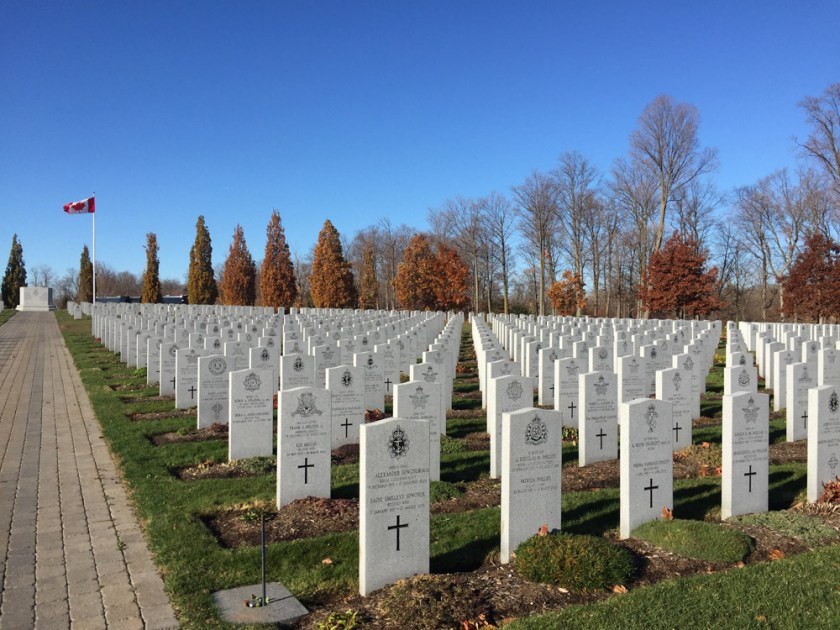
National Military Cemetery

the poem In Flanders Fields is cast onto a bronze plaque and mounted on a simple elegant plinth facing the rows of white tombstones.

In Flanders fields the poppies blow
Between the crosses, row on row,
That mark our place; and in the sky
The larks, still bravely singing, fly
Scarce heard amid the guns below.

We are the Dead. Short days ago
We lived, felt dawn, saw sunset glow,
Loved and were loved, and now we lie
In Flanders fields.

Take up our quarrel with the foe:
To you from failing hands we throw
The torch; be yours to hold it high.
If ye break faith with us who die
We shall not sleep, though poppies grow
In Flanders fields.

John McRae, 1915
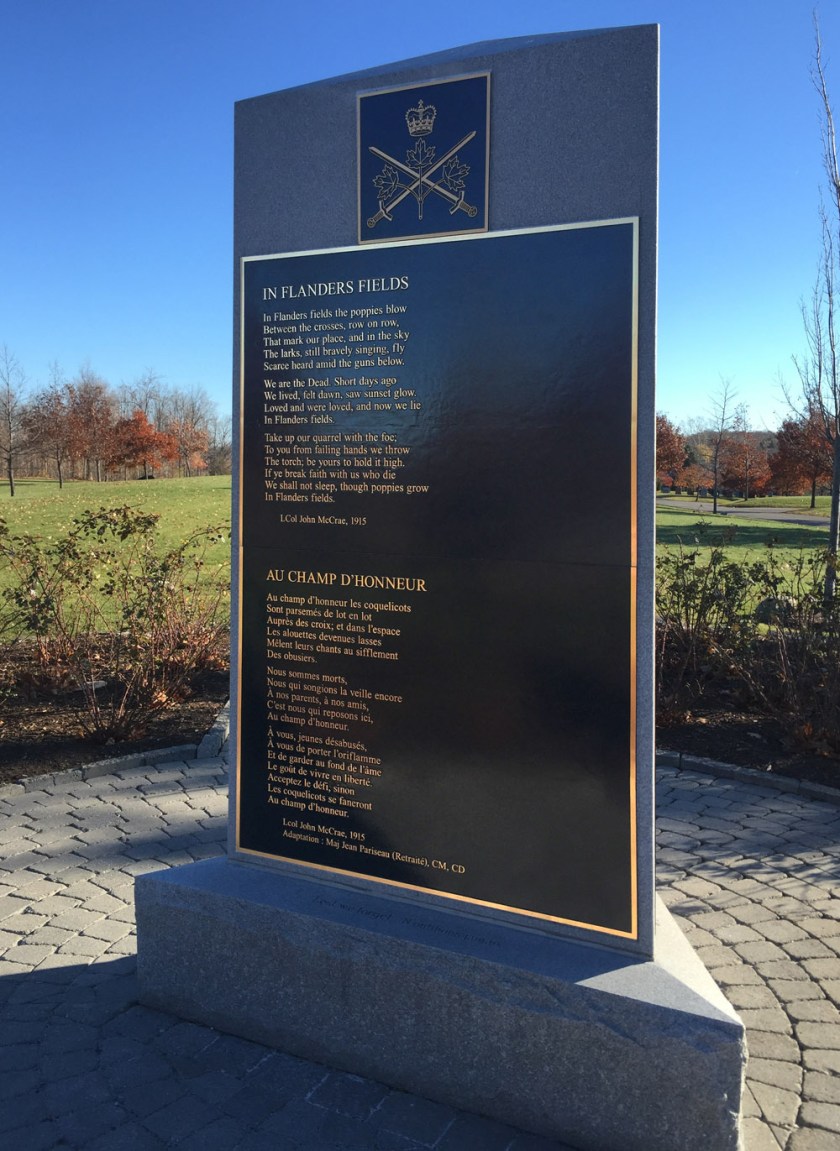
In Flanders Fields
In Flanders Fields

New Bike Path Along Rue Jacques Cartier in Pointe-Gatineau

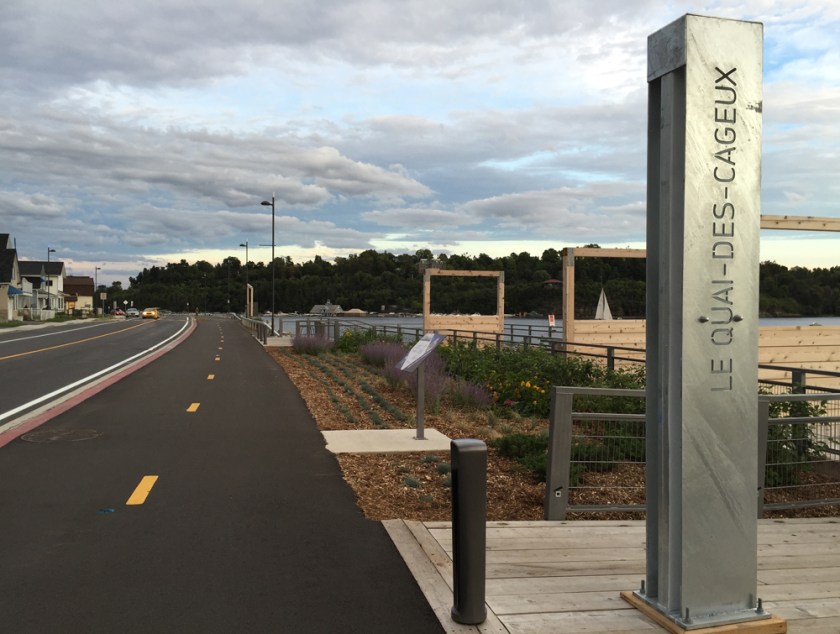
The recently completed section of bike path along the shoreline of the Ottawa River, just east of the confluence of the Gatineau and Ottawa rivers, allow for spectacular views across the water. Previously this stretch of Rue Jacques-Cartier consisted of two narrow lanes with lots of potholes and speeding traffic, making it a challenge for cyclists to concentrate on anything but survival. Now users of all ages visit and cycle along the shoreline, testament to the huge success of this new bike infrastructure.

The blue line on the following map shows how to get there entirely along bike paths starting from Centretown in Ottawa. The purple line is the new stretch of path along Rue Jacques-Cartier, described in more detail below.


.

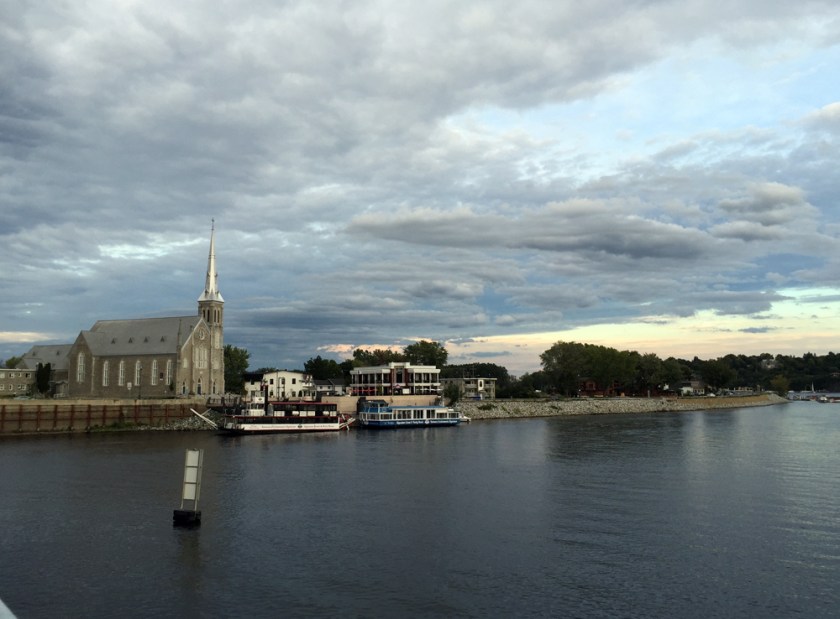
Upon crossing the Gatineau River over the steel truss Lady Aberdeen Bridge, one arrives in the old town of Pointe-Gatineau with the Saint-François-de-Sales church to your right. This is where the new section of path heading east along Rue Jacques-Cartier begins.

View of Pointe-Gatineau from the Lady-Aberdeen Bridge
New path along Rue Jacques-Cartier

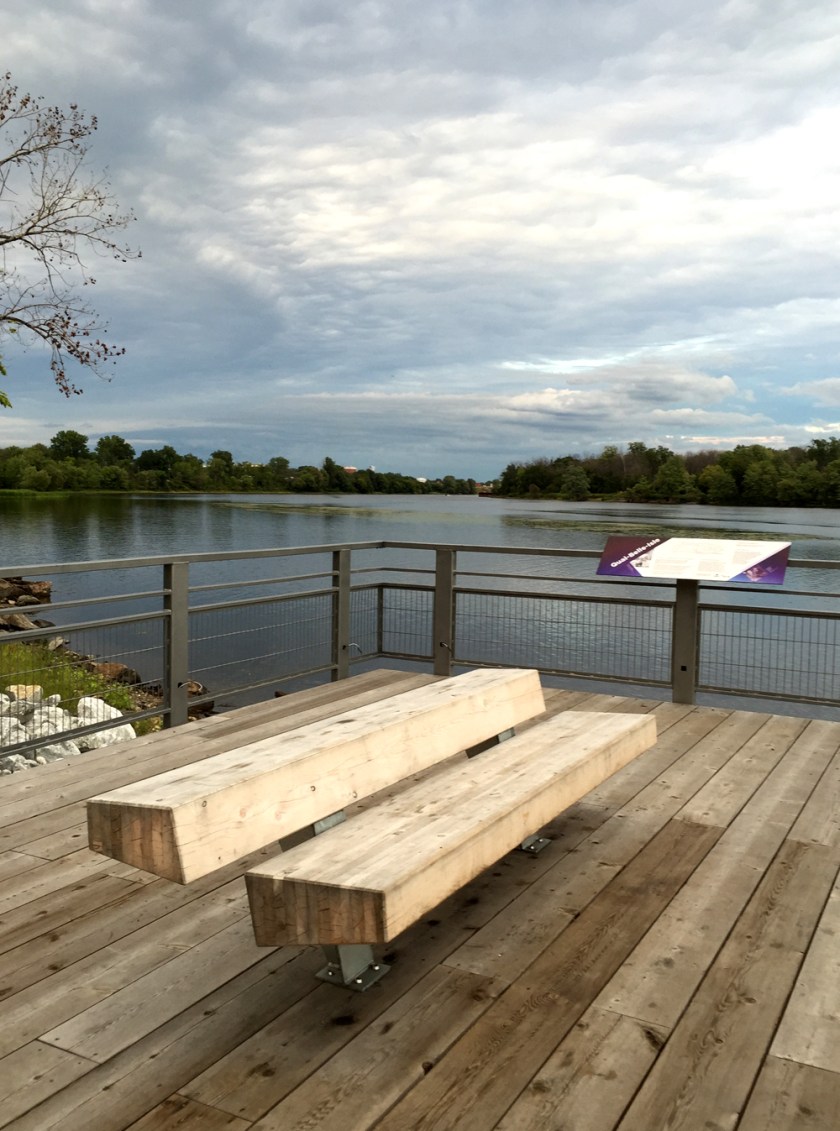
The re-design of the shoreline has included gathering nodes for people to pause and take in the scenery. Many of the stops have interpretive panels that describe the history of the area.

Lookout over the river

The design of the various furnishings appear to have been inspired by the lumber industry so prevalent in Point-Gatineau’s past.

Pathway bench
Pathway bench

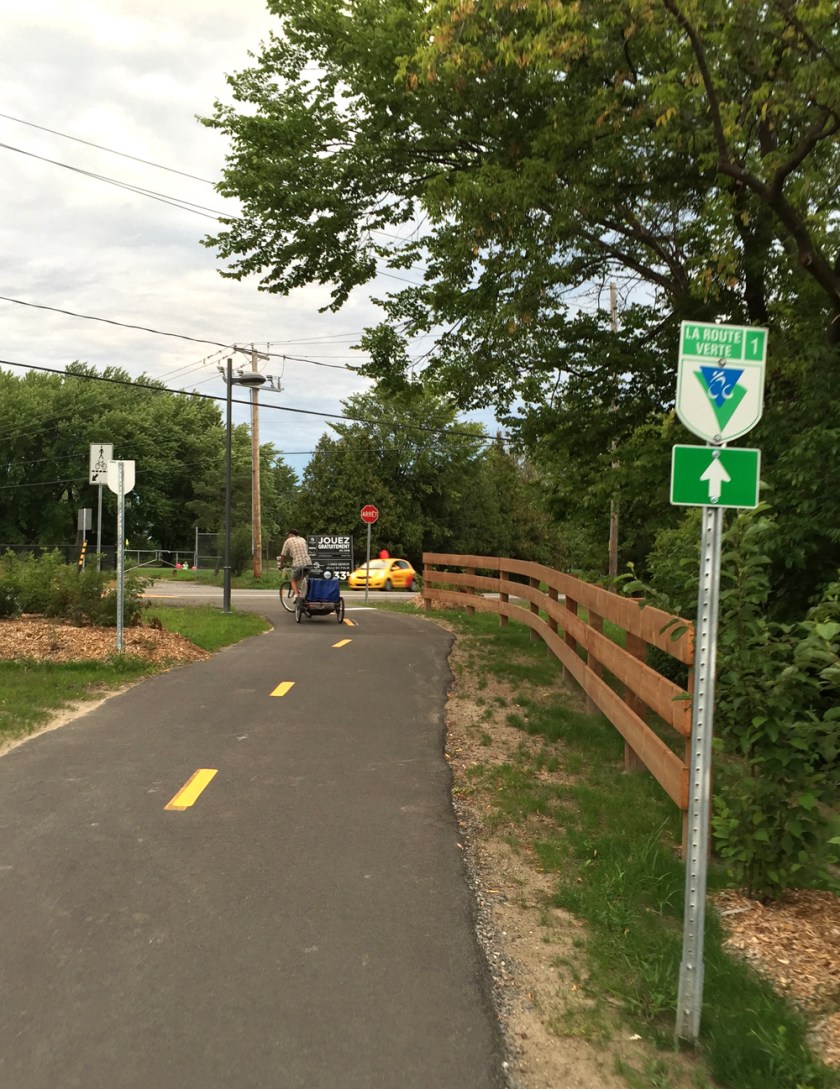
Not only has this new bike infrastructure created a fantastic destination well worth the visit, it also provides an important link to the Route Verte recreational path network that runs across Quebec. It also encourages bike commuting for hundreds of residents living in Pointe-Gatineau and beyond.

Eastern end of the new bike lane
Eastern end of the new bike path

et voila!

light

Bike tour of Ottawa Flower Gardens

All sorts of midsummer flowers are in bloom! There are a number of wonderful gardens throughout the National Capital Region that are open to the public and maintained with lots of tender loving care. Here’s a ride I took to visit a few of them that , starting along the O-Train path between Carling and Scott.

.
First stop – Maplelawn, located at 529 Richmond Road. The NCC describes it as ‘…a rare example of a well-preserved 19th century walled garden, very few of which have survived.’, the Friends of Maplelawn Garden who play a large role in maintaining the garden are inspired by how it looked when it was built in the 1830’s.

Maplelawn  garden

Maple lawn Garden
Maple lawn Garden

Second stop – the First Unitarian Meditation Garden, located at 30 Cleary Ave beside the very cool looking modern church. As the name implies, this horticultural gem has a more organic groove to it with lots of wonderful discoveries to be made along its meandering paths. It is also maintained by a volunteer group of garden enthusiasts.

First Unitarian Meditation Garden

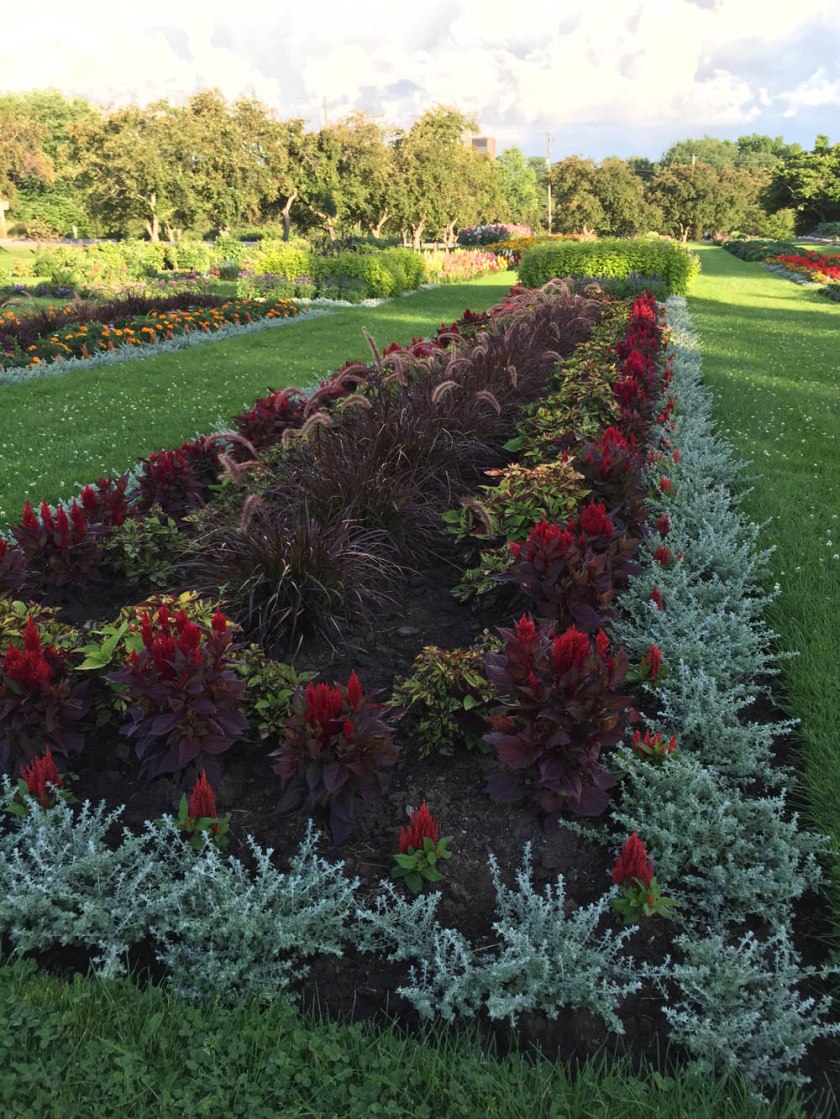
Third Stop – The Central Experimental Farm Ornamental Gardens, just off Prince of Wales Drive south of the round-about. Here’s a link to a detailed map that shows it’s location, along with a number of other gardens on the Farm. The layout of this garden is strict but the flora is fantastic! Another volunteer group plays a big role in maintaining the garden.

Ornamental Garden1

Central Experimental Farm Ornamental Garden

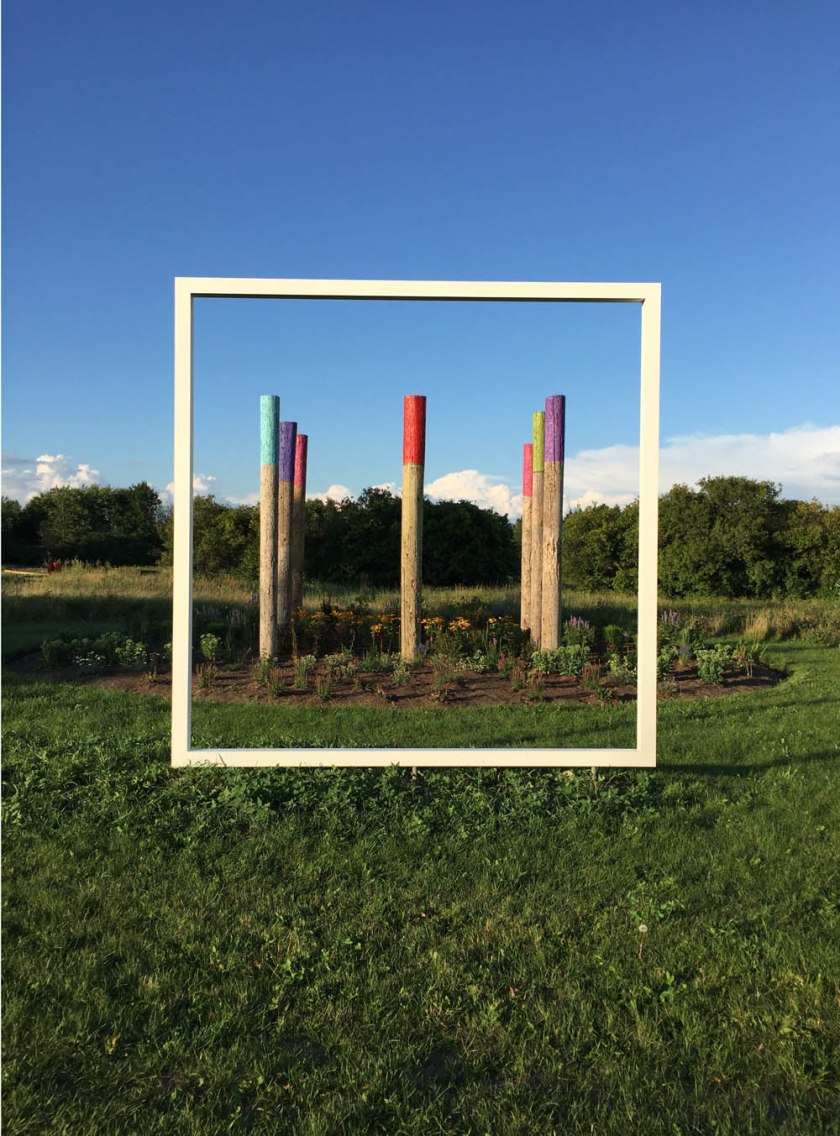
Fourth stop – Beyond the Edge: Artists’ Gardens, located across the street and a short distance further south along Prince of Wales Drive. The three art garden installations are located along a path that circles around a big Agriculture Canada research plot. This annual display is organized by the Candenses Botanical Garden Society.

Engelina Schmitz: Bee Haven

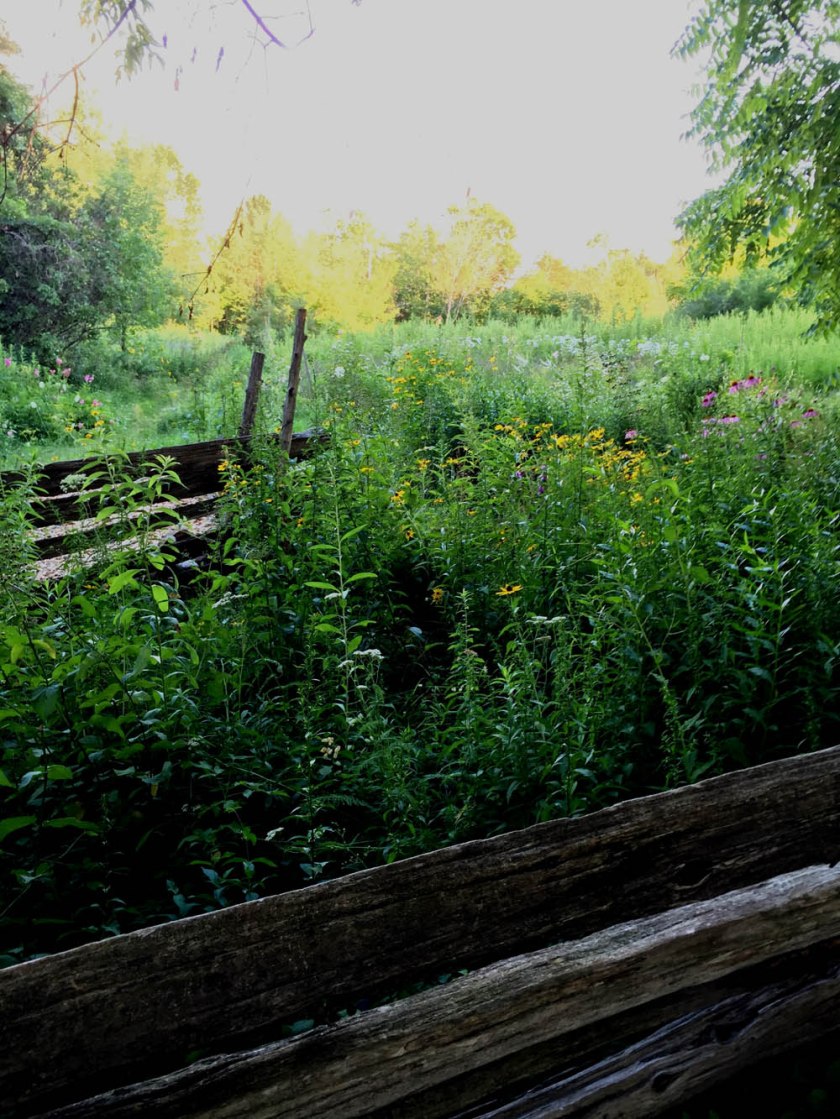
Final stop – Fletcher Wildlife Garden, accessible by path just to the east of our previous stop. Lots of volunteers help maintain this magical network of paths that run through a mixture of natural habitats and gardens. Well worth a visit any time of the year.

Flercher1

Fletcher Wildlife Garden

Et voila!

An Enchanted Evening of Totem Poles and Landmarks Bike Tour!

Indigenous Walks is ‘A guided walk & talk through downtown Ottawa that presents participants with social, political, cultural & artistic spaces from an Indigenous perspective‘. I put together the following bike tour for Indigenous Walks with Alanis King.  Alanis is a published playwright and theatre director, as well as past Artistic Director of Native Earth Performing Arts and Saskatchewan Native Theatre. If you are interested in taking this tour I suggest calling Indigenous Walks to see if they are planning any future group rides.

Here’s a map of the route, starting in front of the Totem Pole on Victoria Island, and ending in the plaza looking in to The Grand Hall of the Museum of History.

If anyone would like to come along for the ride, check out the link on the Indigenous Walks website to register.

.


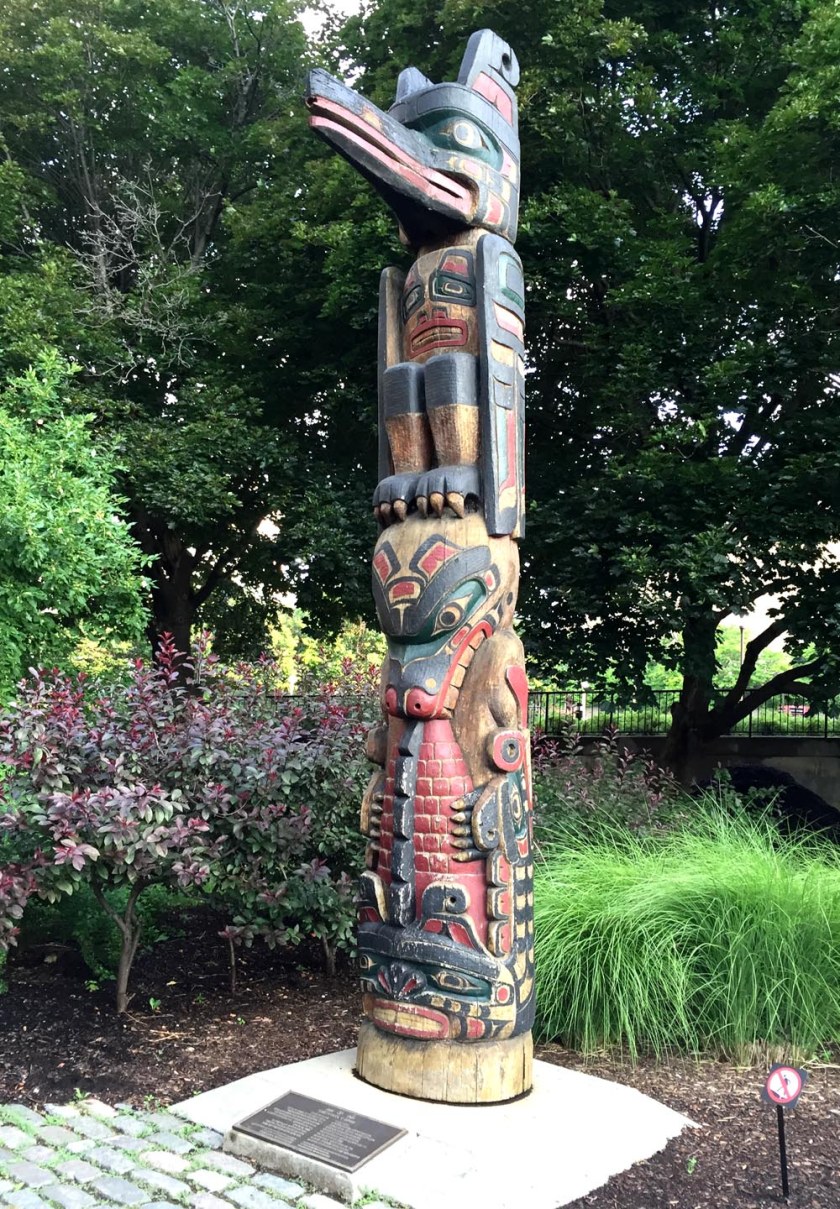
Start - Totem Pole sculpted by Walter Harris on Victoria Island
Start – Totem Pole sculpted by Walter Harris on Victoria Island
First stop - Totem sculpted by Henry Hunt, Confederation Park
First stop – Totem Pole sculpted by Henry Hunt
2nd stop - The Lost Child by David Ruben Piqtoukun
2nd stop – The Lost Child by David Ruben Piqtoukun
3rd stop - Anishinabe Scout
3rd stop – Anishinabe Scout
4th stop - Lookout across over the Ottawa River
4th stop – Lookout over the Ottawa River
5th stop  - The Three Watchmen by Chief James Hart
5th stop – The Three Watchmen by Chief James Hart
Exterior view of the totems within the Grand Hall
Last Stop – Exterior view of the totems within the Grand Hall
Last stop - Museum of History, Namaxsala (To Travel in a Boat Together) by sculptor Anne Barkhouse
Museum of History, Namaxsala (To Travel in a Boat Together) by sculptor Anne Barkhouse